
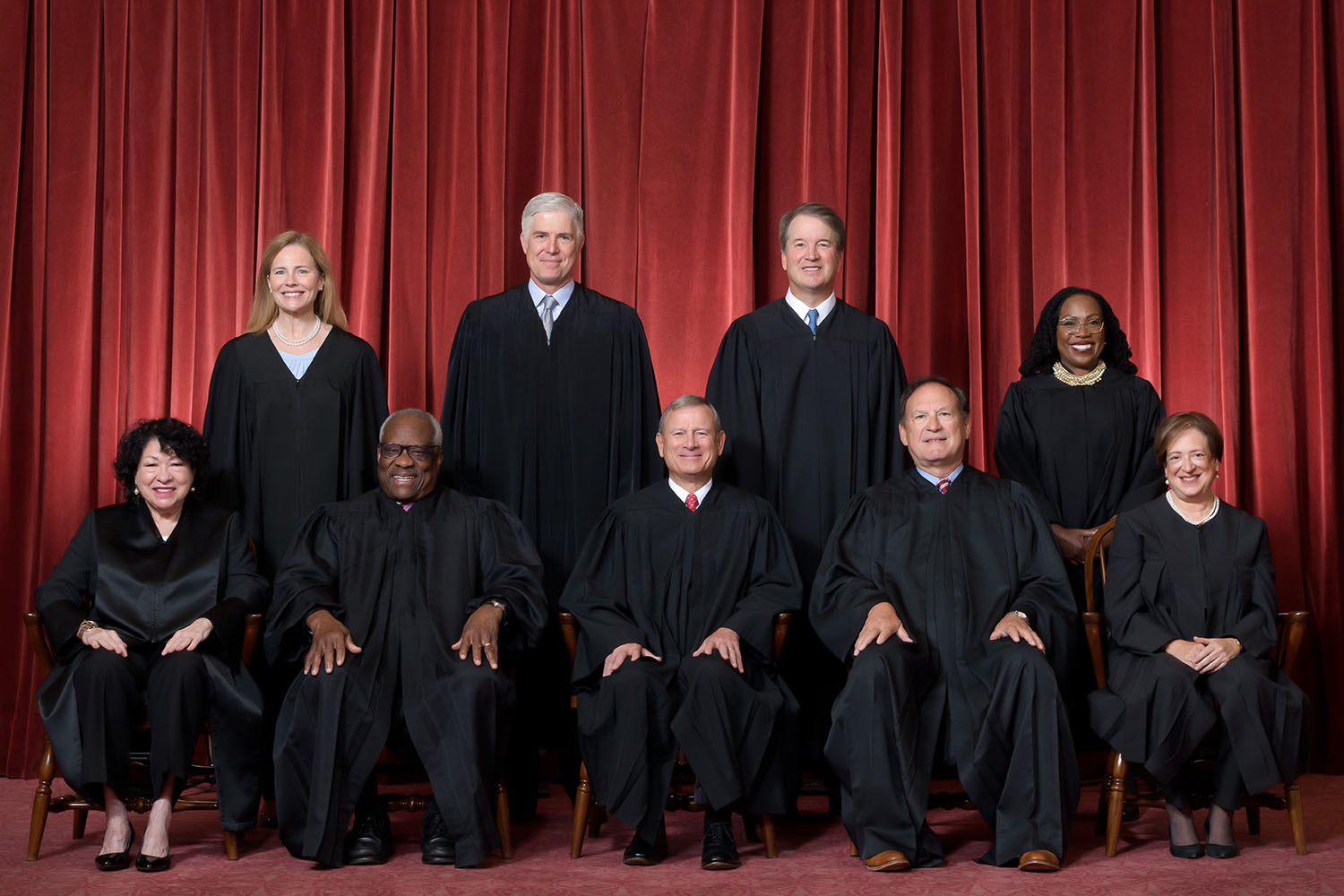

Vox’s Ian Milhiser argues, “Justices Sotomayor and Kagan must retire now.”
We discussed the notion of Sotomayor’s obligation to retire back in March. While I’m less convinced than most commenters that she’s duty-bound to do so, there’s a least a strong argument for it. She’ll turn 70 in a couple of weeks. But Kagan just turned 64; she should still have many productive years ahead of her.
Milhiser’s opening, while perhaps overblown, is reasonable enough:
Let’s not beat around the bush. It is more likely than not that Donald Trump will return to the White House next year. Right now, polling averages show Trump with a slight popular vote lead over incumbent President Joe Biden. And, even if Biden overcomes this small deficit, the Electoral College system effectively makes Trump votes count more than Biden votes.
It’s true that the Electoral College has a slight Republican lean at present, having won the White House twice in recent years despite the Democrat having received a plurality of the vote. While I think Trump will lose again in the fall, there’s a real risk that he wins.
[I]f Justices Sonia Sotomayor or Elena Kagan remain on the Supreme Court past this year, they risk allowing their seat to be filled by a convicted felon who tried to overthrow the duly elected government of the United States of America, inciting an insurrection at the United States Capitol in the process.
This is, frankly, a red herring. Milhiser would be no less upset if it were Mitt Romney or Larry Hogan doing the appointing. The problem he’s trying to solve is Republican Justices.
The full picture for liberals on the Supreme Court is even grimmer. It is still possible that Biden will prevail this November — polls fairly consistently suggest that the most engaged voters prefer the incumbent — but Democrats need a miracle to keep their majority in the malapportioned United States Senate.
Senate malapportionment is such a liability for Democrats that Republicans would not have controlled the Senate at all since the late 1990s if Senate seats were distributed fairly based on population. In the likely event that Democrats lose control of the Senate in November, they may not have a realistic shot at regaining the Senate again until 2030 or even later — and that’s assuming that population shifts do not place the Senate permanently in Republican Party hands.
We already know that, if Republicans control the Senate, no Democrat is likely to be confirmed to the Supreme Court. Just ask Merrick Garland.
That means that, unless Sotomayor (who turns 70 this month) and Kagan (who is 64) are certain that they will survive well into the 2030s, now is their last chance to leave their Supreme Court seats to someone who won’t spend their tenure on the bench tearing apart everything these two women tried to accomplish during their careers.
So, again, this is rather histrionic.
Democrats had a majority in the Senate (including with a VP breaking the tie) in the 107th Congress (2001-2003) with some brief exceptions; the 110th-113th Congresses (2007-2015); and 117th and 118th Congress (2021-present). It’s really unlikely they’re going to be in the wilderness the rest of the decade.
The rest of the piece is argument about what continued Republican control of the Court would mean for cherished liberal causes. And, while characteristically overblown, he’s likely right on these points. But all replacing Sotomayor and Kagan with younger versions would do is increase the likelihood that there remain at least three liberals on the court.
If Trump wins in November, he’ll almost surely get a chance to replace Thomas (75) and Alito (73). It’s conceivable, although less likely, that Chief Justice Roberts (69) would retire as well. But, again, that just keeps the status quo in place.








