Just over one year after his first speech to the United Nations General Assembly. during which he delivered a very belligerent speech targeted largely at North Korea and Iran, the President returned to New York City yesterday and delivered a speech that will likely most be remembered for his rejection of multinational diplomacy and a reassertion of the ‘America First’ foreign policy that was prominent during his campaign:
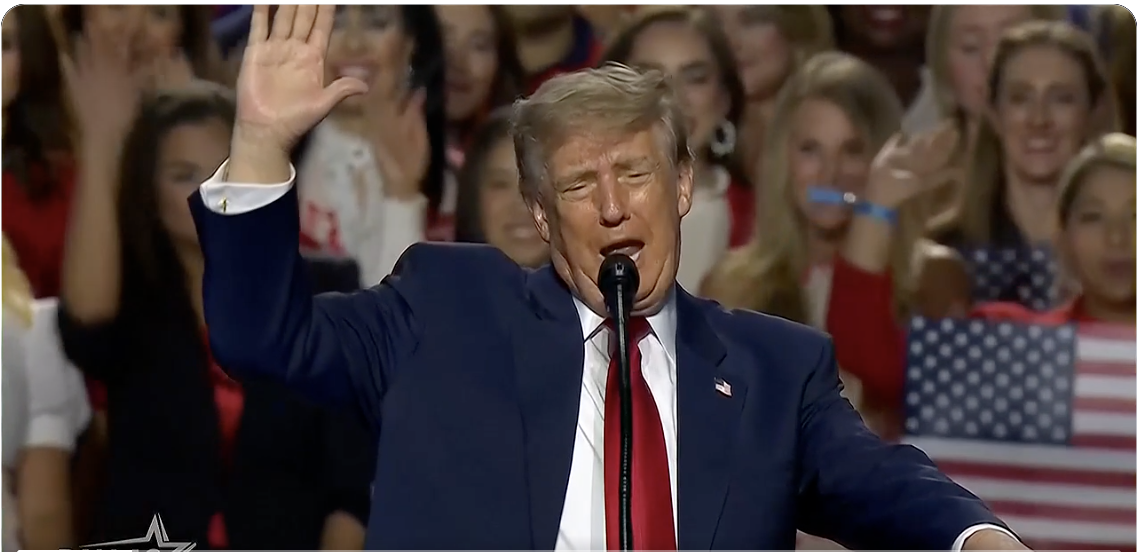
UNITED NATIONS — President Trump thrust his commitment to an “America First” foreign policy back onto the United Nations General Assembly on Tuesday. But in his second address on this diplomatic stage, he sounded as eager to claim credit for his achievements after 20 months in office, as he was to disrupt the world order.
If Mr. Trump had changed, so had his audience — no longer as daunted by the insurgent figure who left them slack-jawed last year when he vowed to “crush loser terrorists,” mocked North Korea’s leader as “Rocket Man” and declared that parts of the world “are going to hell.”
This time, emissaries from around the world listened quietly as Mr. Trump fulminated at foes like Iran and failing states like Venezuela. They nodded as he singled out an enemy-turned-partner, Kim Jong-un of North Korea, expressing optimism for a diplomatic opening that would have seemed far-fetched even a year ago.
But when Mr. Trump declared, “In less than two years, my administration has accomplished more than almost any administration in the history of our country,” the crowd broke into murmurs and laughter.
Briefly disconcerted, the president smiled and said, “I did not expect that reaction, but that’s O.K.”
It was a jarring moment for a leader who usually speaks to adoring crowds at “Make America Great Again” rallies, where his use of superlatives to describe his success draws reliable cheers. Mr. Trump still commands the world stage and he is still capable of upending American foreign policy with a single tweet. But after a year of such bombast, many in the audience at the United Nations treated him almost as a source of levity, not fear.
There is also evidence that foreign leaders are more willing to push back. Speaking after Mr. Trump, President Emmanuel Macron of France said the Paris climate accord had survived despite America’s decision to pull out. In a not-so-subtle slap at Mr. Trump, he proposed that countries refuse to sign trade deals with those who do not comply with the accord.
On Monday, France joined Germany and Britain — as well as the other signatories, Russia, China, and Iran — in recommitting to the Iran nuclear accord, repudiated by Mr. Trump in May. They did so even as Mr. Trump urged Europe to isolate Iran and warned of draconian new sanctions that would penalize America’s allies for not cutting off commercial ties with the Iranians.
President Hassan Rouhani of Iran criticized Mr. Trump for quitting the agreement and made clear he thought the president’s offer to talk with Iran’s leaders was disingenuous (earlier in the day, Mr. Trump insisted it was the Iranians who had wanted to talk).
“It is ironic that the United States government does not even conceal its plan for overthrowing the same government it invites to talks,” Mr. Rouhani said.
Mr. Trump, for his part, condemned Iran’s government as a “corrupt dictatorship” that had looted its people and used the windfall from the nuclear deal to finance what he described as a terrorist campaign that is destabilizing the entire Middle East.
“Iran’s leaders sow chaos, death and destruction,” he declared. “They do not respect their neighbors or borders, or the sovereign rights of nations.”
“Not good,” he added.
Shifting gears, Mr. Trump lavished praise on his efforts to shake up the established order, pointing to his withdrawal from trade deals and international organizations, his recognition of Jerusalem as the capital of Israel, and his meeting last June with Mr. Kim of North Korea, which he said had produced far more than anyone expected.
“The missiles and rockets are no longer flying in every direction,” Mr. Trump said. “Nuclear testing has stopped. Some military facilities are already being dismantled. Our hostages have been released.”
“I would like to thank Chairman Kim for his courage and for the steps he has taken,” he said, adding, “much work needs to be done.”
Mr. Trump’s speech showed a president at once fickle and set in his ways. His emphasis on sovereignty was a repeat of the big theme of last year’s General Assembly address, and it showed that on the core principles of his “America First” foreign policy, Mr. Trump is not budging.
(…)
As he did last year, Mr. Trump relied on his senior domestic adviser, Stephen Miller, for much of the speechwriting. Mr. Miller has spearheaded the White House’s immigration policy and its recent decision to cut significantly the number of refugees the United States will accept.
The national security adviser, John R. Bolton, an even more ardent proponent than Mr. Trump of the virtues of sovereignty, also injected themes. In his own speech at a conference on Tuesday, Mr. Bolton alluded to the frequent description in Iran of the United States as the “Great Satan.”
“If you cross us, our allies, or our partners,” Mr. Bolton said, “if you harm our citizens, if you continue to lie, cheat, and deceive, yes, there will indeed be hell to pay.”
For presidents, General Assembly speeches are a good guide to the evolution of their thinking. In 2009, his first year in office, Barack Obama delivered a soaring paean to the need for diplomacy and collective action. By 2014, Mr. Obama had cast off some early ambitions and dwelt instead on the threat from the Islamic State — an enemy Mr. Trump said Tuesday had been “driven out from the territory they once held in Iraq and Syria.”
But he also promoted his record in the Middle East, where he said his closer ties to Saudi Arabia had helped the fight against extremism, and to Israel, where he said the United States was no longer “held hostage to old dogmas, discredited ideologies, and so-called experts who have been proven wrong, over the years, time and time again.”
Critics said Mr. Trump’s triumphalist tone provoked the derisive reaction. “If you’re boastful, and in the most improbable ways, it’s just becomes outlandish,” said Nicholas Burns, a senior diplomat under President George W. Bush. “It was a sad moment for American leadership.”
The president expressed resentment toward a familiar array of perceived malefactors: allies, who he said did not pay their fair share for military defense; trading partners, who he said exploited unfair agreements that harmed American workers; and oil producers, whom he accused of gouging the United States and other customers.
“OPEC and OPEC nations are, as usual, ripping off the rest of the world, and I don’t like it,” Mr. Trump said. “Nobody should like it.”
While much of the coverage yesterday and this morning regarding the President’s speech concerns the laughter that ensued in the General Assembly chamber after he asserted, falsely, that no American Administration had accomplished as much as he had, there was far more about yesterday’s speech that should be a cause for concern going forward. For example, as Daniel Larison notes in his post this morning, while Trump was far less belligerent toward North Korea than he had been in his speech last year, he was if anything even more belligerent toward Iran than he had been a year ago. Given the fact that this speech comes just five months after he pulled out of the Joint Comprehensive Plan of Action (JCPOA) and amid was it clearly an effort by the Administration to increase pressure on and tensions with the Islamic Republic, As I noted at the time he took that action, there was no basis whatsoever to say that the Iranians were no complying with the terms of the agreement that had been reached in 2015. which is why that most of the reasons that Trump based his decisions on issues entirely unrelated to the nuclear deal itself. Today, Trump is chairing a meeting of the Security Council that is further meant to push his agenda on Iran, but as Larison points out, it’s unlikely to get a very good reception:
Trump asserted that “so many countries in the Middle East strongly supported at my decision to withdraw the United States from the horrible 2015 Iran nuclear deal and reimpose nuclear sanctions,” but in fact only a handful of countries including Israel, Saudi Arabia, and the UAE supported this decision. Almost all other countries in the region and the world consider the reimposition of nuclear sanctions to be illegitimate and unjustified because Iran continues to be comply with the JCPOA. Many of Iran’s immediate neighbors are being negatively affected by the sanctions.
Iraq desperately needs to be exempted from these sanctions because its economy is intertwined with that of its neighbor. Trump’s decision is not popular there, and the sanctions are already causing hardship. The same is true for Afghanistan. Turkey has made it clear that they won’t go along with the U.S. effort to cut off Iran’s oil exports.
The reimposition of sanctions not only hurts the Iranian people, but imposes significant costs on the populations of neighboring countries as well. Trump’s Iran policy is inflicting harm on the entire region, and it is stoking greater resentment against the U.S. It is Trump’s effort to strangle Iran’s economy that threatens and harms Iran’s neighbors more than anything that Iran is currently doing.
More disturbing that the President’s belligerence toward Iran, though, is the extent to which, once again, the President used the occasion of the annual meeting of the General Assembly to put forward a foreign policy vision that is, for lack of a better word, isolationist. This is hardly surprising, of course, given the fact that this has been at the center of the President’s foreign policy since he first became a candidate for the White House. With respect to the United Nations specifically, Trump has proven to be a sharp critic of the organization. To some degree, of course, this position wasn’t all that different from past Republican candidates for President. Like these candidates, Trump criticized the organization as being too bloated and bureaucratic and argued that the United States was bearing an unfair portion of the financial burden of financing U.N. organizations. He also followed the standard conservative practice of claiming that the organization was acting in a manner contrary to American interests and of being unfair to American allies such as Israel in many of its policy positions. During campaign speeches, he would often threaten to withhold or cut back on the amount of money the United States provides to U.N. operations and asserted an “America First” policy that seemed to reject the idea of working together with allies or in concert with international organizations such as the U.N.
Trump’s attacks on the United Nations are only one example of the extent to which he is shrinking away from a strong American role in international affairs. Over the past nine months or so, he has taken a number of steps that have seemingly served the purpose of detaching the United States from its traditional role in the world.
When the President visited Europe last year, for example, he left our closest allies wondering just how committed the President was to the alliance and to its collective defense principles notwithstanding later assurances regarding that commitment on his part. Earlier this summer, the President revoked the exemption from the steel and aluminum tariffs that had been announced back in March that applied to American allies in Europe as well as Canada and Mexico. In doing so, Trump claimed that he was taking this action for “national security” reasons, an utterly silly notion that doesn’t even come close to meeting the test of credulity.
Needless to say, this didn’t go over very well with our allies in Europe and elsewhere. Canada’s Foreign Minister called the new tariffs “absurd,” for example, and European Union officials announced retaliatory tariffs against American goods. Things got even more bizarre in this regard as Trump exchanged harsh words with Canadian Prime Minister Justin Trudeau prior to the G-7 Summit. Once he was at the summit, Trump essentially did everything he could to alienate America’s closest allies, thereby seemingly achieving a goal that Russia and, before it, the Soviet Union had only dreamed of, driving a wedge between the United States and its allies. After the Singapore Photo Op Summit, Trump continued his tirade against Trudeau, while polling revealed that Canadian public opinion about the United States was suffering as a result of American actions and the President’s rhetoric.
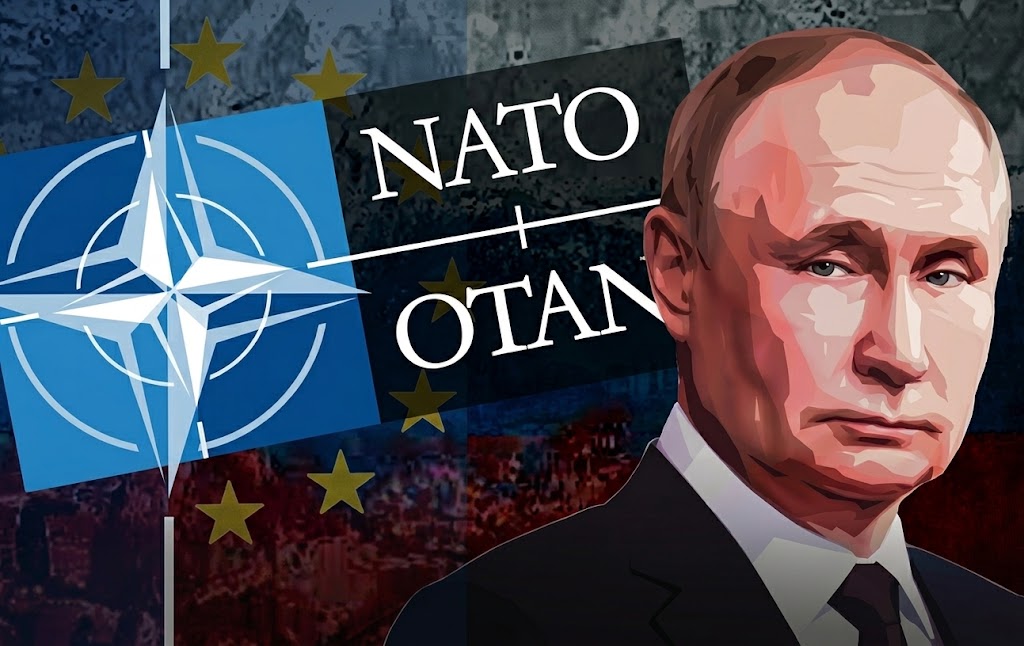
Finally, it was reported at the same time that the President was considering what would effectively be a ban on German-built luxury automobiles, a threat that he continues to make. One month later, of course, Trump met with Russian leader Vladimir Putin in Helsinki and proceeded to perform just as obsequiously as he had in Singapore during his summit with North Korean Leader Kim Jong Un. This meeting, of course, came in the wake of a NATO summit that was about as much of a disaster as you would expect it to be under Trump and a trip to the United Kingdom that didn’t go much better. In the wake of all of this, many of America’s closest allies have begun to question the extent to which they can rely on the United States to continue the leadership role as they have in the past.
I’ve noted in the past, see here, here, and here, the extent to which this alienation of allies has arguably helped Russian President Vladimir Putin to at least partly achieve a goal that the leaders of the old Soviet Union, but it’s clear that it isn’t just Russia that has benefited from this seemingly conscious effort on the part of the Trump Administration to withdraw from the world. Both in response to the efforts of the United States to punish it economically through an ill-advised trade war and in response to the fact that this President has spent the last year and a half wrecking our relationships around the globe. As I noted earlier this month, this has inured to the benefit of not only Russia but also China. Trump’s speech yesterday just made clear that he intends to continue with these foolish policies. Whoever inherits his job, whether it be in 2021 or 2025, is going to have a lot of repair work to do.
You can read the transcript of Trump’s speech at the link and here’s the video: