The psychiatrist that was treating Aurora, Colorado shooting suspect James Holmes identified him as a threat a month before he entered a theater and killed 12 people:
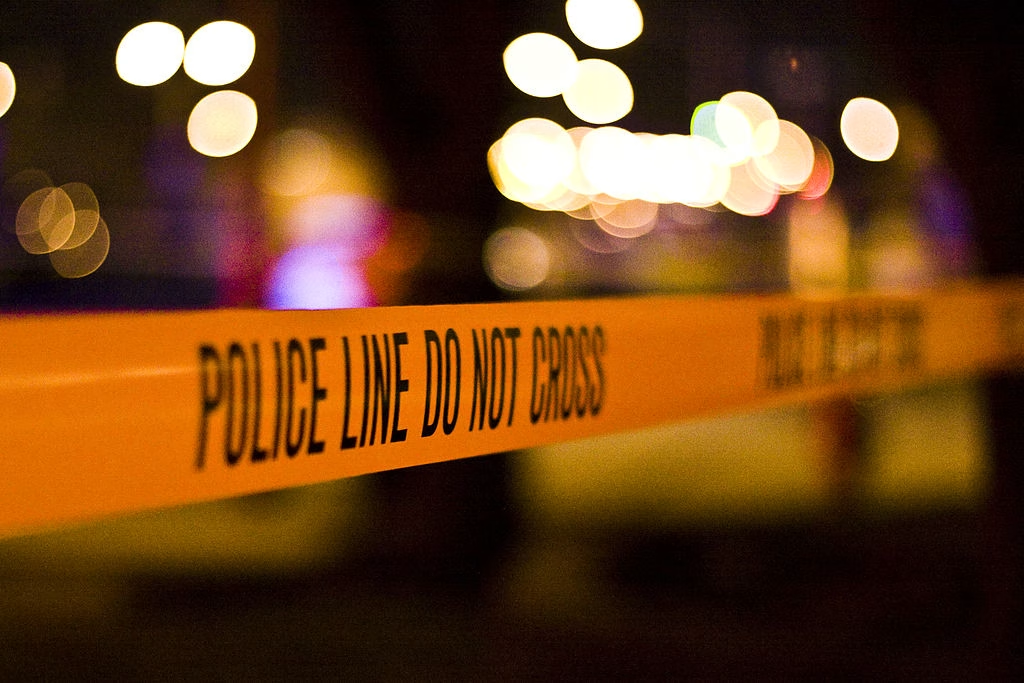
CENTENNIAL — Thirty-eight days before the attack on the Century Aurora 16 movie theater, the psychiatrist treating suspect James Holmes told a police officer that her patient had confessed homicidal thoughts and was a danger to the public, according to newly unsealed court documents in the murder case against Holmes.
The psychiatrist, Dr. Lynne Fenton, also told the officer that Holmes had stopped seeing her and had been threatening her in text messages and e-mails, the documents state. The officer, Lynn Whitten, responded by deactivating Holmes’ key-card access to secure areas of University of Colorado medical campus buildings, according to search-warrant affidavits.
But the documents don’t reveal what — if anything — campus authorities did to investigate Holmes until 38 days later, when 12 people were dead in the July 20 movie-theater shootings, 58 more were injured by gunfire and Aurora police came to campus to ask questions.
“Dr. Fenton advised (Whitten) that through her contact with James Holmes she was reporting, per her requirement, his danger to the public due to homicidal statements he had made,” one search-warrant affidavit states.
Other than revoke Holmes’s Student ID, it’s unclear what university officials did, if anything. It sounds quite familiar to the what happened to Tucson shooter Jared Loughner, who was kicked out of the Community College he was attending after exhibiting what was deemed to be dangerous behavior. In Loughner’s case, there was no follow-up outside the university and it appears that the same thing happened with Holmes. And we can see what the consequences of that were.