 Faced with new regulations limiting some especially unpopular practices, many banks will introduce different practices, also sure to be unpopular but not yet illegal, to replace them.
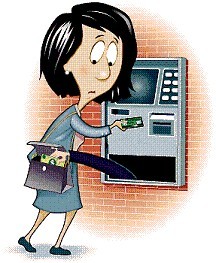
The nation’s banks will be bombarding customers with new fees and products in 2010 as they try to replace more than $50 billion in revenue wiped out by new rules that clamp down on certain business practices. So far, the changes are mostly concentrated in checking accounts and credit cards. In addition to attaching new fees to old products, banks are introducing new types of accounts that they hope will reel in new customers and reduce their funding costs.
For plastic, the new rules go into effect in February as part of the Credit Card Act of 2009. The rules will limit some interest-rate increases, require more disclosure to customers and prohibit banks from raising interest rates on current balances unless a customer is at least 60 days behind in a payment. Credit-card issuers collected $22.9 billion in penalty fees—such as those assessed for late payments—in 2009, up from $19 billion in 2008, said [xxx], who runs a credit-card consulting firm in Thousand Oaks, Calif.
Credit-card companies already have been racing to slip new fees and practices into customer contracts ahead of the law. Issuers are closing accounts, switching cards with fixed interest rates to variable rates and introducing cards that have an annual fee.
[xxx], who regularly shops at sporting-goods chain, recently was notified that he will be charged a $1 “processing fee” each time he receives a printed statement of his Gander credit-card account rather than an electronic one. The 50-year-old paralegal said he is prepared to cut up the credit card even though he likes the loyalty rewards that come with it. “It’s not like I can’t afford it, but it’s another little stick in the consumer’s eye,” Mr. Moss said.
The Gander Mountain card is issued by World Financial Network National Bank, a unit of Corp., of Dallas. The company, which also issues credit cards for women’s clothing chain and lingerie maker Victoria’s Secret, says that the decision to charge the fee is partly tied to the costs that it will incur from the new rules. “One requirement of the Credit Card Act of 2009 is that monthly billing statements will now have to include significantly more information pertaining to the cardholder’s terms and conditions, thus increasing the amount of paper, production and postal expenses as well as having a greater environmental impact,” the company said in a written statement.
[…]
Other banks are expected to eliminate free checking completely, raise fees on safe-deposit boxes and charge customers more for issuing a stop-payment on a check.
“There may be some areas of opportunity that banks really haven’t focused on because they had the engine of overdraft fees,” said [xxx], who specializes in the community-banking industry at SNL Financial in Charlottesville, Va. [xxx], a consultant at marketing firm Haberfeld Associates in Lincoln, Neb., said such a strategy can backfire with customers. He is urging his community-bank clients to retain free checking and other services in order to differentiate themselves from big banks that are likely to increase fees.
Many of the fees being regulated away by the Credit Card Act of 2009 were indeed unconscionable and I have no real objection to the government’s intervention. Our modern economy virtually requires people to use credit cards and many of the practices are either industry-wide (and thus unavoidable) or sufficiently well hidden in the 30-page contracts that even educated consumers are unaware of them until hit.
At the same time, the financial industry has evolved into one that relies on low teaser rates to attract customers and then a myriad of complicated additional charges to make a profit. It was highly predictable that companies would find innovative ways to replace revenues taken away by the new law.
Because switching banks is a royal pain — most of us have direct deposit, a number of automatic transactions, and a multitude of other accounts tied to our primary bank account — a whole lot of people will put up with this. Many likely won’t even realize they’re being hit. But, so long as the practices don’t become universal, a significant number of people will indeed take their business to places that treat them fairly. Certainly, I’ve been known to cancel accounts and go through the aggravation of switching over the principle of the thing.
Note: I have no idea why the story redacted all the proper names; I replaced the blanks with [xxx].