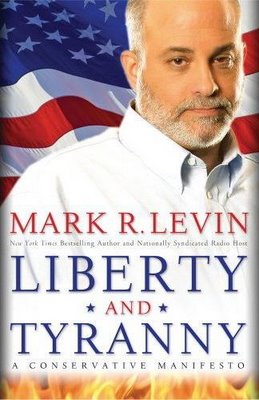

Chapter Three – “On Faith and the Founding” – pp. 24-35
We kick this chapter off with the type of paragraph that sounds incredibly deep and meaningful — if you’re stoned.
Reason cannot, by itself, explain why there is reason. Science cannot, by itself, explain why there is science.
Why not? Because, according to Levin
Reason and science can explain the existence of matter, but they cannot explain why there is matter. They can explain the existence of the universe, but they cannot explain why there is a universe.
Why can’t they? Levin doesn’t say. He simply asserts this. He goes on in the same vein for the laws of nature, life, and consciousness.
But here’s the thing — there’s actually quite a LOT of science and philosophy on the cutting edge working to explain all of these things! There are teams researching why matter came about. There are tons of physicists examining the origin of the universe. There’s lots of exciting work going on to explain the origin of life and the origin and nature of consciousness. Anyone who reads the occasional Discover or Scientific American at the airport knows this. Of course, why I’m surprised at Levin’s ignorance on this point when he’s ignorant of basic facts of American history is a mystery.
He then goes on to explain that:
Reason itself informs man of its own limitations and, in doing so, directs him to the discovery of a force greater than himself–a supernatural force responsible for the origins of not only human existence but all existence, and which itself has always existed and always will exist.
If you expected this to be the beginning of at least a basic set of arguments for the existence of a God, you clearly haven’t been paying attention. This isn’t the introduction to the argument. It’s the end. To Levin, the matter is self-evident. Which tells me he never even took an intro to philosophy course.
Mark Levin then goes on to assert that Natural Law exists — because Edmund Burke said there was. End of argument.
He then moves on to the beginning of a discussion about the faith of the Founding Fathers. He starts with the Declaration of Independence, which he notes states that “all men are endowed by their Creator with certain unalienable rights.” Of course, what Levin doesn’t mention is that the “endowed by their Creator” language was a political compromise. The original draft doesn’t include it. Nor does it include the reference to Divine Providence that Levin also mentions.
Levin then goes on to ask, “Is it possible that there is no Natural Law and man can know moral order and unalienable rights from his own reasoning, unaided by the supernatural of God?” Levin’s answer, unsurprisingly is no.
This position would, it seems, lead man to arbitrarily create his own morality and rights, or create his own arbitrary morality and rights–right and wrong, just and unjust, good and bad, would be relative concepts suceptible to circumstantial applications.
From here, Levin then goes on to point out that every major sacred text of every major world religion provides clear and undeniable statements of individual rights and liberties, not to mention a clear delineation of Natural Law.
Ha ha, just kidding! He doesn’t do that because none of the major religious texts have any mention of individual rights whatsoever. They’re a product of philosophy, not religion. Philosophy influenced by religion, to be sure. For example, the great Muslim legal scholar Ibn Rushd was one of the first people in the Western World to advocate equality between men and women. Other Muslim legal scholars first developed the idea of freedom of religion. Muslim commentators on the Stoics, Aristotle and other Greek philosophers also began some preliminary steps towards a philosophy of rights. Their writings were transmitted to Europe after the Crusades, where they influenced a number of western philosophers, notably Thomas Aquinas and Giordano Bruno, and later John Locke, who in many ways was the intellectual father of the American revolution.
But despite the religious origins of the philosophy of rights, the fact remains that the doctrine was fully developed through philosophy. No document which claims to be divine revelation makes any mention of the doctrine of individual rights. Period. So this entire line of argumentation by Levin is absolute nonsense.
After this nonsensical discussion of Natural Law, I have to admit that Mark Levin surprised me by providing a full paragraphs of history that is actually correct. He notes — rightly! — that the colonies were settled by different religious sects, and there was a wide spectrum of religious tolerance among them. The next paragraph is actually about 80% right, but then he blows it at the end:
But when [the colonies] bound themselves to the Declaration’s principles, they bound themselves to, among other things religious liberty. It is little understood that the Declaration was a declaration of political and religious liberty.
*sigh* No, it wasn’t. The concept isn’t discussed in the Declaration at all.
Levin then goes on to point out that Christianity is America’s dominant religion — another true fact! He also points out Judeo-Christian values influence American law — another true fact! We’re on a roll! Until, well, crap.
Christianity itself does not preach operational dominance over the body politic or seek justification from it
This would certain be a surprise to anyone who lived in a Christian country until, oh, the late 18th Century. I suppose that Levin has never heard of the Divine Right of Kings, the Inquisition, or Ecclesiastical Courts. This, Levin notes, is a contrast to Islam. So I suppose that in Mark Levin’s fantasy history of Spain, it was the Muslims who had an Inquisition and drove all the Christians and Jews out of Spain, rather than the reality that the Muslims who ruled Spain respected religious liberty, which lasted until Ferdinand and Isabella successfully drove all Muslims and Jews out of Spain. And I also suppose that in Levin’s world, Islam was the official religion of the Roman and Byzantine Empires.
In point of fact, it’s interesting that Levin should bring up the idea of Christianity not purporting dominance in the context of the Founding. Apparently Levin is completely unaware that a great number of American Tories were opposed to the Revolution on Christian grounds! Specifically, their opposition to the Revolution derived from Romans 13:1-2, which reads:
Let everyone be subject to the governing authorities, for there is no authority except that which God has established. The authorities that exist have been established by God. Consequently, whoever rebels against the authority is rebelling against what God has instituted, and those who do so will bring judgment on themselves.
To be sure, many of the Revolution’s supporters had interpretations of Romans 13 which they believed were consistent with the American Revolution (James Otis’ writings on this provide a good insight as to how Christian revolutionaries interpreted this passage). But this was a contentious issue at the time.
Mark Levin then goes on to note — rightly! — that the purpose of the First Amendment was to protect religious liberty. Indeed, I agree with Levin that is is one of the best things to come out of the Revolution, and the United States has a lot more religious tolerance than other nations, even if there have been some issues along the way.
The next couple of paragraphs just talk about how the Statist boogeyman doesn’t believe in individual rights or the supernatural blah blah blah blah.
After that, Levin begins his discussion of the rise of secularism, which he blames (naturally) on the New Deal. First, he notes that Justice Hugo Black’s decision in Everson v. Board of Education, which stated that the First Amendment forbids taxpayer subsidies of religions institutions was a “betrayal of America’s founding.” He blames this decision on Black’s dislike of the power of the Catholic Church — a dislike that Black shared with John Adams and Thomas Jefferson, I might add. Because in Levin world, it’s impossible that two people might reasonably disagree about a Constitutional principle without some nefarious motive.
Mark Levin then laments the fact that religious teachings are no longer made in public schools. (I’m interested to see whether, later one, he supports public education, since many conservatives of his stripe don’t.) Why religious teaching in public school doesn’t violate the First Amendment isn’t something that Levin actually explains. He notes that states did at the time of the Founding, but that’s because until the 14th Amendment, the Bill of Rights didn’t apply to state governments, so this argument makes no sense.
Levin then goes on to say that a theocracy is not established if “certain public schools allow their students to pray at the beginning of the day”. But that’s bullshit. Some religions don’t include prayer. Some religious beliefs — like my own — prohibit public prayer. Some people aren’t religious at all. So prayer at the beginning of the day is a clear endorsement of a particular religious belief.
Levin also believes that theocracy isn’t established by “Christmas or Easter assemblies.” Which ignores the fact that only some Christians celebrate Christmas and Easter. And not all sects celebrate these holidays on the same day! Indeed, the date of Christmas and Easter have been the causes of struggle between different Christian sects! So even picking a date of say, December 25th for Christmas, is to endorse Catholics and Protestants to the exclusion of Eastern Orthodox Christians, who celebrate a different Christmas Day.
Levin also dismisses the idea that a public display of the Ten Commandments is a violation of religious liberty, despite the fact that different sects of Jews and Christians all have different versions of the Ten Commandments! If a Town puts up, say, the Catholic version of the Ten Commandments, it’s pretty much saying that Jews and Protestants aren’t a part of the community.
In Mark Levin’s world, these things are no big deal because they don’t “require people to worship against their beliefs”. But that’s wrong. This is another level entirely. If a government promotes one religion above others, that’s an establishment of religion even if free exercise is still permitted.
Levin then goes on to say that secularism is bad because it’s opposed to religion and religion is important but Statists hate it and blah blah blah. Levin then closes with a quote by Barry Goldwater, which he claims shows that Goldwater believed in a link between God and the Founding of this country. I’m going to close this post with a quote from Barry Goldwater that I like a whole lot more:
But like any powerful weapon, the use of God’s name on one’s behalf should be used sparingly. The religious factions that are growing throughout our land are not using their religious clout with wisdom. They are trying to force government leaders into following their position 100 percent. If you disagree with these religious groups on a particular moral issue, they complain, they threaten you with a loss of money or votes or both.
I’m frankly sick and tired of the political preachers across this country telling me as a citizen that if I want to be a moral person, I must believe in “A,” “B,” “C” and “D.” Just who do they think they are? And from where do they presume to claim the right to dictate their moral beliefs to me?
And I am even more angry as a legislator who must endure the threats of every religious group who thinks it has some God-granted right to control my vote on every roll call in the Senate. I am warning them today: I will fight them every step of the way if they try to dictate their moral convictions to all Americans in the name of “conservatism.”
Amen to that.
Next time: Levin attempts to explain the Constitution!