Breaking: Trump Loses SCOTUS Tariff Case
A 6-3 ruling takes away one of Trump's favorite toys.

The NYT reports: Live Updates: Supreme Court Strikes Down Trump’s Sweeping Tariffs.
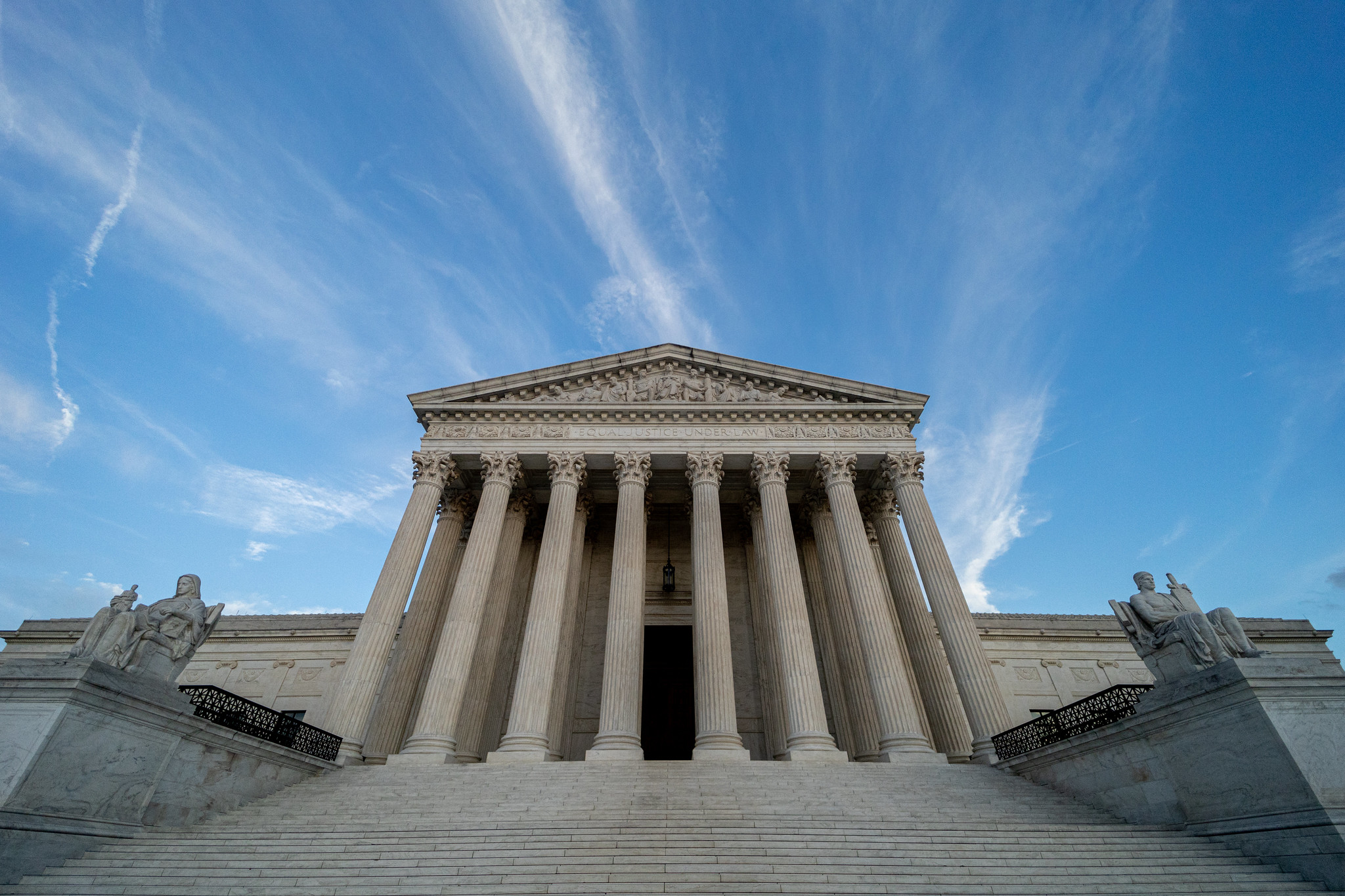
The Supreme Court ruled Friday that President Trump exceeded his authority when he imposed sweeping tariffs on imports from nearly every U.S. trading partner, a major setback for his administration’s second-term agenda.
The court’s 6-3 decision has significant implications for the U.S. economy, consumers and the president’s trade policy. The Trump administration had said that a loss at the Supreme Court could force the government to unwind trade deals with other countries and potentially pay hefty refunds to importers.
Mr. Trump is the first president to claim that a 1970s emergency statute, which does not mention the word “tariffs,” allowed him to unilaterally impose the duties without congressional approval.
[…]
Early last year, he invoked the International Emergency Economic Powers Act of 1977 to set tariffs on imported goods from more than 100 countries. He said his goal was to reduce the trade deficit and spur more manufacturing in the United States. Since then, he has used the tariffs to raise revenue and to pressure other countries in trade negotiations.
The dissenters were Alito, Thomas, and Kavanaugh, should we ever need further evidence of which Justices are pro-dictatorial rule. That may sound harsh, but I don’t know any other way to put it. I will reserve the right to revise my view once I have had the chance to review the opinion and the dissents, but given the statutory and constitutional language on this topic, I don’t think I am being hyperbolic.
Writing for the majority, Chief Justice John G. Roberts Jr. said the statute does not authorize the president to impose tariffs.
“The president asserts the extraordinary power to unilaterally impose tariffs of unlimited amount, duration, and scope. In light of the breadth, history, and constitutional context of that asserted authority, he must identify clear congressional authorization to exercise it,” the chief justice wrote.
I am not a lawyer, but all of this has seemed pretty evident to me from the get-go.
Under the 1970s-era law, the president has the authority to take certain steps in response to a national emergency to “deal with any unusual and extraordinary threat” to “the national security, foreign policy or economy of the United States.” That includes the power to “regulate” the “importation” of foreign property. Past presidents have relied on that language to place sanctions or embargoes on other countries, but not to impose taxes. But the administration has argued that phrase also gives Mr. Trump the power to levy tariffs.
This case was on my personal mental list of red lines that, once crossed, would have taken us deeper into authoritarian rule. I am relieved that the obviously constitutionally correct interpretation was upheld, but I remain concerned that a third of SCOTUS was willing to grant the president these powers.
The ruling can be found here.
Some highlights (emphases mine). These are from the syllabus section that summarizes the ruling.
Held: IEEPA does not authorize the President to impose tariffs. The
judgment in No. 24–1287 is vacated, and the case is remanded with
instructions to dismiss for lack of jurisdiction; the judgment in No. 25–
250 is affirmed.[…]
Article I, Section 8, of the Constitution specifies that “The Congress
shall have Power To lay and collect Taxes, Duties, Imposts and Excises.” The Framers recognized the unique importance of this taxing
power—a power which “very clear[ly]” includes the power to impose
tariffs. Gibbons v. Ogden, 9 Wheat. 1, 201. And they gave Congress
“alone . . . access to the pockets of the people.” The Federalist No. 48,
p. 310 (J. Madison). The Framers did not vest any part of the taxing
power in the Executive Branch.[…]
the argument that “regulate” naturally includes tariffs because the term lies between two poles in IEEPA—“compel” on the affirmative end and “prohibit” on the negative end—is unavailing.
From the full opinion.
[In regard to war time emergency powers:] The United States, after all, is not at war with every nation in the world.
[…]
the President must “point to clear congressional authorization” to justify his extraordinary assertion of the power to impose tariffs. Nebraska, 600 U. S., at 506
(internal quotation marks omitted). He cannot.[…]
The President asserts the extraordinary power to unilaterally impose tariffs of unlimited amount, duration, and scope. In light of the breadth, history, and constitutional
context of that asserted authority, he must identify clear congressional authorization to exercise it.
Form Gorsuch’s concurrence:
The President claims that Congress delegated to him an extraordinary power in the International Emergency Economic Powers Act (IEEPA)—the power to impose tariffs on practically any products he wants, from any countries he chooses, in any amounts he selects. Applying the major questions doctrine, the principal opinion rejects that argument. I join in full. The Constitution lodges the Nation’s lawmaking powers in Congress alone, and the major questions doctrine safeguards that assignment against executive encroachment. Under the doctrine’s terms, the President must identify clear statutory authority for the extraordinary delegated power he claims. And, as the principal opinion explains, that is a standard he cannot meet.
Whatever else might be said about Congress’s work inIEEPA, it did not clearly surrender to the President the sweeping tariff power he seeks to wield.
The refunds are going to be HUGE!!!
lol
So much for our tariff bonus checks.
@Daryl:
At least one of the justices — Gorsuch in his concurrence? Kavanaugh in his dissent? — brought up the subject of international trade agreements which other countries joined only under threat of (illegal) tariffs.
I think there is something in the United States Constitution about the Congress having the power to declare war…
…doesn’t mean shit to a tree…
While it’s a welcome decision that shows the SCOTUS aren’t rubber-stamping all of Trump’s efforts (just the vast majority), it’s hard to draw any broad conclusions about it. Free trade is something that conservatives actually care about (unlike most things the GOP has long claimed to care about), and the decision in the long term will be politically beneficial to Trump, even though Trump himself doesn’t see it that way, because it will soften the blow his tariffs have had to the economy.
@Kylopod:
Agreed.
But I think you would have to admit how bad it would have been if they had upheld Trump’s interpretation of IEEPA.
This is a big deal and a relief, even if it only fixes one problem out of a chorus of so many.
Don’t get me wrong, we are still deeply in an anti-democratic crisis, but this steps us back a bit, and I think it should be taken as the good news that it is.
@Kylopod: And yes, this could be helpful to Trump politically. But, again, the damage that the ruling would have done to the very basic fabric of the constitutional order, had it gone the other way, would have been immense.
Three quick notes:
1) It took about 9 months from the inception of the illegal tariffs to the Fixer Court striking them down. This allowed a lot of damage to accumulate.
2) What’s to prevent El Taco from ignoring the Fixers this time and order customs to retain any shipments that don’t pay tariffs. Who’s going to enforce it? The Taco DOJ with his gigantic photo hanging on its headquarters?
3) The Fixer court will rubber stamp any Taco whim and tantrum orders that do not antagonize the donor base, the real owners of the US government.
@Kylopod and@Steven L. Taylor:
I don’t expect Trump to give up on his tariffs. His only idea for foreign policy objectives is bullying and his only idea for bullying foreign powers is through tariffs. Do we think Trump is suddenly going to learn diplomacy?
He’ll try to get Congress to impose some tariffs or give him some added power to impose them himself, or he’ll find some legal justification besides IEEPA he can claim, or he’ll slow walk or ignore the SCOTUS ruling.
Per CNN reporting this morning:
There’s ketchup on the walls of the WH dining room today, I guarantee.
@Scott F.:
Yes, Trump and his enablers will come up with another ILLEGAL way to impose tariffs and SCOTUS will again drag its feet while American importers and consumers foot the bill. Roberts could have stopped this bullsheet with this: “Only Congress can impose tariffs. See Article 1, Section 8(1), U.S. Constitution.”
It’s worth noting that while this decision makes American tariffs harder to impose, it has no effect on retaliatory tariffs various countries have laid on us. With Trump promising to find a work-around I don’t imagine they will be eager to drop their own tariffs.
Tough luck, Iran, Trump is going to have to bomb you to avoid looking like a beta cuck.
@Charley in Cleveland:
The illegal workarounds have been annunced.
The foot dragging will begin as soon as a case is won before a lower court, and the Taco so-called administration unsuccessfully appeals it. Say in three months.
From NYT:
Pure projection.
@gVOR10: Projection to be sure, but nothing about this administration should ever be called pure.
Brad DeLong has the best take I’ve seen so far:
The Roberts Doctrine – not only does the prez have criminal immunity, he can do any damn thing he wants for a year, no matter how blatantly unconstitutional. But Roberts does do a great job at pretending to not be a partisan hack.
Yet, it would be uncouth to call Trump a fascist.
@gVOR10:
Here is the linky:
“Brad DeLong“
@Joe:
“Projection to be sure, but nothing about this administration should ever be called pure.”
As Tallulah Bankhead said, “I am as pure as the driven slush”.
@Moosebreath: And she was a saint by comparison.
@gVOR10:
I’m more than half convinced Uncle Thomas has never read the constitution. At least not all of it.
I mean, it took me like 30 seconds to find out Article I Section 8 gives Congress the power to regulate foreign trade.
Heavens above.
A bit of good news for a change.
Though it’s a sad commentary on the current Court that the verdict was ever in doubt; because though i.a.n.a.l., and merely an impertinent foreeign interloper, both the Constitution and the statues seem clear as day.
Where did Alito, Thomas, and Kavanaugh leave their legal brains?
Asuuming they eve had any.
Now, is there any chance that the congressional GoP will become vertebrates any time soon?
On both trade and war powers?
(Not going to hold my breath, tbh)
@JohnSF:
Sure. It happens just as soon as they decide not to run for re-election. Risk-free courage. Bravery without stakes.
But if the mid-terms go badly for Republicans, more will suddenly grow tiny, vestigial spines. Trump will be a lame duck, they’ll be out of power, and they will dimly perceive that the zeitgeist has shifted.
Just understand that they will learn nothing, come to no greater understanding, and never become fully-formed human beings. We have to play the game to win, but however much we have to bite our tongues, we must never forget and never forgive and, when opportunity knocks, we have to fuck them up. They’re not getting the modern equivalent of The Lost Cause myth.
I confess I’m surprised. The narrow majority of the US Court of Appeal decision – it was 7-4 to reject the appeal – suggested there was ample scope for a majority of Supreme Court justices to find reasons to uphold it. I expected something along the lines that Congress did not prescribe objective criteria for what constitutes an emergency, therefore its a matter for political judgement, and since Congress could easily correct him if the president over-stepped the limits it had intended, it was a political dispute between the executive and Congress and not one in which humble judges should insert themselves.
@gVOR10:
The true villains in this saga were the judges who stayed the original order of the US Court of International Trade. Clearly the decision ruling the tariffs unlawful was likely to succeed on the merits, the government was not going to suffer irreparable harm if it had to suspend them while the appeals ran their course, but allowing them to remain in place knowing they would probably be ruled unlawful eventually was a recklessly irresponsible recipe for global chaos.
A temporary injunction blocking the tariffs should have remained in place pending the outcome of the appeals.
@Michael Reynolds:
Indeed.
Do not proclaim your intent on vengeance before you win.
Bite your tongue, have patience, play for the middle ground.
Then, once you have won f@ck them up!
Break the billionaires, do a Roosevelt on the Courts.
Don’t go in with “defund ICE”: prosecute the bastards once you have power.
Smile, and have a knife ready for the day. 🙂
Perfomative display counts for nothing; power is what matters.
And the will to use it.
Because it should be obvious, by now, that the effective, but legal, use of power is going to be necessary.
My analogy is how the Liberals broke the Tory aristocracy in the UK in the early 20th century.
@JohnSF:
@Michael Reynolds:
I confess, I am a bit sad as an external observer.
I really never thought, that for all their faults, the US Republicans would become so damned by a simultaneous addiction to idiotically short-sighted ultra-rich self serving pseudo-libertarianismand stupid racist/Christianist reactionary populism.
Mea culpa.