Partially, the following is just me catching up on some news relevant to my recent travels. And partially, we can file the following under such headings as “science matters,” “elections have consequences,” and “collective action is hard.”
Let’s start with the Copernicus Climate Change Service: Copernicus: Highest July global ocean surface temperatures as exceptionally hot, dry conditions fuel wildfires in Europe.
In July 2026, prolonged hot and dry conditions in western Europe led to the spread and intensification of extreme wildfires. The month also saw the highest sea surface temperature (SST) ever recorded for July across the extra-polar oceans, partly fuelled by developing El Niño conditions in the equatorial Pacific, as reported by Copernicus Climate Change Service (C3S), implemented by the European Centre for Medium-Range Weather Forecasts (ECMWF).
July saw exceptionally high temperatures for the month across a large portion of the tropical Pacific, an area where El Niño conditions are present and forecast to further strengthen in the coming months. Around Europe, record high SSTs along the Atlantic and western Mediterranean were associated with widespread strong or severe marine heatwaves, affecting coastal communities and ecosystems.
It is rather difficult not to see the obvious trend since the turn of the century, and especially since the early 2010s. This was, I would note, predicted by climate scientists who have been trying to warn us for many decades. While I recognize some amount of annual variation, there is no reason to assume that the basic trend is going to reverse itself. This is rather clearly not just “the weather.”

As it pertains to the rivers:
Western Europe experienced its hottest June-July period on record and July saw the third and fourth heatwaves since May, marking an exceptional run of extreme heat this summer. Much of the region also saw the widespread dryness observed in May and June persist and intensify, with exceptionally low rainfall and/or soil moisture reported for France, Spain, parts of Germany and the UK. Across the dry regions, river flows were much lower than average or exceptionally low, with the Seine, Rhine and Danube particularly affected, impacting water supply, irrigation and energy production in several countries.
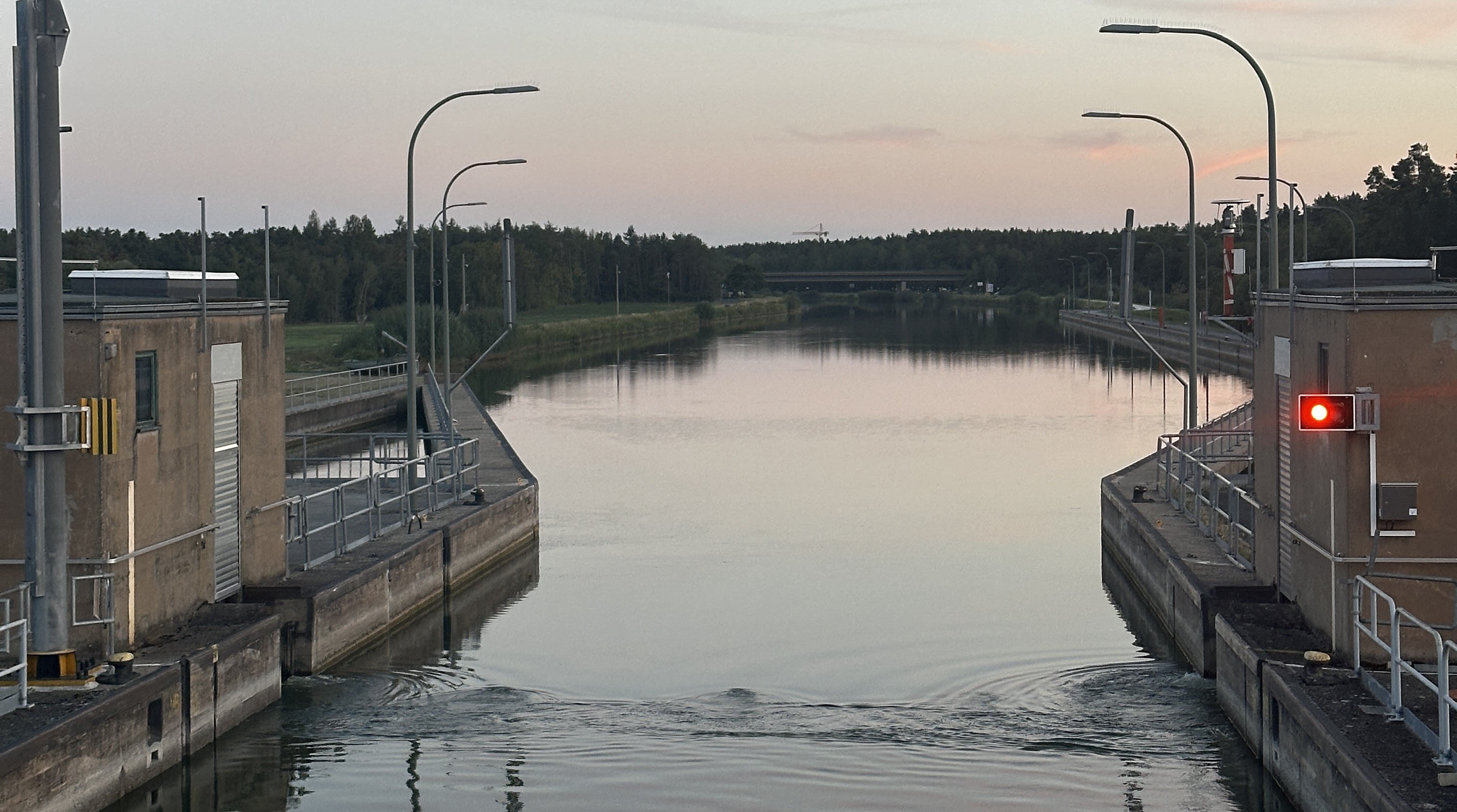
As much as the impact on tourists was annoying (but will also have long-term economic effects), the impact on agriculture and power generation is important. While I certainly do not know what the area is “supposed” to look like, I have some knowledge of plants, and a lot of the fields and trees looked stressed by heat to me. The impact on humans working and living in buildings not suited to such heat is also quite significant.

Meanwhile, via National Geographic: Dozens of Nazi-Era Ships Are Emerging in the Danube. How Did They Get There?
The wrecks first broke the river’s surface in 2003. In 2011, another year of low water on the Danube, Karović dove underwater and filmed several hulls. The wrecks reappeared in 2022, and again in 2024. But nothing in the record matches this summer, when the river has fallen so far that hulls, only briefly glimpsed before, now stand clear of the water. “The situation is extraordinary,” says Karović.
There are some photos in the piece worth a look, as well as its discussion of the deeper issues (it is worth having to provide your email address to read, IMO).
A punishing heat wave has left much of Europe in drought. With rivers running at record-low levels, the economic consequences have been severe. Unable to bear their usual weight, barges must sail half-loaded, driving up the cost of everything that moves by water. Power plants have been pushed to the brink of shutdown, and governments across Central and Eastern Europe have had to conserve electricity.
Compounding the problem is that the heat is not landing on healthy rivers. In their natural state, Europe’s rivers once spread into side channels and stored water across the land around them. But two centuries of damming and dredging for power and navigation have stripped much of that capacity away.
“European rivers are already sick,” says Ulrich Eichelmann, a conservationist who leads the Vienna-based Riverwatch. “This heat wave makes the damage more visible.”
[…]
Scientists say climate change is driving the drought, but not in the way most people assume. Across eastern Europe, rainfall shows no clear long-term decline. What has changed is the air itself.
[…]
Record low water levels on the Danube are exacerbated by how Europe has engineered its rivers.
The continent’s waterways are the most dammed on earth, and two centuries of straightening, dredging, and diking have stripped away the floodplains and wetlands that once absorbed water and released it slowly.
See also Nova News: European drought exposes mammoth bones as major rivers hit record lows.
Sinking water levels in the Danube near the northeastern Bulgarian city of Ruse have unveiled bone fragments that “very likely” belonged to a woolly mammoth that lived during the Ice Age, according to Nikolay Nenov, director of the Regional Historical Museum.
Specialists have identified a jaw bone, fragments of tusks, part of a shoulder blade and a femur among the remains, which were spotted by a resident of the village of Ryahovo on Wednesday. The bones are well preserved and were concentrated in the same place, indicating they all belonged to the same animal, Nenov said.The young mammoth’s bones show a dark colour that may indicate it spent considerable time in a marshy environment before dying out about 4 000 years ago. Specialists are planning further searches of the area in hopes of finding additional remains.
Climate change: nature’s archeaologist!
More from The Atlantic: Photos: European Rivers Fall to Record Lows and The Maritime Executive: Viking River Cruise Ship Evacuated After Grounding on the Danube.