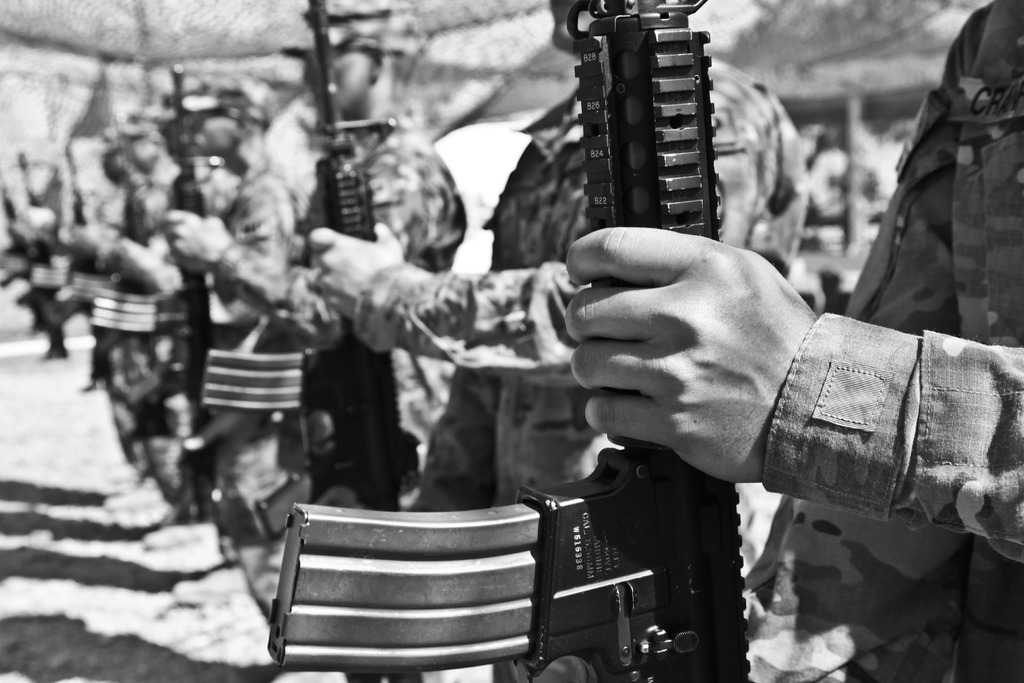
Wisconsin Sen. Russ Feingold penned on op-ed in the Christian Science Monitor questioning the wisdom of increasing U. S. troop strength in Afghanistan:
We need to ask: After seven years of war, will more troops help us achieve our strategic goals in Afghanistan? How many troops would be needed and for how long? Is there a danger that a heavier military footprint will further alienate the population, and, if so, what are the alternatives? And — with the lessons of Iraq in mind — will this approach advance our top national security priority, namely defeating Al Qaeda?
We must target Al Qaeda aggressively, and we cannot allow Afghanistan to be used again as a launching pad for attacks on America. It is far from clear, however, that a larger military presence there would advance these goals.
To the contrary, it might only perpetuate a counterproductive game of cat and mouse that has led to a steep erosion in Afghans’ support for foreign forces in southwestern Afghanistan, the main Taliban stronghold. One of the most recent polls found that, while most Afghans support the US presence, only a minority rate it positively.
He concludes with a set of proposals some of which I agree with:
- Encourage a more representative, less corrupt Afghan government.
- Provide incentives for Afghan farmers to produce crops other than opium. I think, contrariwise, that we should buy up all of the opium that Afghan farmers can produce. It would support rural development and take the revenue away from the Taliban. Natural opioids tend to be better analgesics than their artificial substitutes. It won’t make the drug companies happy.
- More support for infrastructure development in Afghanistan.
I think there’s just one good argument for more U. S. troops in Afghanistan: lower troop levels make us depend on airstrikes more and civilian damage as a consequence of airstrikes undermines the strategic objectives of our presence in Afghanistan. Unfortunately, I don’t think it’s politically possible for us to put the amount of force in Afghanistan we’d need to change that. Afghanistan is too big, too wild, too rural, and has that long, unsecured border with Pakistan.
There’s an old engineering quip: don’t force it, use a bigger hammer. If you favor a bigger hammer in Afghanistan, I’d appreciate an explanation of how you plan to use it, what it will accomplish, and how long we’ll need it.