A longstanding controversy at the nation’s only college for deaf students reached its inevitable apex yesterday as dozens of protesters at Gallaudet University were arrested.
At least two dozen people were arrested Friday night as students continued to block the entrance to the nation’s only liberal arts university for the deaf and hearing-impaired in a protest over its incoming president. Hundreds of Gallaudet University students have blocked access to campus buildings since Wednesday, and the incoming president has refused to step aside. Classes were canceled for a third day Friday.
The school’s outgoing president, I. King Jordan, said he regretted authorizing the arrests but felt he had no other choice. “Gallaudet University has exhausted all means of communication and negotiation with those who have disrupted the university’s educational processes and held the campus hostage to their demands,” he said in a statement.
A large group of students and some faculty members are demanding the resignation of Jane K. Fernandes, who was appointed in the spring to succeed Jordan in January. Fernandes has said some people do not consider her “deaf enough” to be president. She was born deaf but grew up speaking and did not learn American Sign Language, the preferred method of communicating at Gallaudet, until she was 23.
The whole controversy has been quite bizarre. What has become quite clear is that there is a strong subculture among the deaf that is akin to what we often observe among minority ethnic groups. There seems to be a strong resentment of deaf or hard of hearing people who try to assimilate into mainstream society rather than adopting a separate medium of communication and a unique lifestyle.
Fernandes wrote this in a WaPo op-ed published in today’s edition:
Our Gallaudet community is varied. There are many kinds of deaf people. Some are born to deaf parents; most are not. Some are lucky enough to grow up using American Sign Language. Others — like myself and increasing numbers of Gallaudet’s students — learn and embrace ASL later in life. Some are deaf from birth; some become deaf later in life. Some benefit from the use of hearing aids or cochlear implants; others don’t. Some have visual impairments or other disabilities.
What unites all types of deaf people at our university is the rich history of the deaf community, American Sign Language and Deaf culture that has shaped Gallaudet’s mission and character. As divided as we might seem right now, we are united in our commitment to that mission and character.
But what we see happening at Gallaudet is not just about being deaf. Just as there is diversity in ways of being deaf, the deaf community shares with the larger society diversity of age, gender, disability, racial and ethnic background, religion, sexual orientation and socioeconomic class. Just as in the larger society, racism exists within the deaf community. Deaf people of color face discrimination not only because of their hearing status (termed audism) but because of their race — even from within the deaf community. Deaf people of color and others from diverse groups must be included and are just as central to Gallaudet’s mission and character as are our commitments to American Sign Language and Deaf culture. Currently, they are not.
During the presidential search and selection process, the issues of audism and racism that have plagued the deaf community for centuries came to the forefront. Long rumbling under the surface, they erupted like a volcano. I happened to be the person standing next to that volcano. The heat and fury of the eruption are the result of suppressed frustrations due to racism and audism, disagreements on how best to address them, and how best to preserve and support Deaf culture and American Sign Language in an age when deaf people are more diverse than ever.
There are those who would have us hunker down, fighting audism by excluding those who are not already like us. If Gallaudet took this approach, we would find ourselves shrinking to insignificance as the diversity of deaf, hard-of-hearing and deaf-blind people looked to other institutions to welcome them, however imperfectly.
Let me make very clear my complete commitment to Deaf culture and American Sign Language as fundamental to Gallaudet University. Having devoted half my life to improving and extending deaf education, I want to see our university grow in preeminence as an institution of higher learning. The best way for Gallaudet to thrive in the 21st century is to strengthen our community by sharing American Sign Language and Deaf culture and by growing as an inclusive university for the deaf. American Sign Language and Deaf culture are the birthright of every deaf, hard-of-hearing and deaf-blind person who wishes to claim them. By welcoming and including the diverse spectrum of deaf people, by respecting and appreciating our differences, we strengthen our core.
Obviously, people with a given disability share common obstacles and experiences which will create some unity. Still, their forming such a strong subcultural identity is quite odd to me. Presumably, after all, the intermediate goal would be to do whatever is possible to overcome the disadvantages imposed by that disability in order to adapt to the world around them. Ultimately, one would hope that advances in medical science would cure the disability.
Yet, there is a strong sentiment among many of these groups that manifests in resisting the very idea of a “cure.” Many handicapped people consider themselves merely “different” and view the idea that they should be “cured” much the way homosexuals do. For example, Christopher Reed was vilified by many for not simply accepting that he was confined to a wheelchair and instead undergoing aggressive treatments in a (futile, it turned out) attempt to regain the use of his limbs.
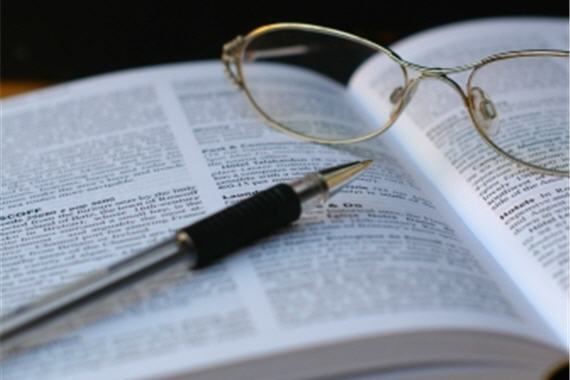
Because of heredity, my eyes became progressively unable to see distant objects starting around age 8. Rather than simply accepting that fact, my parents took me to an optometrist and bought me corrective lenses (Buddy Holly style eyeglasses). I went through perhaps twenty pairs of glasses over the next several years owing to ever-stronger prescriptions, breakage, and loss until getting contact lenses in my early twenties. About six years ago, I had corrective surgery (Lasik) that gave me “uncorrected” vision approximating 20/20. By that point, my uncorrected eyes had gotten to the point where I needed to put on eyeglasses to see my contact lenses so that I could get the first one ready for insertion. About two years ago, as I had been warned, I had early onset presbyopia, a side effect of the Lasik, and began needing very weak reading glasses to help me read small print or work long periods at the computer. Were there safe and reasonably affordable surgery available to give me perfect vision, I wouldn’t hesitate an instant.
Granted, being nearsighted is orders of magnitude less debilitating than being deaf or quadriplegic. It’s also sufficiently commonplace that, aside from confronting some stereotypes and being called “four eyes” as a kid, there’s little social consequence. Still, I can’t imagine that people would simply choose not to wear corrective lenses or that people with glasses would shun people who had Lasik surgery.