
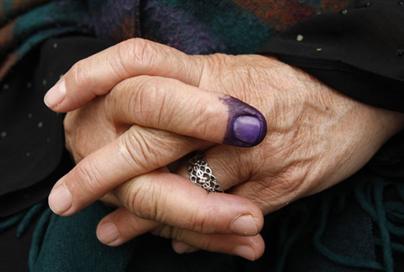
 It isn’t a single election that makes a country democratic but durable, persistent democratic institutions and the peaceful turning over of power as the result of a democratic election. Iraq under Saddam had elections; everybody always knew what the outcome would be.
Tomorrow Iraqis return to the polls to elect a new national government. This is itself a hopeful sign. Peter Goodspeed, writing in the National Post, summarizes the situation:
Five years ago, U.S. troops played a major role in securing the polling places. This time, Iraqis are running the elections, providing troops for security, monitors to supervise the voting and courts to handle disputes.
Hopes the country’s divisions could be settled at the ballot box disappeared when politicians were unable to resolve such basic issues as sharing oil revenue, balancing powers between the central and regional governments or reconciling relationships between Sunnis, Shiites and Kurds.
This election may have exacerbated the divisions instead of bridging them. Sectarianism has once again emerged as a dominant theme. For now, Iraq’s fate will be determined by the interactions of a few major coalitions.
The unified Shiite political front that swept the last election has split into two camps: Prime Minister Nouri al-Maliki’s Da’wa or State of Law coalition, which presents itself as nonsectarian; and the far-more religiously inclined Iranian-influenced and Shiite-dominated Iraqi National Alliance, which combines the Supreme Islamic Iraqi Council and followers of the radical anti-American cleric Muqtada al-Sadr.
A third group, the Iraqi National Movement , or Iraqiya, is led by Iyad Allawi, a secular nationalist who was the U.S.-appointed head of Iraq’s first post-war transitional government in 2004-05. Even the Kurds, kingmakers in the last parliament, are divided between the main Kurdish Alliance and the breakaway Kurdish Goran or Change party. Sunni Arabs, who make up about 20% of the population, boycotted the last parliamentary elections and see this poll as a chance to restore some of their lost power. But their votes will be divided between religious and regional parties, while 440 Sunni candidates have been banned from running because of alleged links to Saddam Hussein’s now-outlawed Baath party.
Will the election take place without major violence? Will Maliki be turned from office and will Allawi replace him? Will there be a peaceful transition?
I opposed the invasion of Iraq but I also opposed withdrawing from it as the situation threatened to descend into civil war, for a combination of humanitarian and geopolitical reasons. A civil war now in Iraq would be in nobody’s best interests but, unlike the situation in 2006 and 2007, it would be the Iraqis’ civil war, not ours. IMO it’s time for us to go.
Please comment on the situation going forward in Iraq in the comments. Try not to rake up old scores.









