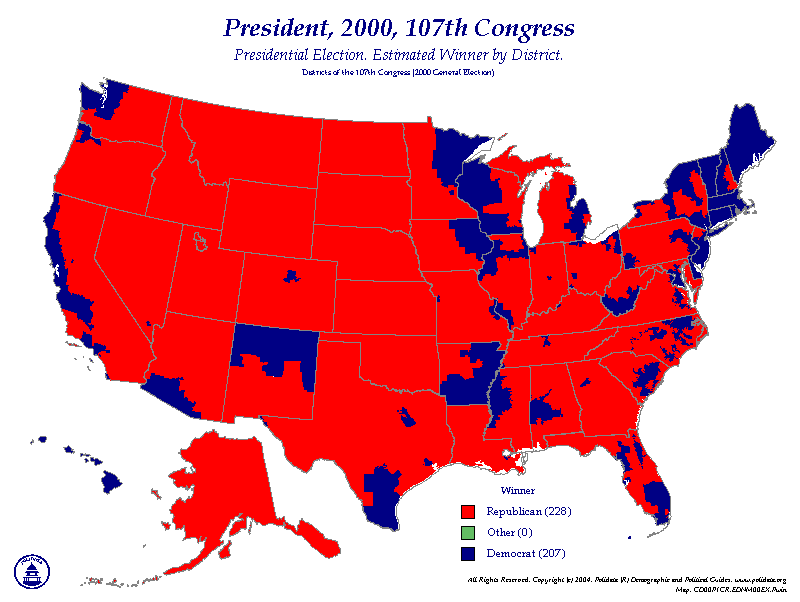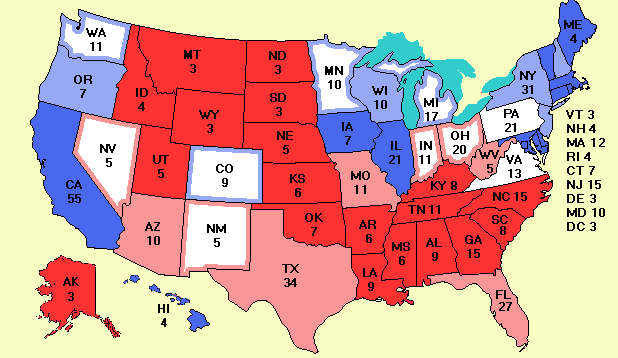
McCain-Palin currently have a very slim lead over Obama-Biden in virtually every national poll (see RealClearPolitics and Pollster.com). The Electoral College is too close to call. RCP has it 273-265 for Obama (without toss-ups) while Electoral-Vote.com has it 257-247 for McCain with Virginia and Pennsylvania too close to call.

Obviously, there’s still a lot of campaigning to do and dramatic events like yesterday’s financial sector collapses could also have significant impact on the race. If, however, things remain close, we could, for the second time in three elections, have the popular vote winner lose.
This has Steven Taylor thinking:
Would that at all prompt reform of the EC, given that both parties will have suffered that fate in less than a decade? Would the public start to actually wonder about the system by which we elect out presidents?
Before the 2000 elections, I routinely predicted to my Intro to American Government classes that, if the popular vote winner were ever to lose in the modern media era, the Constitution would be amended forthwith to abolish the Electoral College. I was, of course, spectacularly wrong.
Why? Well, I’d forgotten the most fundamental rule of public policy making: What’s important isn’t what the mass opinion is on a subject but rather who cares most about it. Even though Al Gore lost a heartbreaker and his supporters thought they’d been robbed, they could not muster the sustained action to do something about the issue. Meanwhile, there were very entrenched interests in favor of the status quo.
It’s very, very hard to amend the Constitution. You need to get supermajorities in both Houses of Congress and then get approval in 38 of the 50 state legislatures.* Both of these are incredibly unlikely in this particular case. Those who want to abolish the Electoral College are doing so out of general principle. Meanwhile, those who benefit from the current system include: 1) the very small states, who would be ignored in a popular vote system but who get the same two votes in the Senate (and Electoral College) as everyone else; 2) the very large states, who are much more attractive as block votes than as citizens 1+1+1; and 3) swing states, who vary from cycle to cycle, who get a lot of attention foisted on them but who wouldn’t matter nearly as much if it were a truly national race.
______________
*There’s also the state convention model, which has not been attempted. And, some would say, you could get 5 Justices of the Supreme Court to simply fiat an amendment. For simplicity, we’ll ignore those.