

First, there were reports of people simply walking away from mortgages when the value of their houses dropped below what they owed. Now, apparently, some people are simply refusing to pay their mortgages and continuing to live in their homes for free.
David Streitfeld begins his NYT report with the requisite anecdote:
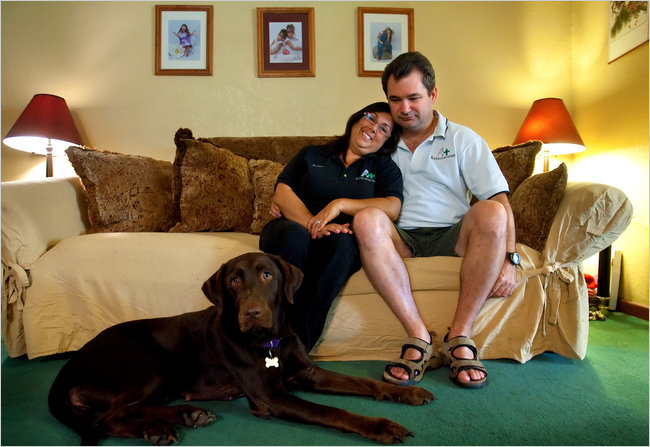
For Alex Pemberton and Susan Reboyras, foreclosure is becoming a way of life — something they did not want but are in no hurry to get out of. Foreclosure has allowed them to stabilize the family business. Go to Outback occasionally for a steak. Take their gas-guzzling airboat out for the weekend. Visit the Hard Rock Casino.
“Instead of the house dragging us down, it’s become a life raft,” said Mr. Pemberton, who stopped paying the mortgage on their house here last summer. “It’s really been a blessing.”
So, we’re talking about dirtbags here. The sort of scum who take out a loan and then refuse to pay it in order to finance a pretty posh lifestyle. Got it.
A growing number of the people whose homes are in foreclosure are refusing to slink away in shame. They are fashioning a sort of homemade mortgage modification, one that brings their payments all the way down to zero. They use the money they save to get back on their feet or just get by.
This type of modification does not beg for a lender’s permission but is delivered as an ultimatum: Force me out if you can. Any moral qualms are overshadowed by a conviction that the banks created the crisis by snookering homeowners with loans that got them in over their heads.
Having taken out several mortgages over the years, there’s no mistaking what you’re doing. There are reams of papers to sign and the overall process typically takes weeks. This isn’t a slick salesman coming to the door.
“I tried to explain my situation to the lender, but they wouldn’t help,” said Mr. Pemberton’s mother, Wendy Pemberton, herself in foreclosure on a small house a few blocks away from her son’s. She stopped paying her mortgage two years ago after a bout with lung cancer. “They’re all crooks.”
It’s not clear to me why being sick creates an obligation on the bank to let you live in their house for free, much less renders them “crooks” for insisting you live up to your freely undertaken obligation. But, yeah, cancer does at least make your situation more sympathetic than the scumbags using the money saved by stealing from the bank and using it to buy lousy steaks and take joy rides in their luxury watercraft.
Foreclosure procedures have been initiated against 1.7 million of the nation’s households. The pace of resolving these problem loans is slow and getting slower because of legal challenges, foreclosure moratoriums, government pressure to offer modifications and the inability of the lenders to cope with so many souring mortgages.
The average borrower in foreclosure has been delinquent for 438 days before actually being evicted, up from 251 days in January 2008, according to LPS Applied Analytics.
While there are no firm figures on how many households are following the Pemberton-Reboyras path of passive resistance, real estate agents and other experts say the number of overextended borrowers taking the “free rent” approach is on the rise.
This is a giant systemic problem with no real short-term solution. And the law is ridiculously overweighted in favor of the deadbeats rather than the mortgage holder.
Thankfully, most of the blogospheric commenters on this matter at least agree that those taking advantage of the system are low-lifes. See, for example, Brad Tuttle, Daniel Foster, and 3Wood.
Barry Ritholtz thinks the excuses these people are giving to the NYT are weak but thinks there are economically sound reasons to walk away. He says he’d like to see them tell the truth:
“I’ve done the math, and it doesn’t make sense to pay the mortgage. I can rent the same house a block over for half of what I am paying. I am so far underwater that if I stay here, struggle, and make all the payments, in 10 years, I will merely be back to break even. Why bother?
Like all the big banks have all done, I’ve made the calculation that it is financially beneficial to default on the loan — so that is what I am doing. As Sonny was told in the Godfather, “This is business, not personal…”
But others think this is not only smart behavior, but even heroic.
Duncan Black (aka Atrios):
I hope it’s finally penetrated the public consciousness that it’s perfectly acceptable to make cold-hearted morality free financial decisions when dealing with actors that are making cold-hearted morality free financial decisions. For too long we’ve heard bleatings from the press painting walking away as some sort of moral and ethical issue, placing ethical obligations on people that aren’t put on businesses in similar situations. If it makes financial sense for you, walk away.
Now, if we’re simply talking about deciding that taking a 7-year hit to your credit rating is worth getting out of a bad loan, I’d agree. That’s simply a matter of living up to the terms of the contract and returning the collateral. But these people are exploiting the system’s inability to quickly foreclose to bilk free rent out of the other part. A different thing entirely.
FDL’s David Dayen:
Lenders actually know this is one of the risks when they settle on a house. They probably took a bonus by putting people into mortgages they couldn’t afford that would reset at unreasonable rates, or any number of other predatory schemes. They don’t really have a profile that engenders sympathy. So if some people facing foreclosure have gone the Peter Gibbons route and decided just not to pay anymore, well, more power to them.
Did these people make bad decisions? Some of them. Many were just caught up in a bad economy and happened to buy their home at the top of the market. Now they’re punished for their bad timing. But the original sin here is the securitization of their mortgages and the global savings glut and all the other factors we know played into the inflation and then popping of the housing bubble. Anyway, the smart people on Wall Street told everyone it didn’t matter if these homes went into foreclosure, since they sliced and diced them so finely that no investor would take a hit. Well, consider these folks as beta testers for your risk spread theories.
Jessica Pressler of New York‘s Daily Intel blog writes, apparently without irony, a post titled “Homeowners Who Refuse to Pay Mortgages May Be First Genuine Heroes of the Recession.” What makes them heroic is unclear from the post, which includes such sterling logic as,
At least these people are putting their money into something good — the economy, which, after all, needs it far more than the banks do.
Sometimes, I don’t know whether to laugh or cry.
The original put Ritholtz in the camp questioning the morality of the free riders. I’ve corrected the post to more accurately reflect his position.








