
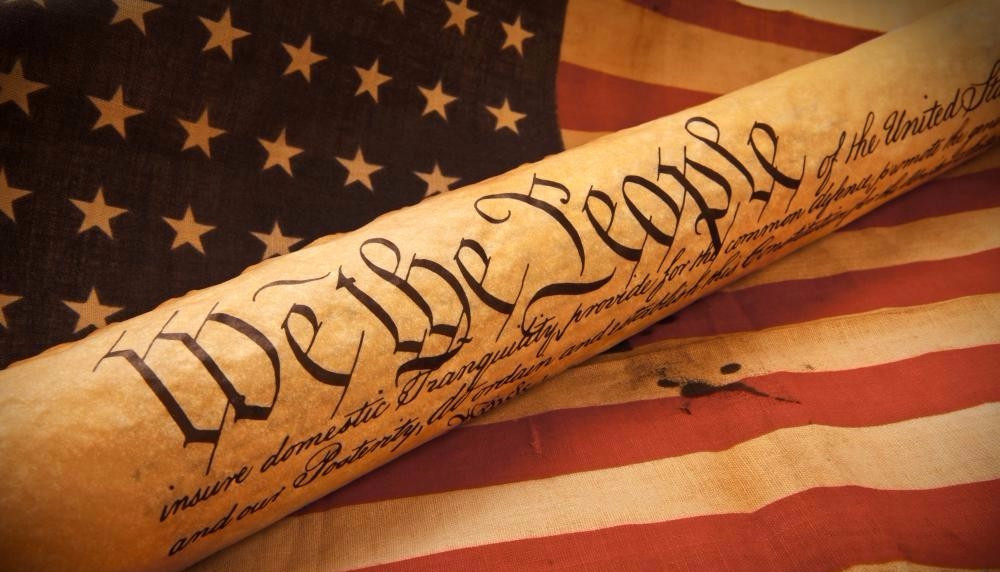

As many readers are no doubt aware, the NYT has a feature called the 1619 Project that looks that the four hundredth anniversary of the first African slaves being brought to British colonies in what would become the United States of America.
The Project starts as follows:
The 1619 Project is a major initiative from The New York Times observing the 400th anniversary of the beginning of American slavery. It aims to reframe the country’s history, understanding 1619 as our true founding, and placing the consequences of slavery and the contributions of black Americans at the very center of the story we tell ourselves about who we are.
Now, I cannot as of this writing provide a full evaluation of the project, as I have not had the chance to read it all (and it is, as I understand it, an ongoing project including a recently launched podcast).*
While I cannot provide a review of all the material, I can say that I endorse the basic goal of highlighting the role, from the country’s beginning, of slavery to American development. I very much believe that we, as a country, have a habit of downplaying the negative aspects of our past and while we acknowledge slavery, we have a tendency of wanting to pretend like we have settled its legacy (when we clearly have not). Indeed, the lack of coming to grips with that past is part of the reason we continue to struggle with a host of issues from the abstract (CSA symbols) to the very concrete (police violence against African-American citizens).
I can see some resistance to the notion that 1619 was “our true founding” (although, I have no problems with noting its importance to our overall founding). Indeed, my initial reaction was that the statement was sufficiently provocative to distract from getting people to critically examine this history that needs far more attention than it deserves (that is, critics who don’t want to deal with these issues will find it too easy to gripe about this framing rather then engaging in the actual substance of the enterprise).
One example of this reaction, which is not atypical whenever the issue of slavery and race is raised in the context of US history, can be found in Rich Lowrey’s column: The left’s vile smear of America’s founding.
The New York Times has begun its so-called 1619 Project, marking the 400th anniversary of the importation of slaves from Africa.
The series seeks nothing less than “to reframe the country’s history, understanding 1619 as our true founding, and placing the consequences of slavery and the contributions of black Americans at the very center of the story we tell ourselves about who we are.”
It is certainly true that an American nation existed prior to the Declaration of Independence in 1776, and slavery was its great sin, with permutations still felt today. But to pretend that racism is the essence of America and constituted one of the country’s founding principles is an odious and reductive lie.
I suppose we could argue over what the “essence of America” was and is, given that it is an extremely abstract notion. However, I don’t think one has to be a leftist, or really much of anything other than honest, to acknowledge that one of the country’s founding principles was, in fact, white supremacy.
What else would you say about a country that allowed at its founding white people to own black people like livestock. I know many people don’t like to confront this fact, but it is the hard truth.
Indeed, like the person who only thinks that a racists is someone who uses the n-word or joins the Klan, Lowry seems to think that the fact that the word “slavery” is not in the original text of the Constitution of 1789 somehow absolves it.
It doesn’t explain why any reference to slavery was kept out of the Constitution. James Madison, per his notes during the drafting convention, “thought it wrong to admit in the Constitution the idea that there could be property in men.”
While it is well know that I am a great fan of Madison, the bottom line remains that his moral authority on this question is circumspect (to be kind), given that he died a slave owner.
Lowry tries, in an argument that I have pretty much heard all my life, especially from conservative defenders of the Constitution, that the lack of the word “slavery” should be considered moral high ground for the Framers and the document:
The careful avoidance of the term was subsequently used to buttress the position of opponents of slavery from John Quincy Adams to Abraham Lincoln to Frederick Douglass. The great black abolitionist asked, “If the Constitution were intended to be, by its framers and adopters, a slave-holding instrument,” how could it be that “neither slavery, slaveholding nor slave . . . be anywhere found in it?”
All well and good, but making it the constitutional equivalent of He Who Must Not be Named didn’t make it any less in the document, any more than not naming Voldemort made him nonexistent.
Because of course, there are several oblique, but nonetheless quite clear (especially to those who wrote the document) references to slavery.
Article I, Section 2:
Representatives and direct Taxes shall be apportioned among the several States which may be included within this Union, according to their respective Numbers, which shall be determined by adding to the whole Number of free Persons, including those bound to Service for a Term of Years, and excluding Indians not taxed, three fifths of all other Persons.
We (and they) knew who the “other Person” were (emphasis mine).
Then, Article I, Section 9
The Migration or Importation of such Persons as any of the States now existing shall think proper to admit, shall not be prohibited by the Congress prior to the Year one thousand eight hundred and eight, but a tax or duty may be imposed on such Importation, not exceeding ten dollars for each Person.
Again, it is not a mystery that this referred to the slave trade. It is worth noting that this passage was a way to kick the can down the road for future politicians to deal with. It was not some grand plan to stop slavery (and even stopping the legal slave trade would not, and did not, stop the practice itself). Note that it does not state the the importation of “such Persons” will cease in 1808. Rather, it states that such importations cannot be curtailed until such a time. There was no guarantee that such curtailing would take place.
Article IV, Section 2:
No Person held to Service or Labour in one State, under the Laws thereof, escaping into another, shall, in Consequence of any Law or Regulation therein, be discharged from such Service or Labour, But shall be delivered up on Claim of the Party to whom such Service or Labour may be due.
This clause is not one we talk about a lot, but it established a constitutional right for slave owners to retrieve fugitive slaves.
For a document that does not mention the word slavery (until the addition of the Thirteenth Amendment), the document actually did have a lot to say on the subject (and was also silent on the issue in other key ways).
Lowry does admit:
Of course, in crucial respects the Constitution was indeed a compromise with slaveholders. It isn’t clear why it would be considered better if, in the absence of such a compromise, slave states had possibly gone their own way to create a rump nation-state wholly devoted to slavery and not yoked to a North that became more anti-slavery over time.
All well and good, but he says this like it gets the constitution off the hook. The reality is that the only way to keep the slave states in a constitutional union was to compromise heavily on the topic of slavery.
First, it is important to note that while, yes, the importation of slaves could be stopped after two decades, there is nothing in the original document to suggest the institution itself would be stopped overall (or that it could be).
Second, political power was afforded to the slave-holding states via the three-fifths compromise, and worse, the Fugitive Slave Clause guaranteed ownership of fleeing slaves.
One may quibble over whether racism and slavery were the “essence of America” but it is actually hard to argue that it wasn’t a founding principle, since maintenance of slavery was utterly necessary to reach the needed political deal to ratify the constitution.
To put it directly: acceptance of slavery was as essential to getting the constitution ratified as any of the other political compromises (such as federalism, the presidency, or equal representation in the Senate).
Can anyone argue, therefore, that we could have both abolished slavery and had the Constitution of 1789?
We might could have had the non-slave United States, but it would not have been the original 13 as we understand the concept.
To be fair to Lowry, he acknowledges this:
Of course, in crucial respects the Constitution was indeed a compromise with slaveholders. It isn’t clear why it would be considered better if, in the absence of such a compromise, slave states had possibly gone their own way to create a rump nation-state wholly devoted to slavery and not yoked to a North that became more anti-slavery over time.
Still, what does that say, logically, about the role slavery played?
Well, it makes it essential to the Founding.
And what do we gain by pretending otherwise?
One thing is for sure: pointing all of this out, as a matter of the historical record, is not some leftist attack on the Founders.
*After I had composed about 90% of this post I listened to the first episode, and I would very much recommend it.








