USA Today (“Abortion pill challenge gives Supreme Court chance to move toward national abortion ban“):
Two years after the Supreme Court erased the constitutional right to an abortion, creating a patchwork of access across the country, the justices could now pave the way toward a national ban.
In a case they will consider Tuesday about access to the abortion drug mifepristone, the court could give legitimacy to a nineteenth century obscenity law that some abortion opponents are promoting as a de facto federal abortion ban that just needs enforcing.
Even if the court decides the case without addressing the 1873 Comstock Act − which it could easily do − the justices could restrict access to mifepristone in a way that would make it more difficult for millions of women to end a pregnancy in states where abortion is legal.
The result would be an end run around the court’s stated purpose, when it overturned Roe v. Wade, of leaving the question of abortion to Congress and the state legislatures, according to abortion rights advocates.
Keeping in place a lower court’s decision restricting access to mifepristone, more than 640 state lawmakers wrote in a brief to the court, would “wrest the power to decide abortion access issues back out of the hands of state legislators.”
Abortion opponents say it’s the Food and Drug Administration that is doing the end run around the Supreme Court’s 2022 decision by enabling women to circumvent state abortion bans by allowing unreasonably easy access to mifepristone.
The FDA’s actions “rob from the people important decisions on this vital issue,” the attorneys general of 22 states told the court.
More than six in 10 abortions in the United States last year were completed with pills, according to the Guttmacher Institute, a research group that supports abortion rights.
The Supreme Court is deciding whether the FDA improperly relaxed requirements on mifepristone, one of the two drugs used in medication abortions for early pregnancies. The New Orleans-based 5th U.S. Circuit Court of Appeals said the FDA should not have allowed mifepristone to be dispensed through the mail, along with other changes.
WSJ (“Abortion-Pill Case Puts Supreme Court Back in the Hot Seat“):
The Supreme Court on Tuesday will consider whether to roll back the availability of the abortion pill known as mifepristone as women increasingly rely on medication to end unwanted pregnancies.
The case has quickly forced the court back into the abortion thicket after its decision two years ago in Dobbs v. Jackson Women’s Health Organization eliminated federal protections for the procedure. Since then, roughly one-third of states have banned many or most abortions, but mifepristone is more readily available than ever, especially by mail, and overall abortions haven’t declined.
This has bedeviled Republican politicians and disappointed antiabortion groups who hoped the demise of Roe v. Wade would substantially reduce the number of pregnancy terminations. Medication abortions now make up nearly two-thirds of abortions. There were some 150,000 more of them in 2023 than there were before the decision, in 2020, according to the Guttmacher Institute, a research group that supports abortion rights.
“That model really poses a threat to the antiabortion movement because once pills are in the mail it’s pretty hard to track where they go and where they end up,” said Rachel Rebouché, the dean of Temple University’s law school.
At issue in Tuesday’s case is whether the Food and Drug Administration acted reasonably in adopting rules that have made it easier to obtain mifepristone since 2016. As a legal matter, that is fundamentally different from the Dobbs case, which discarded the 1973 court’s view in Roe that a woman’s control over pregnancy before fetal viability could be inferred from broad constitutional guarantees protecting individual liberty. By withdrawing the right to an abortion, the court left states to restrict the procedure or not as they see fit.
[…]
Elizabeth Sepper, a law professor at the University of Texas, said Tuesday’s case could show how far the court’s conservative majority, already critical of regulatory agencies, is willing to let litigation rather than rule making shape policy decisions.
When it comes to expertise, “the Food and Drug Administration is really the gold standard,” Sepper said, and the agency has been central to the success of the American pharmaceutical industry. Drugmakers are backing the regulators. “They are very, very worried about the idea that the FDA could be second-guessed in the courts based on the say-so of any E.R. doctor anywhere,” she said.
The high court’s ruling, expected by July, will land in the middle of the election season and has the potential to shake up races that are up and down the ballot, at a time when abortion has proved to be a key political issue post-Dobbs.
In some ways, the abortion-pill case has the potential to affect a greater number of women than Dobbs. Even without the constitutional protections Roe provided, more than half the states have legal access to abortion. But if pill access is restricted, abortions will be more difficult to obtain across the nation.
“States like California and New York are going to be just as affected by any roll back,” said Nancy Northup, president and chief executive of the Center for Reproductive Rights, which represented an abortion clinic in the Dobbs case.
The current suit, filed by Alliance Defending Freedom, a Christian conservative advocacy group, on behalf of antiabortion doctors and medical associations, alleges the FDA flouted legal obligations to ensure patient safety when it relaxed restrictions on access to the drug. Erin Hawley, an ADF attorney and wife of Sen. Josh Hawley (R., Mo.), will argue Tuesday for the challengers.
This case could be a double whammy. The right-most Justices have been signaling for years that they want to overturn a decades-old precedent that the courts should grant extreme deference to federal regulatory agencies in their rule-making. That they have the ability to do so in a case that would make abortion radically more difficult even in the bluest states would likely make them giddy.
On the broader question, I’m somewhat sympathetic to Thomas and company ideologically but think it would be a disaster practically. Congress has delegated huge chunks of its express powers to Executive branch agencies, exercising its Constitutional authority in the breach via the oversight function. This rather stands the Constitution on its head. But there’s really no practical alternative. Congress lacks both the bandwidth and expertise to legislate these areas on a detailed basis. Even absent the longstanding partisan gridlock in that body, there’s simply no way to govern a modern society in the manner envisioned by the Framers way back in 1787.
Whether the FDA overstepped its bounds in making mifepristone easily available by mail is well outside my expertise. But, considering that they ruled it safe for early-term abortions a quarter-century ago, it certainly seems reasonable to make it more readily available.
This, of course, creates a standoff. Dobbs returned the power to decide whether abortion is legal to the several states. Yet, since drug regulation is a federal responsibility, that power is all but circumscribed by the easy availability of this drug by mail.
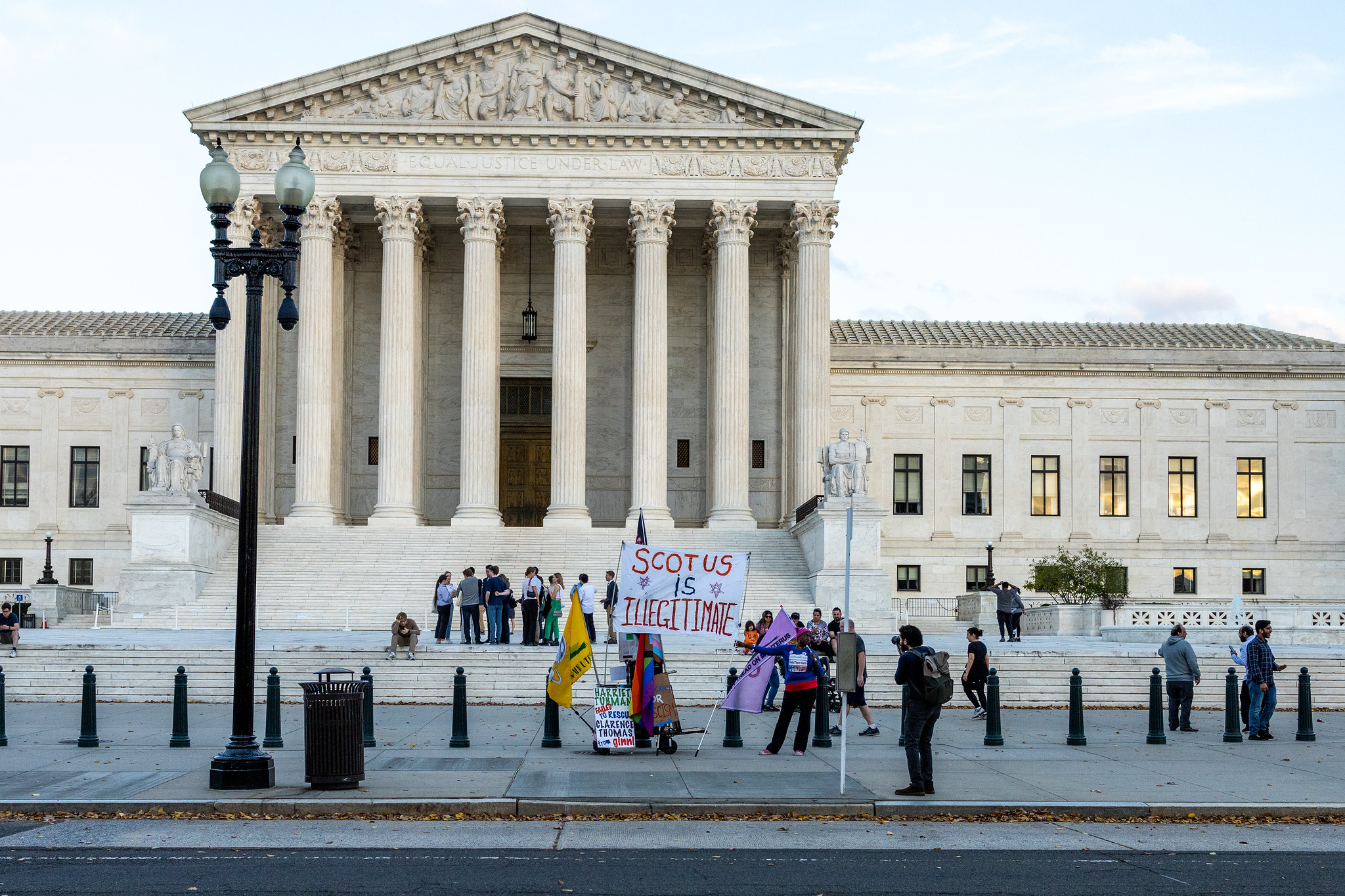
So, even aside from the legal issues, SCOTUS is in a tough position. It put its legitimacy on the line by overturning a half-century-old Constitutional right that it had created. Now, it either has to render Dobbs all but meaningless or it has to double down on destroying precedents. Either way, it’s legitimacy is further weakened.