

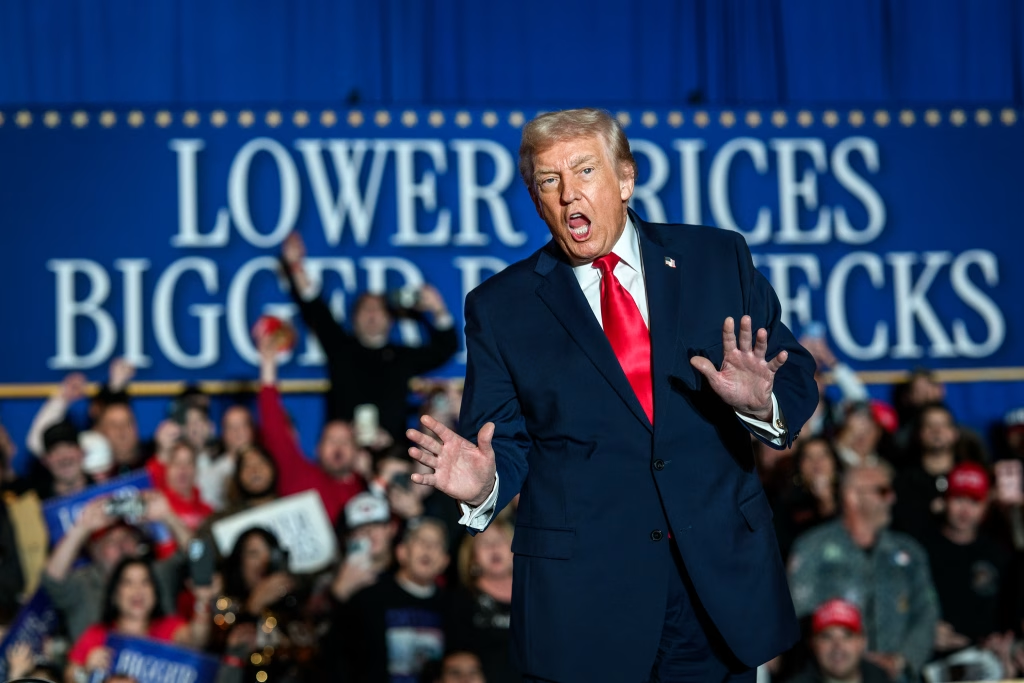
How it started.
Gallup in October of 2024: Economy Most Important Issue to 2024 Presidential Vote.
The economy ranks as the most important of 22 issues that U.S. registered voters say will influence their choice for president. It is the only issue on which a majority of voters, 52%, say the candidates’ positions on it are an “extremely important” influence on their vote. Another 38% of voters rate the economy as “very important,” which means the issue could be a significant factor to nine in 10 voters.
Voters view Donald Trump as better able than Kamala Harris to handle the economy, 54% versus 45%.
From an interview with Johns Hopkins’ political economist, David A. Steinberg, in November of 2024 (post-election):
Elections are never decided by one factor alone, but inflation is one factor that helped Donald Trump win the 2024 presidential election. Americans were angry about inflation. In surveys prior to the election, inflation was typically the most commonly cited concern on voters’ minds. Most voters also thought Trump would do a better job than Harris at bringing prices down.
[…]
My study with Erdem Aytaç and Daniel McDowell shows that inflation undermined support for the Democrats in the 2024 Presidential election.
As a general matter, it is not hard to find polling that shows this over and over: the economy was a major driver of the 2024 outcome. While not the only issue where Trump did well in polling, it was consistently central.
This post is not about how or why Trump won in 2024, but instead to note the following in contrast to the hopes of many who voted for him.
How it’s going.
Via the NYT: U.S. Economy Was Vulnerable Before War With Iran.
Economic growth was slower at the end of 2025 than data first showed and inflationary pressures persisted at the start of this year, a troubling snapshot of an economy on unsteady footing before war with Iran upended oil and financial markets.
[…]
gross domestic product, the benchmark measure of economic growth, which is adjusted for inflation, was revised down to a 0.7 percent annual pace for the last three months of the year.
[…]
Compared with the same time last year, prices were up 2.8 percent. The “core” inflation reading, which strips out more volatile food and energy prices, came in at 0.4 percent on a monthly basis, and 3.1 percent on an annual basis. That is a full percentage point above the Fed’s 2 percent target.
[…]
The economy added just 116,000 jobs in all of 2025, and employers have cut jobs in two of the past three months, according to the Bureau of Labor Statistics. And yet, inflation has been above the central bank’s 2 percent target for five years now.
This is the basic context in which Trump launched a war of choice against an adversary who can directly affect global energy supplies, all the while spending huge sums of money in the process.
While I will stress that presidents do not control the economy, policy choices do matter (and it is easier to mess things up than to cause positive outcomes). While I would not blame all of this economic weakness on Trump, it is difficult not to note the chaos and uncertainty that he has created via his volatile and capricious tariff policies, as well as the general way he has attacked the global economic order.
There is little doubt that his tariffs have contributed to inflation and that the uncertainty he has injected into the broader economy has influenced both hiring and investment decisions by the business sector.
As many have noted, we would have been better off if he had just done nothing and taken credit for the good economy he inherited.
In short, he does own a lot of the blame for our predicament prior to the launch of this war, and with the attack on Iran, he now owns the domestic and global consequences.
Starting a war with Iran, however, has now created massive price pressure around oil (and other key products like fertilizer, LNG, and helium), and we haven’t seen the worst of it yet. If these closures continue, the supply issues (and prices) will get worse, including the potential cessation of production due to a lack of storage and shipping capacity, which could have long-term damage.
Even the short-term is causing global effects, including the price at the pump in the US (source).
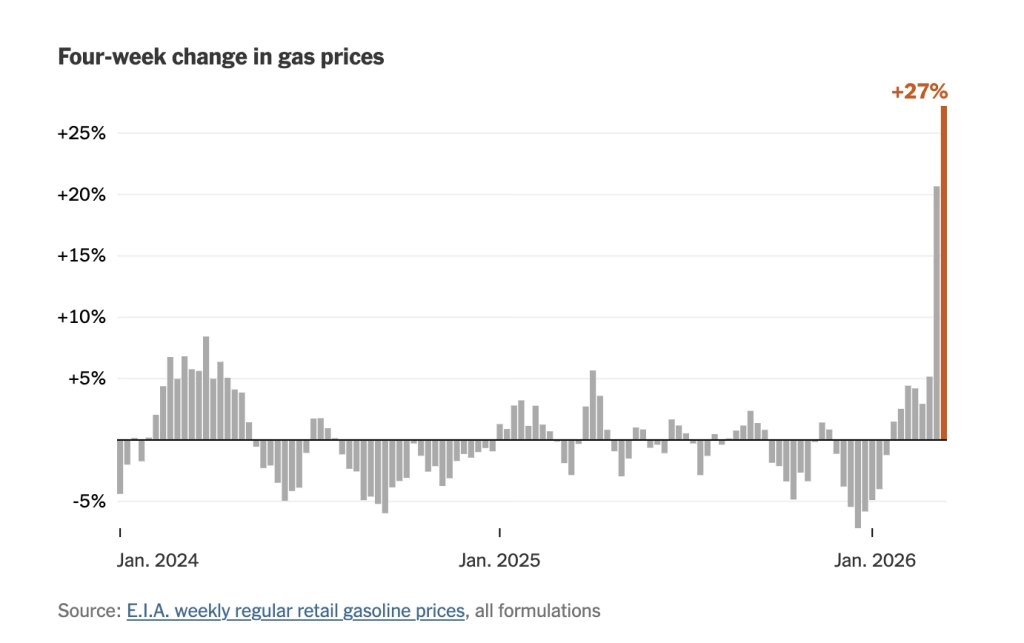
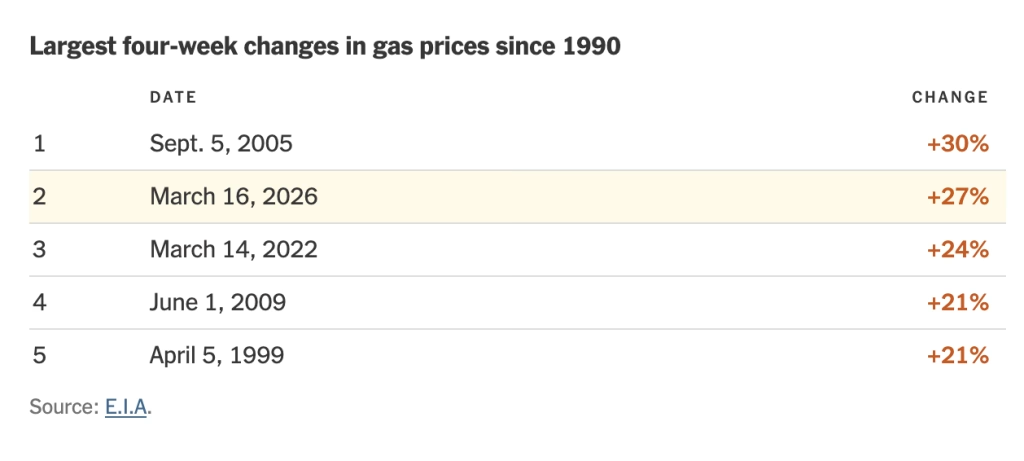
The 2005 spike was because of Katrina.
I surely don’t need to note, but will anyway, that when fuel prices spike like this, the cost of other goods will follow.
I cannot stress enough that all of this was a direct result of a policy choice made by Donald J. Trump.
Let’s just add in via Barron’s: Stock Market News From March 20, 2026: Dow Marks Longest Weekly Losing Streak Since 2023.
All brought to you by the president who supposedly understood the economy and business (we won’t get into why all the evidence suggested otherwise, even at the time).
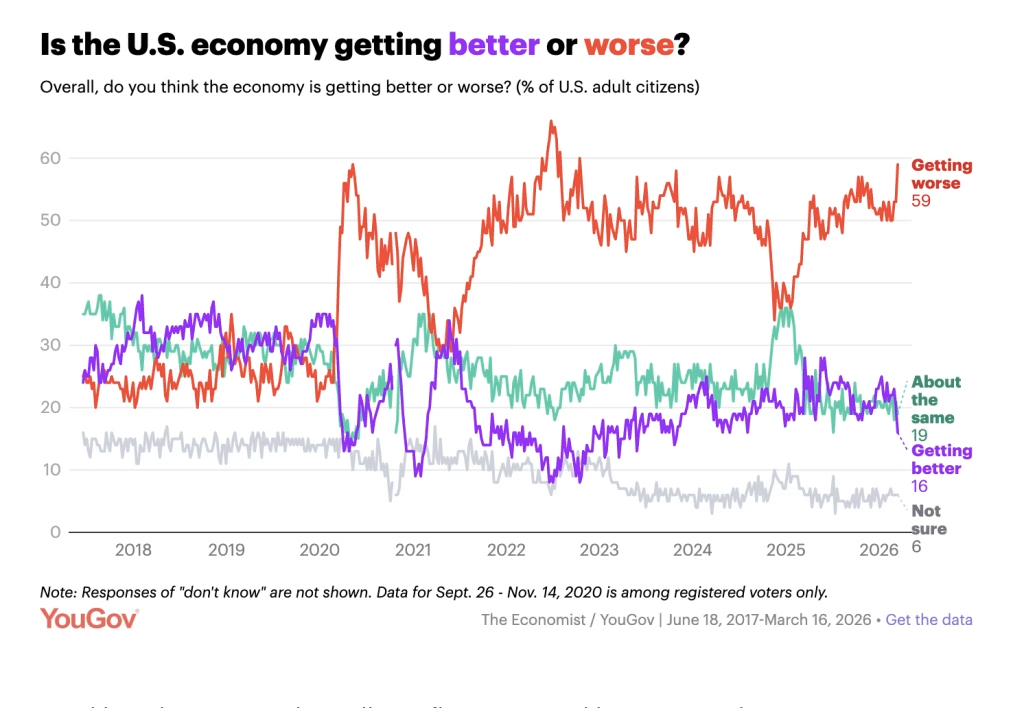
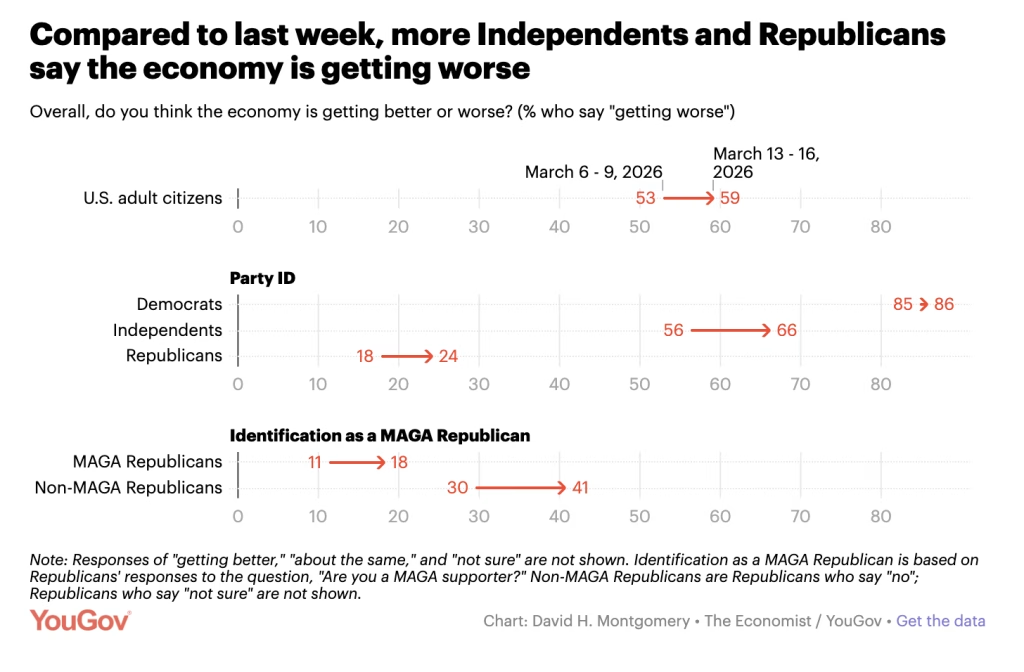
I will conclude with the following from YouGov. While I recognize that our congressional elections are far less competitive than I would like them to be and, therefore, there are many districts and states wherein national public opinion matters less than it should in a representative democracy, this is very bad for the party in power heading into the midterms.
Thank you for your attention in this matter.









