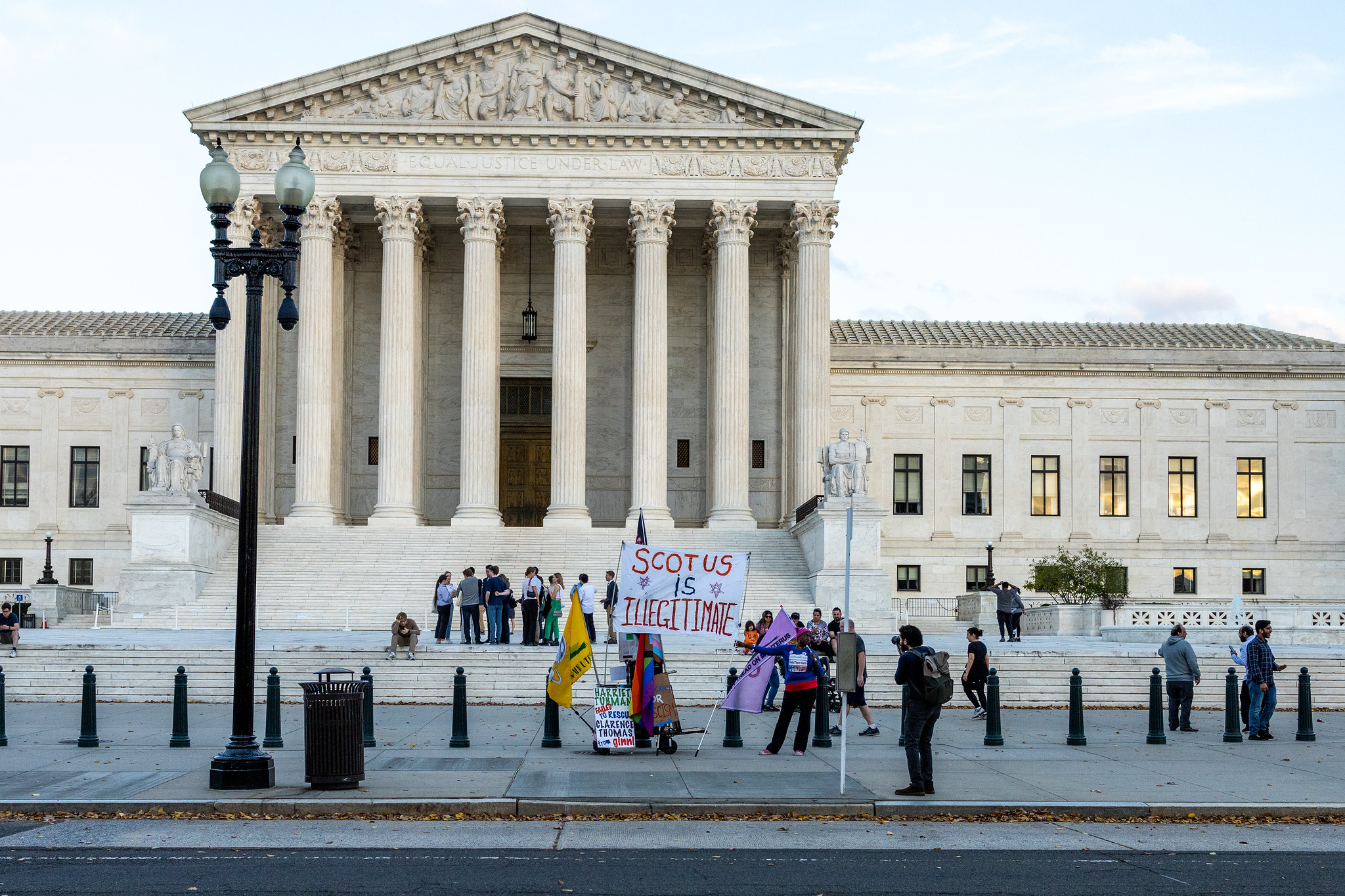
Sometime in the next two weeks, possibly but not likely tomorrow, the Supreme Court will issue its ruling in King v. Burwell, the case that deals with the subsidies provided to low income Americans who purchase health insurance through one of the exchanges established under the Affordable Care Act. If the Court rules in favor of the Plaintiffs in that case, then somewhere between four and six million Americans who have purchased insurance through the Federal exchanges established in those states that did not set up an exchange on their own will face the dilemma of finding a way to pay premiums that are probably outside of their ability to pay or going without health insurance. That type of outcome is likely to present Republican candidates for President with the dilemma of having to chose between satisfying their party’s base and dealing with a rather immediate problem for millions of Americans:
WEST MIAMI, Fla. — Around the corner from Sen. Marco Rubio’s house and a few miles from former Florida governor Jeb Bush’s, an insurance agency at a strip mall advertises the Affordable Care Act.
Banners with a logo reminiscent of the one President Obama used during his campaign hang on the exterior of the Eli Insurance Agency. An ad above a window display touting trips to Punta Cana in the Dominican Republic says in Spanish that Obamacare could be available for $0 a month. “Obamacare $0 mensual,” it reads. “Centro de aplicaciones aqui” — Application center here!
Those signs may not last much longer. Depending on how the Supreme Court rules in King v. Burwell this month, they might disappear — replaced by a major political dilemma for Eli Insurance’s presidential-contender neighbors.
The pressing problem for the 2016 Republican field falls into the “dog catches car” category: It’s one thing to call for the Affordable Care Act to be repealed or to promise an Oval Office signing ceremony for its repeal. It’s another to endorse pulling insurance subsidies used by more than 6 million people in 34 states, including at least 1.3 million Florida residents.
A ruling that subsidies provided to consumers to help them purchase health insurance are not legal could spark chaos in the insurance marketplace and help shape the electoral landscape in several key swing states. Beyond those voters directly affected, many more could see their premiums increase if the law unravels, driving up the number of uninsured.
The administration has said it has no Plan B if the court rules against it. The sitting governors and senators in the GOP presidential field would be among those who need to implement an emergency fix that helps people remain insured. The rest of the candidates would be called upon to offer policy alternatives. All of them would need to balance demands that they support an emergency restoration of benefits with the demands of a conservative base that wants to seize any opportunity to gut Obama’s signature domestic policy achievement.
“The politics of this for Republicans are extremely tricky and treacherous, and most Republicans privately would like to see the Supreme Court take a pass on this one,” said John Ullyot, a Republican strategist.
(…)
The 2016 contenders currently in Congress will be the ones “in the crucible,” he said — they will have to take votes or make proposals “that might not be as politically pure as needed during a Republican primary.”
On the other side of the spectrum, the Democratic presidential contenders lie in wait. “Hillary Clinton can immediately pivot not to defending the ACA,” said Republican strategist Rich Galen, but “can immediately begin saying, ‘The Republicans won’t fix this; I will’ — and I think that’s a big, big bow that the Republicans shouldn’t hand to her.”
Most of the major plans congressional Republicans and conservative think tanks have proposed to address a hypothetical loss of subsidies would offer some temporary relief — but only in exchange for a repeal of the requirement that most Americans have insurance, the linchpin of the law.
“Republicans need to unify around a specific set of constructive, longer-term solutions and then turn the 2016 presidential election into a referendum on two competing visions of health care,” Sen. Ben Sasse (R-Neb.), who proposed one of the plans, wrote in the Wall Street Journal in February.
Although most states are considering their options, even talking about them publicly before the decision is risky.
“The Republican governors have very little reason to put themselves at political risk if they don’t have to,” said Caroline Pearson, a vice president at Avalere Health, a consulting firm.
The issue of what will happen if the Justices rule in favor of the Plaintiffs has been hanging over politics both in Washington and in the Presidential field for some time now. Polling that has shown that the vast majority of Americans believe that Congress should fix the PPACA if the Justices rule for the Plaintiffs in King and that a narrow majority of Americans had an over all positive opinion of the PPACA. Because of this, and because, well, they aren’t insane, some Republicans on Capitol Hill have been talking publicly about addressing the subsidy issue in the wake of a Supreme Court opinion and working behind the scenes to try to come up with some legislative solution. Additionally, the issue has already become a subject of heated political debate between President Obama and Congressional Republicans. At the same time, though, there remain many in the GOP, both in Capitol Hill and nationally, who are already resisting the idea of doing anything to fix the problems that would be created by a “win” at the Supreme Court, and that means that both Republicans on Capitol Hill and the Republicans running for President will likely have a narrow path to walk, and some hard choices to be made.
Of the candidates in the races, the ones who will be presented with the most immediate problem, of course, will be the office holders. In the Senate, Senators Paul, Cruz, Rubio and Graham, will have to chose what position to take on any legislation that may come before them in the wake of a Court ruling, and whether or not to introduce or co-sponsor such legislation themselves. This would seem to be especially true since, other than Paul, they all represent states that did not establish exchanges and thus have constituents who will be directly impacted by the loss of subsidies. The natural inclination, of course, will be to try to dodge the issue as much as possible, but given the fact that Congress could be asked to vote on something, even something as limited as legislation that extends the subsidies for some period to give Congress time to act on broader reform, The sitting Governors in the race or thinking about getting into it, including John Kaisch and Scott Walker in particular since they both live in states that are part of the Federal exchange system, will have to face their own issues. The most obvious solution for the states that would be impacted by a Court ruling striking down Federal exchange subsidies would be to set up a state exchange, but that’s something that is likely to prove politically difficult both in terms of state politics and the broader race for the Republican nomination nationally.
The candidates on the Democratic side don’t face these issues, of course. Whether we’re talking about Hillary Clinton or any of the challengers that have entered the race against her, these are candidates who have all expressed public support for the PPACA virtually from the beginning. If the Supreme Court does rule that subsidies are unavailable for policies purchased on Federal exchanges, then they will obviously join the President and Democrats in Congress in pressuring Republicans to act. To the extent there is political fallout from King v. Burwell, then, it’s going to fall mostly on Republicans. They better be ready for it, or maybe they better hope that the Justices save them from a political firestorm.