Presidents Trump and Xi have agreed to a “90-day cease fire” on new tariffs. This means that Trump will not raise tariffs on Chinese imports that were scheduled to take effect on January 1st of next year. The tariffs will go into effect if the two countries cannot reach an agreement within that 90 day time frame.
BUENOS AIRES, Argentina (AP) — The United States and China reached a 90-day ceasefire in a trade dispute that has rattled financial markets and threatened world economic growth. The breakthrough came after a dinner meeting Saturday between President Donald Trump and Chinese leader Xi Jinping at the Group of 20 summit in Buenos Aires.
Trump agreed to hold off on plans to raise tariffs Jan. 1 on $200 billion in Chinese goods. The Chinese agreed to buy a “not yet agreed upon, but very substantial amount of agricultural, energy, industrial” and other products from the United States to reduce America’s huge trade deficit with China, the White House said.
The truce buys time for the two countries to work out their differences in a dispute over Beijing’s aggressive drive to supplant US technological dominance.
In another long-sought concession to the US, China agreed to label fentanyl, the deadly synthetic opioid responsible for tens of thousands of American drug deaths annually, as a controlled substance.
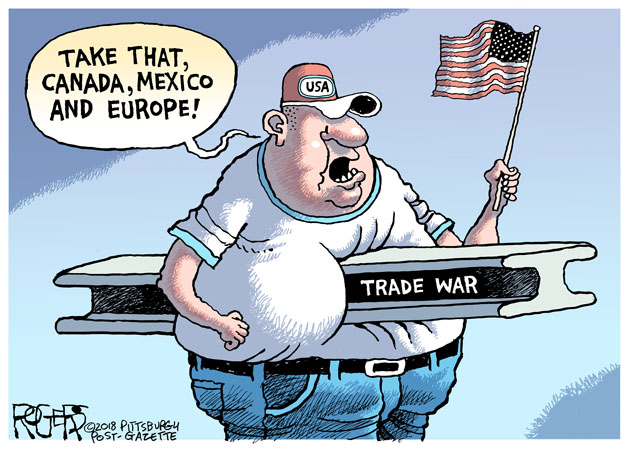
While this is good news, it should also be pointed out that this could have all been avoided. China was already buying considerable amounts of agricultural products from the US. Just because the US runs a trade deficit with China does not mean the US exports nothing to China. An analogy would be getting excited that we are no longer going to be hitting ourselves with a roofing hammer. Sure it is a good idea to stop, but an even better idea would be not to hit yourself with the roofing hammer to begin with.