As I noted yesterday, the Federal Courts dealt the President another legal setback to keep his finances private when the Court of Appeals for the D.C. Circuit denied a request to rehear a ruling that upheld a Congressional subpoena for Trump’s personal and business financial records. In another legal development, President Trump’s lawyers have filed a petition with the Supreme Court seeking to overturn a decision of the Second Circuit Court of Appeals upholding a lower court’s ruling that Manhattan District Attorney Cyrus Vance Jr. can subpoena tax returns and other documents from President Trump’s accounting firm:
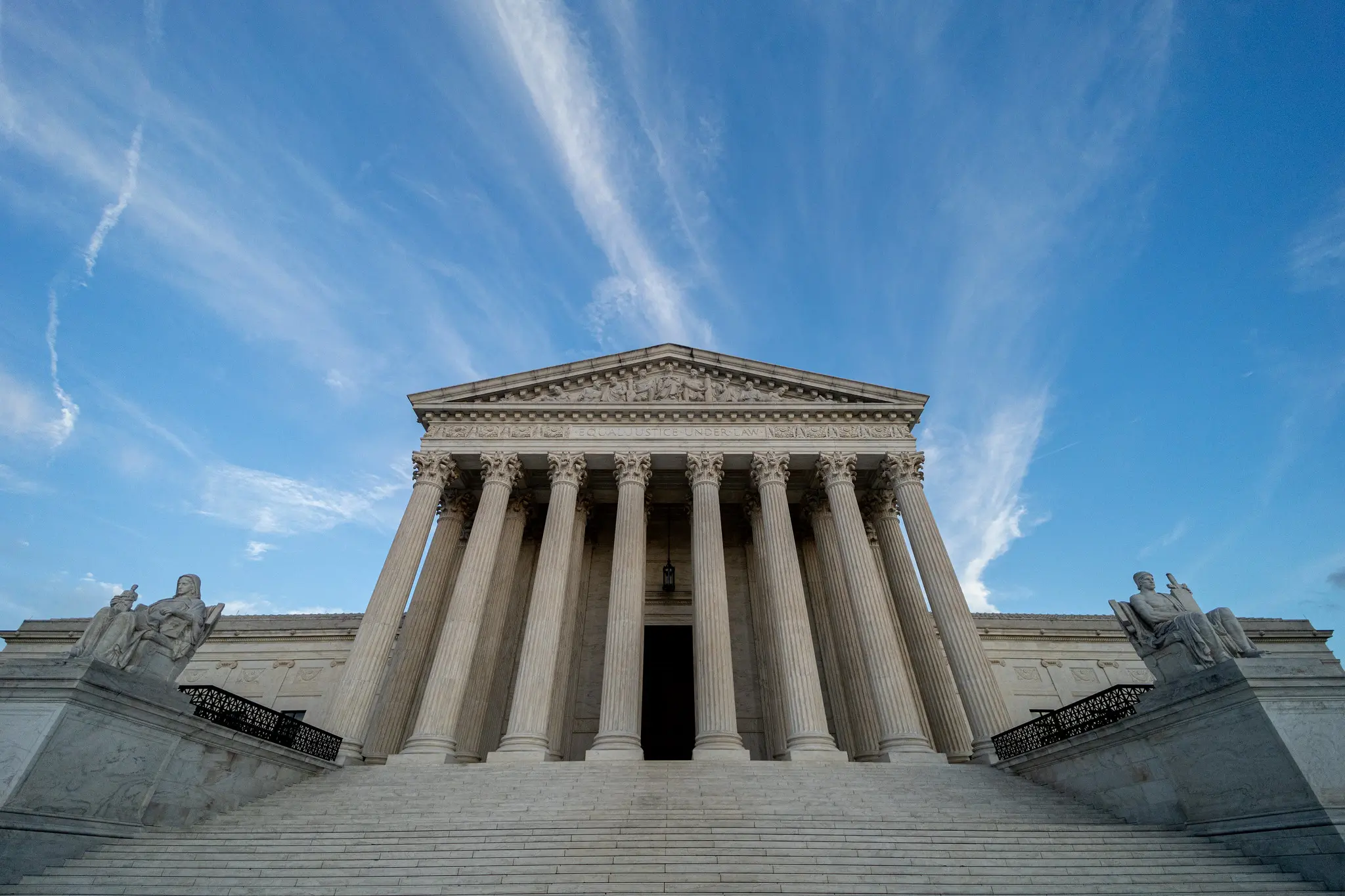
President Trump asked the Supreme Court on Thursday to stop a prosecutor’s investigation of his personal finances, a bold assertion of presidential power that seeks a landmark decision from the nation’s highest court.
The filing by the president’s private lawyers represents a historic moment that will test the court and highlights the Constitution’s separation-of-powers design. It also marks a new phase in the investigations that have dogged Trump throughout his presidency and have culminated in an impeachment inquiry.
The case involves Manhattan District Attorney Cyrus Vance Jr.’s attempt to enforce a grand jury subpoena issued to the president’s accountants for eight years of Trump’s tax records.
Trump went to court to block the subpoena, making a broad claim that U.S. presidents are immune from investigation while in office. A district judge and a panel of the U.S. Court of Appeals for the 2nd Circuit ruled against him, saying that the subpoena was proper and that the president’s longtime accounting firm, Mazars USA, must comply.
Vance’s office, which declined to comment Thursday, agreed to hold off on enforcing the subpoena if Trump’s lawyers quickly asked the Supreme Court to hear the case this term.
“For the first time in our nation’s history, a state or local prosecutor has launched a criminal investigation of the President of the United States and subjected him to coercive criminal process,” wrote Jay Sekulow, one of the president’s lawyers.
He added: “Politically motivated subpoenas like this one are a perfect illustration of why a sitting president should be categorically immune from state criminal process.”
The justices are not required to review the lower court’s decision. But the chances that the high court will get involved increased Wednesday when a separate appeals court in a separate case concluded that Congress has a right to the same tax records. Trump’s lawyers plan to ask the Supreme Court on Friday for a stay in that case.
The cases set up a potentially dramatic decision on presidential power like those the Supreme Court rendered against Presidents Richard M. Nixon and Bill Clinton. Both were unanimous rulings rejecting their pleas, and they suggest Trump might have trouble shielding the tax information from prosecutors and Congress.
The case will come before a court that includes two Trump nominees, Justices Neil M. Gorsuch and Brett M. Kavanaugh. In addition, Justice Ruth Bader Ginsburg in media interviews before the 2016 election criticized Trump’s decision not to release his tax information, as other presidential nominees had done.
“How has he gotten away with not turning over his tax returns?” Ginsburg said in an interview with CNN. “The press seems to be very gentle with him on that.” After criticism, Ginsburg said she should not have commented on the candidate.
(…)
In the filing at the Supreme Court, Trump’s lawyers said that upholding the subpoena would unleash the president’s political enemies.
“That the Constitution would empower thousands of state and local prosecutors to embroil the President in criminal proceedings is unimaginable,” they said in the filing. “State criminal process interferes with the President’s ability to execute his duties.”
But Vance has noted that, unlike disputes involving past presidents, the New York subpoena does not require any action from Trump because it is aimed at his accounting firm.
As noted, this case is unrelated to ongoing Congressional efforts to obtain copies of the President’s tax returns, which are pending in the Federal Court in the District of Columbia. Instead, this is a case that was initiated by the President himself in an effort to block a subpoena issued by Manhattan District Attorney Cyrus Vance, Jr. directed to Trump’s longtime accounting firm, Mazars. For their part, Mazars has said they will comply with whatever court order may ultimately be issued in the case, meaning that it has been the President’s private attorneys who have been pushing this case forward.
The current round of legal drama began less just over a month ago when the Federal District Court Judge that had been assigned the Trump lawsuit issued an opinion that essentially rejected the entirety of the President’s argument seeking to block the subpoena and directed that the accounting firm comply with the subpoena. In his initial lawsuit, Trump and his lawyers made the argument that Vance was precluded from obtaining copies of the tax returns because the same argument(s) that support the position that a sitting President cannot be criminally indicted also mean that he cannot be investigated as part of a criminal proceeding. By putting forward this argument the President’s lawyers may have bitten off more than they can chew, especially if the manner in which Judge Marrero reacted to the argument. In his more than 70 page opinion, the District Court Judge categorically rejects the idea that a President cannot be criminally investigated as adopting a view of the Presidency that, he argues, goes far beyond the powers and protections provided by Article II of Constitution.
Trump then appealed the matter to the Second Circuit Court of Appeals on an expedited basis that resulted in a hearing on October 25th in which one of the lawyers for Trump appeared to lose the entire case with an argument that made absolutely absurd arguments. Continuing with the argument made in the initial lawsuit, that lawyer asserted that the President could murder someone in cold-blood and still be immune from criminal investigation. Based on the reports, that argument seemed to take the three-judge panel aback and less than two weeks ago, the Court issued an opinion rejecting the arguments of the President’s attorneys and ruling strongly in favor of District Attorney Vance.
Instead of issuing a ruling as broad as the one that the District Court Judge did, though, the three-judge Second Circuit panel — made up of Clinton appointee Judge Richard Katzmann and Obama appointees Judge Denny Chin and Christopher Droney — issued a far narrower ruling. Bypassing the issue of Presidential immunity from prosecution entirely, the court considered the issue before it to be whether or not the President’s accounting firm, to whom the subpoena is directed, could be forced to comply with the subpoena. Generally speaking, this made the case far easier for the Court because it avoids the thorny issue of Presidential immunity altogether. As a result, the outcome in the case wasn’t entirely surprising.
Trump et al v. Vance et al … by Doug Mataconis on Scribd