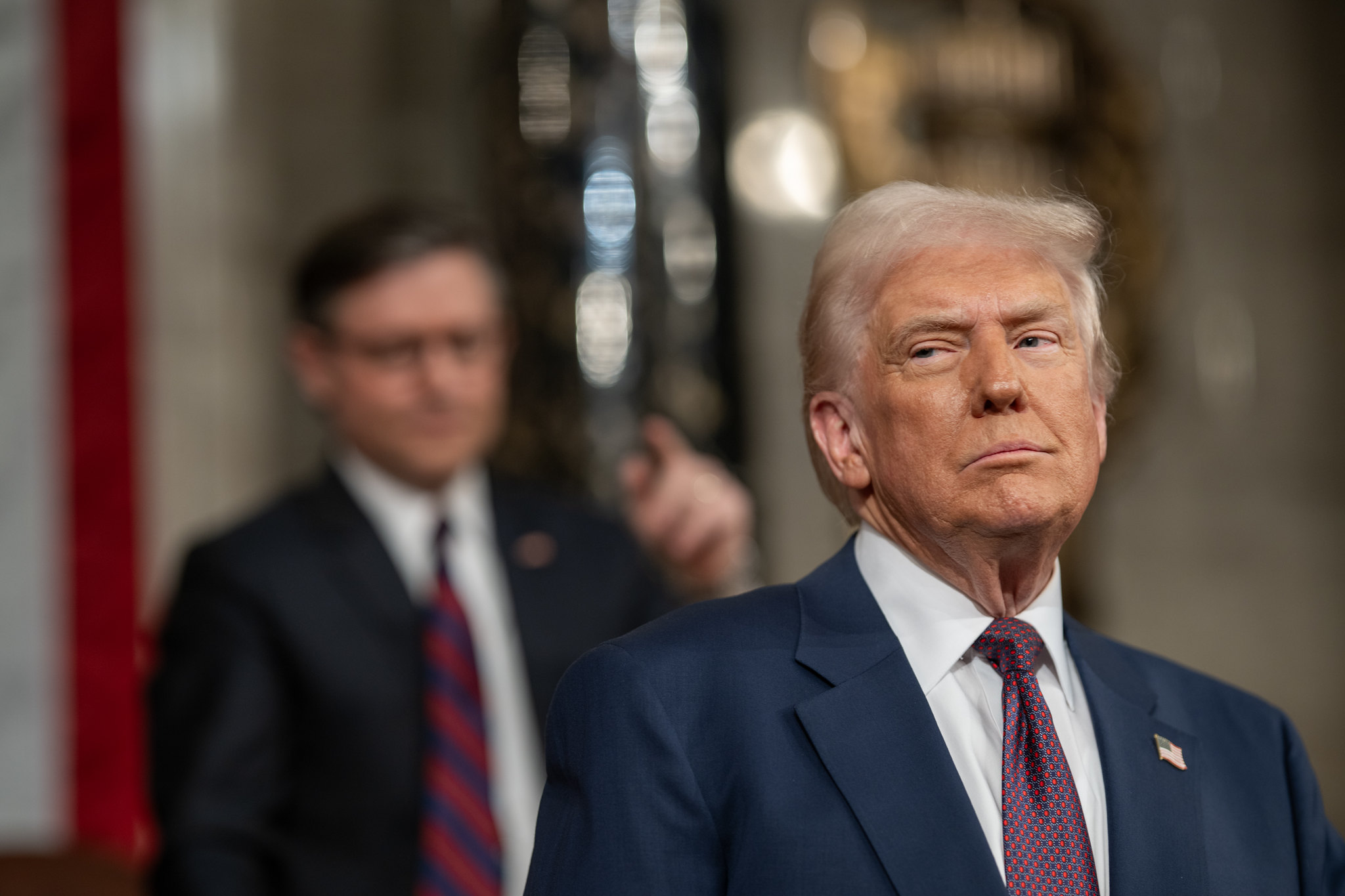
President Trump in an interview with Sean Hannity this week:
“The country — we took it over and owed over $20 trillion,” Trump said. “As you know, the last eight years, they borrowed more than it did in the whole history of our country. So they borrowed more than $10 trillion, right? And yet, we picked up $5.2 trillion just in the stock market. … So you could say, in one sense, we’re really increasing values. And maybe in a sense we’re reducing debt. But we’re very honored by it. And we’re very, very happy.”
As many, many people noted on Twitter this week: that’s not how this works.
His policy acumen is basically at the level of someone whose sum total of knowledge is cable news coupled with an inflated confidence in one’s own opinion. This is not a person playing some complex political game. This is a person who does not understand the basics of policy and government (yes, I know, this is not news). And this is the person making major decisions about health care, the Iran deal, disaster relief, and North Korea.
BTW, I have seen some attempts to make sense of this. Josh Barro:
If the economy grows, the debt can grow too, and that’s fine.
[…]
I assume he thinks it’s like a real-estate investment: If you have a $50 million mortgage on a building, and its value rises from $80 million to $100 million, you have deleveraged without paying your debt down at all.
This is a stretch, to be kind. Plus, I would note: increases in the market capitalization of the Dow Jones Industrial Average does not results in equal growth in GDP. See the chart and the analysis of the six periods that the author identifies here–often the DJIA and GDP are not correlated at all, which has been true of late: “During the final period, from 2009 through 2015, stocks averaged 12.8% despite a weak GDP of only 2.7%.”
Another problem with Trump’s thinking here is that if he gets the tax cuts he wants, the debt will increase.