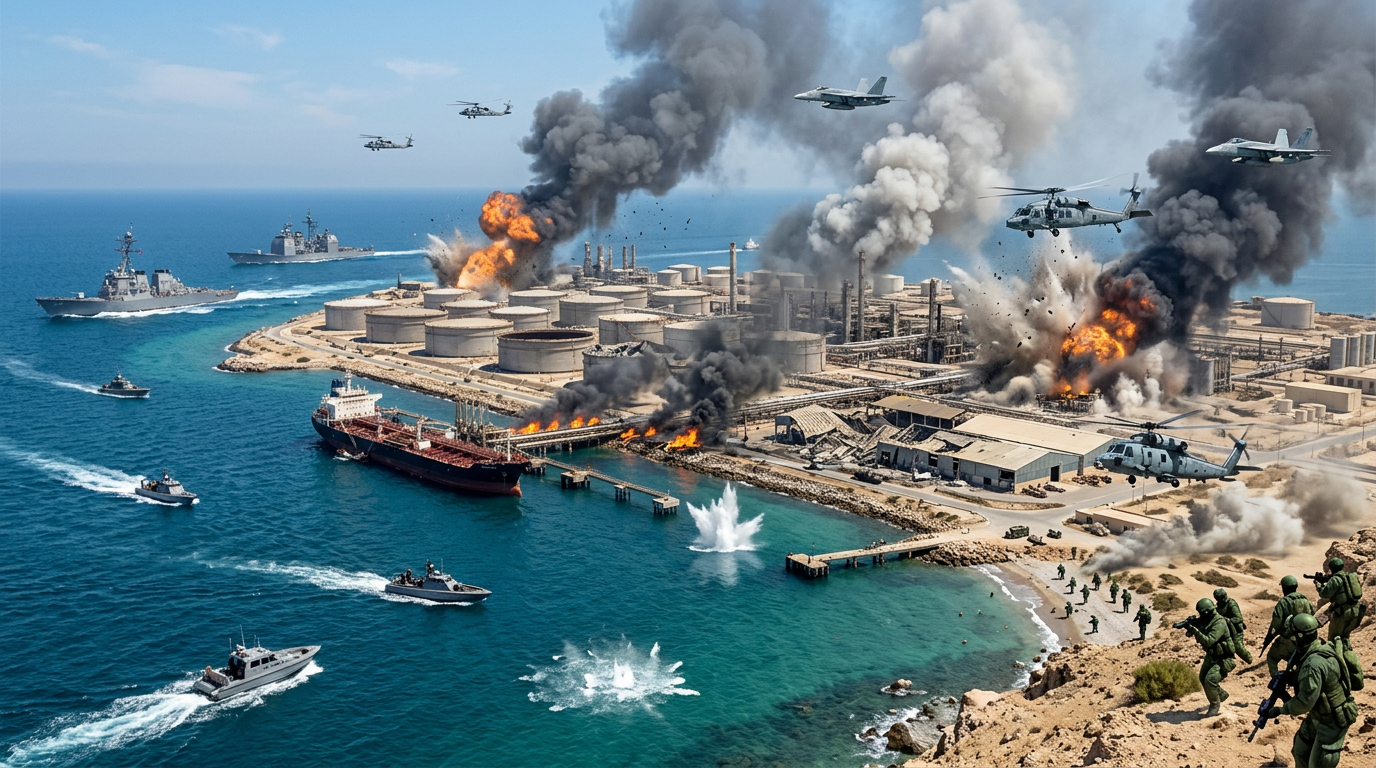
Rusty Shackleford argues that discussions about the Iraq War get clouded with emotional and political baggage surrounding the decision to invade in 2003 and that we can gain clarity by speaking of two Iraq Wars: the successful invasion to topple Saddam’s regime and the post-Saddam nation-building phase.
The post-invasion period subjected Iraqis to the tyranny of chaos. The vacuum left by the Baathist police state was filled by yet another tyranny: the tyranny of Sunni Islamists, like al Qaeda; and the tyranny of Shia Islamists, like those following Muqtada al Sadr. This is when the Second Iraq War started.
The first war was against Iraq, a nation-state. The second war is against terrorists and Islamist rebels.
[…]
The First Iraq War may have been “optional”, as many of the critics say; but the Second Iraq war is not. We must win it. The price of victory may be high, but the price of defeat is higher.
The theory isn’t particularly novel, even if the nomenclature is. Indeed, I’ve argued for years that we achieved the “regime change” part of the mission (and thus the infamous “Mission Accomplished” banner flown behind President Bush in his flight-suited address aboard the USS Abraham Lincoln was apt) and have failed at the postwar counterinsurgency and stability operations.
Fundamentally, I agree with the underlying premise: Whether the 2003 invasion was a good idea has little bearing on what we need to do in Iraq now. One can, as my colleague Dave Schuler did, oppose the invasion but now think we need to clean up the mess. Conversely, one can have supported the invasion, as Andrew Sullivan and others did, and now think we should cut our losses.
Still, I’ve got some quibbles with Rusty’s argument. First, the First Iraq War was the 1990-91 Desert Shield/Desert Storm operation, not the 2003 invasion. Second, while I agree that Islamists are a major part of the anti-government forces we’re fighting against in Iraq, most of the resistance is motivated by nationalism, sectarianism, and other old-fashioned political goals. Most are fighting for the right to govern themselves, not to recreate the Caliphate or for the glory of a Greater Shia empire.
Finally, it’s rather disingenuous to separate the current operation from the 2003 invasion as if they’re “two wars.” After all, the second was only necessary because of the first. Further, the mission we’re trying to achieve in the second was part of the political objectives of the first. Indeed, if we’re looking for a rhetorical means of separating the two phases, it’s likely more useful to call the regime change operation “The Second Iraq War” and the current mission “postwar occupation.” Zell Miller might object, of course, but it’s really more accurate than calling it a second (or third) war.