
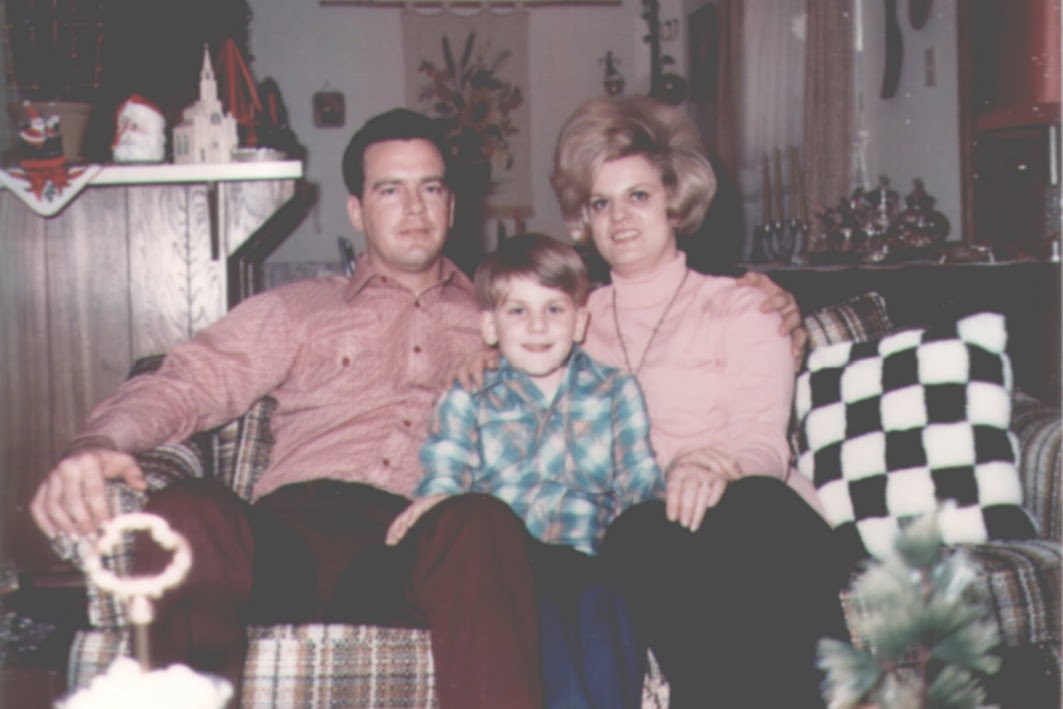

My mom, Waltraud Joyner, died yesterday afternoon from a combination of illnesses. She was 75.
She has seemingly always had health problems but lived a reasonably active and happy life until the past few years. She had fluid retention issues literally as long as I can remember, requiring her to be on diuretics. Ditto thyroid problems, which were likewise treatable. She had uterine cancer circa 1972, requiring a partial hysterectomy. By sheer happenstance, my dad was on Army recruiting duty in Houston at the time, so she was treated at M.D. Anderson, one of the finest facilities in the world. She was diagnosed with diabetes upon our return from Germany in 1979. This, over time, led to a variety of related ailments, most notably glaucoma (treated with surgery), nerve damage, and extreme swelling of the lower extremities. Over the last decade or so, she’d developed congestive heart failure, requiring both a pacemaker and open heart surgery to repair a leaky mitral valve. Her breathing was labored, ostensibly requiring her to be on oxygen, but she stubbornly refused to comply most of the time. She was afflicted with gout. And her kidneys slowly failed, such that she was on dialysis at the end–probably two or three years after she should have started. There are probably a half dozen ailments I’m forgetting.
She had been in and out of hospitals and rehabilitation facilities for the last few years. The combination of overlapping diseases was bad enough but she often refused to follow the protocols, thus compounding the problems. In particular, while the post-hospitalization stints in rehabilitation facilities got her strength back up, she quickly returned to an insanely sedentary lifestyle.
It was in many ways understandable. The complications from diabetes made it harder to get around, as she had lost quite a bit of sensation in her feet. And the congestive heart failure and kidney issues compounded that, contributing often substantial swelling. So she tended to spend her days and nights in a reclining chair in the living room. But, of course, the immobility compounded the other issues and contributed to obesity, which in turn made movement even more difficult, creating a vicious cycle.
Her penultimate hospital stay began Thanksgiving weekend and lasted almost a month. She was released to rehab late last week and seemed in much better spirits when I talked to her by phone the next morning. But she was only semi-coherent when I talked to her Christmas Day. She crashed that night and was rushed back to intensive care. Her friend and caretaker, Wanda, called me around 10pm to let me know she was back in the hospital but that there was no need to hurry down. I talked to her nursing staff around 530 the next morning, got mixed reports, and made the 12-hour drive down. I was able to talk to her neurologist, who said she had suffered damage to the middle brain from oxygen deprivation and, upon prodding, was candid that the prospects for recovery were essentially nil. Contrary to the instructions in her living will—but perfectly understandable given emergent circumstances—they had put her on a ventilator. I made the grim call to take her off early yesterday morning and the rest was just waiting for nature to take its course.
I’ve written much more here about the circumstances of my mom’s death than in my dad’s remembrance almost nine years ago. Sadly, though, she had lived with them long enough that her illnesses began to define her and even change who she had been.
Because I was both the only child and married late, I spent most holidays with my parents and visited often, particularly when I lived within a reasonable driving range. I moved to the DC area in 2002, got married in 2005, and had my first child in 2008, so we gradually shifted to trading off visits, with them coming my way more often. In the last year or so of Dad’s life, he couldn’t make the trip and we did our best to get down there. And, once he passed, Kim, Katie, and I went down every three or four months for a while.
A few months after dad passed, Mom had to have open heart surgery. Because Kim was pregnant with Ellie and Katie wasn’t yet 2, they stayed behind. The surgery itself went smoothly; indeed, better than expected because they were able to repair the valve rather than replace it. The recovery seemed normal enough and she went from ICU down to a regular bed. I was getting ready to head back up to Virginia when things took a drastic turn for the worse and I had to fight to get her re-admitted to the ICU. Thankfully, she was soon stabilized and made a strong recovery.
Had we lost her then, at 67, it would have been tragic in a way that it wasn’t eight years later. She was still reasonably vibrant and merely an older, somewhat less healthy version of who she had been.
The next year was life-altering, with the birth of my second daughter in June and the sudden death of my wife in November. Aside from the normal changes one expects from those events, it made getting down to see my Mom next to impossible. The drive is too far to make with very small children, especially alone, and the combination of flying with them to Atlanta, juggling them while I rented a car and installed car seats, and driving another two hours to my Mom’s house was rather too much. For a couple of years, Mom and Wanda would drive up our way every few months but it soon became too much for my Mom to endure. So, we were reduced to the weekly phone call and annual visits, usually in mid-summer.
Somewhere along the way—I think it was while Dad’s health was declining—she began cutting people out of her life. While the Joyner clan was never the most gregarious, she had always had some relationships. We moved into the house in Alabama in November 1980, making it by far the longest she lived anywhere. She had built up friendships with a couple of neighbors, a fairly large circle she called the German Ladies (fellow spouses and widows of retired soldiers who likewise hailed from Germany) with whom she had regular coffees and Bunko games, and a couple longtime friends from previous stops in Dad’s career with whom she maintained long-distance relationships via telephone. She had always been one to hold grudges and cut off relationships based on slights that struck me as insignificant. But by the end, she just didn’t want to be bothered. While one would think she would have wanted the human interaction, she was down to Wanda and me. She enjoyed seeing her granddaughters and talking to them on the phone but they didn’t really know her very well.
Her final years were a sad caricature of old age. She sat around in her recliner watching Fox News, giving her such a distorted view of what was happening in the world that she was genuinely shocked when Mitt Romney lost. When she wasn’t watching news, she usually had it on QVC. A woman who had always been reluctant to spend money on herself was suddenly buying tons of crap for which she had no use and, indeed, didn’t use. Her house is packed with unused dishes, gadgets, and tchotchkes. About the only joy she had otherwise was televised sports, particularly tennis and Alabama football. The latter, at least, gave us something other than her ailments and the grandkids to talk about.
It wasn’t always that way, of course.
She grew up in a suburb of Mannheim, West Germany. She was the fourth of five children born to Wilhelm and Luise Raule. Her father, known as “Opa” (grandfather) even to his kids since well before I was born, was a semi-skilled laborer. Her mother, “Oma,” was a housewife. Theirs was a “mixed marriage,” with him Catholic and her Lutheran; this was apparently a big deal in 1930s Germany and it took some doing to get permission from the parents to marry. Overall, it was by all accounts a reasonably happy childhood, if one without much money.
My mom was working as a clerk at the PX on the base in Mannheim when she met my dad. They married in September 1964 and moved stateside the next year. She was due to become an American citizen on November 16 but my birth postponed that for a month. She adjusted as well as could be expected to her new surroundings—a new country and a language with which she was far from fluent and a rather hateful mother-in-law—but they would soon be reassigned to Germany again. After a year or so, Dad got orders to Vietnam and we stayed behind with her parents.
We moved quite a lot, although perhaps not by Army standards. Upon Dad’s return from Vietnam, he got orders to Houston for recruiting duty and he liked it enough to get an extension on that job, which was then followed by two years of junior college on the Army’s dime. So, we were there from 1968-1975. Next, it was a year in Fort Leonard Wood, Missouri and then three years back in Germany, this time in Kaiserslautern. That gave us a good chance to reconnect with her family, which was a good thing because Opa would pass shortly after we returned stateside. We lived a year and a half in El Paso, Texas, where we planned to retire, until the Army decided to move us one last time. We settled in Jacksonville, Alabama, a few miles from Dad’s last duty station at Fort McClellan.
Among her fondest memories was having her mother over to visit us twice shortly after Opa died. If Oma had ever been out of Germany, she certainly hadn’t been on an airplane before, much less another continent. She had a blast the first time, still quite spry and able to experience all manner of Americana. She was a bit more feeble the second trip but still enjoyed herself.
In many ways, I think Mom defined herself by Dad’s and my achievements. While she maintained a life of her own, she was first and foremost a wife and mother. Once I had moved out and began my career in earnest, she grew impatient for grandchildren. I would be 43–making her 66—by the time I delivered on that. By contrast, I graduated from high school on her 41st birthday.
Perhaps because she had moved so far away from home, she never resented my being unable to visit more often. We kept in touch by phone weekly but, while she never stopped worrying about me (in particular, she was anxious for me to remarry after Kim’s passing) she never wanted to burden me with her own health issues. I frequently tried to get her to move up my way, where she could not only see her grandchildren more readily but also get access to far better quality healthcare, but she was settled in her ways and didn’t want to leave her house.
I’ll miss her terribly and it’ll be odd, indeed, for 10 o’clock Saturday morning to roll by and not call. I wish she had lived longer. But I especially wish she’d lived more of the life she had in those final years.









