
USA Today (“West Point accuses more than 70 cadets of cheating in worst academic scandal in nearly 45 years“):
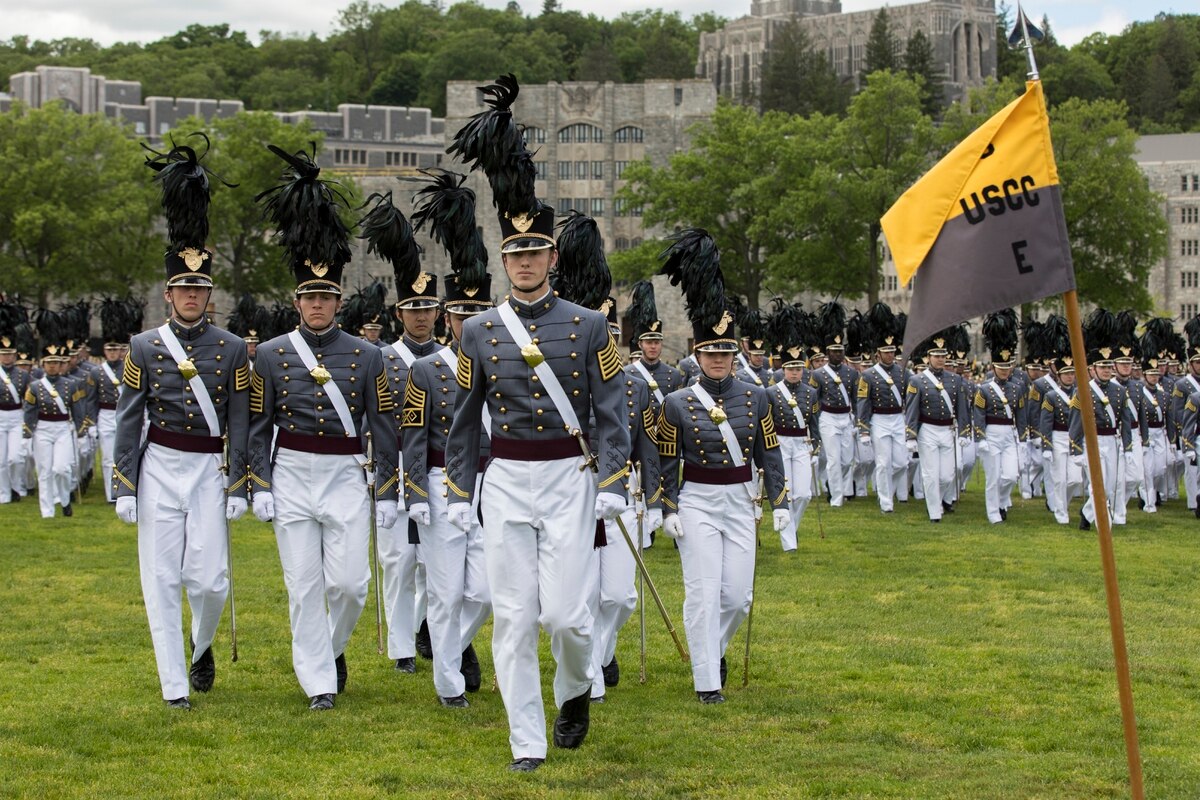
More than 70 cadets at the U.S. Military Academy at West Point were accused of cheating on a math exam, the worst academic scandal since the 1970s at the Army’s premier training ground for officers.
Fifty-eight cadets admitted cheating on the exam, which was administered remotely because of the COVID-19 pandemic. Most of them have been enrolled in a rehabilitation program and will be on probation for the remainder of their time at the academy. Others resigned, and some face hearings that could result in their expulsion.
The scandal strikes at the heart of the academy’s reputation for rectitude, espoused by its own moral code, which is literally etched in stone:
“A cadet will not lie, cheat, steal, or tolerate those who do.”
Tim Bakken, a law professor at West Point, called the scandal a national security issue. West Point cadets become senior leaders the nation depends on. “There’s no excuse for cheating when the fundamental code for cadets is that they should not lie, cheat or steal,” Bakken said. “Therefore when the military tries to downplay effects of cheating at the academy, we’re really downplaying the effects on the military as a whole. We rely on the military to tell us honestly when we should fight wars, and when we can win them.”
Army Secretary Ryan McCarthy said West Point’s disciplinary system is effective.
“The Honor process is working as expected and cadets will be held accountable for breaking the code,” McCarthy said in a statement.
“The honor system at West Point is strong and working as designed,” Lt. Gen. Darryl Williams, the academy’s superintendent, said in a statement. “We made a deliberate decision to uphold our academic standards during the pandemic. We are holding cadets to those standards.”
Army Col. Mark Weathers, West Point’s chief of staff, said in an interview Monday that he was “disappointed” in the cadets for cheating, but he did not consider the incident a serious breach of the code. It would not have occurred if the cadets had taken the exam on campus, he said.
Rep. Jackie Speier, D-Calif., who leads the personnel panel of the House Armed Services Committee, said she found the scandal deeply troubling and West Point must provide more transparency to determine the scope of cheating.
“Our West Point cadets are the cream of the crop and are expected to demonstrate unimpeachable character and integrity,” Speier said. “They must be held to the same high standard during remote learning as in-person.”
Instructors initially determined that 72 plebes, or first-year cadets, and one yearling, or second-year cadet, had cheated on a calculus final exam in May. Those cadets all made the same error on a portion of the exam.
Recently concluded investigations and preliminary hearings for the cadets resulted in two cases being dismissed for lack of evidence and four dropped because the cadets resigned. Of the remaining 67 cases, 55 cadets were found in violation of the honor code and enrolled in a program for rehabilitation Dec. 9. Three more cadets admitted cheating but were not eligible to enroll in what is called the Willful Admission Program.
The scandal of 1976 was much larger and created a revamping of the whole honor code, including the present policy that allows those found guilty of cheating to rehabilitate. There, the Academy went through self-reflection and decided that its training practices and means of dealing with infractions were partially to blame.
That 73 cadets were caught cheating on a single exam is a big deal. On the other hand, it’s worth emphasizing that 72 of them were in their first year. And the Class of 2023 had “more than 1,190” members, so we’re talking about 6 percent of the cohort.
Still, I agree with Speier that it’s distressing for the Superintendent to downplay this. The fact that this “would not have occurred if the cadets had taken the exam on campus” speaks to procedure, to be sure, but it also speaks to integrity. “They cheated because they thought could get away with it” is the antithesis of honor. If “Duty is doing the right thing when no one is watching,” these 73 are derelict.
On the other hand, Bakken is being histrionic. We’re talking about 18- and 19-year-old kids operating under unusual stress—forced back home during a pandemic and trying to complete their studies remotely—not senior leaders. They deserve additional scrutiny—and redoubled honor education—during the rest of their tenure at the Academy but it’s likely an overreaction to simply expel them, permanently branding them cheaters.
Further, while it’s true that the academies pride themselves on producing the best of the best, the fact of the matter is that these cadets are under a far higher level of scrutiny than their ROTC peers. There is doubtless cheating there, too, but it never rises to the level of scandal because it’s either undetected or the cadets are simply quietly dismissed from the program. Academy cadets are technically active duty soldiers, subject to not only 24/7/365 supervision but the Uniform Code of Military Justice.