Over at The New York Times, Carl Huse ponders the question of whether or not Republicans would follow the so-called “Garland Rule” if a Supreme Court vacancy were to open up prior to the 2020 elections:
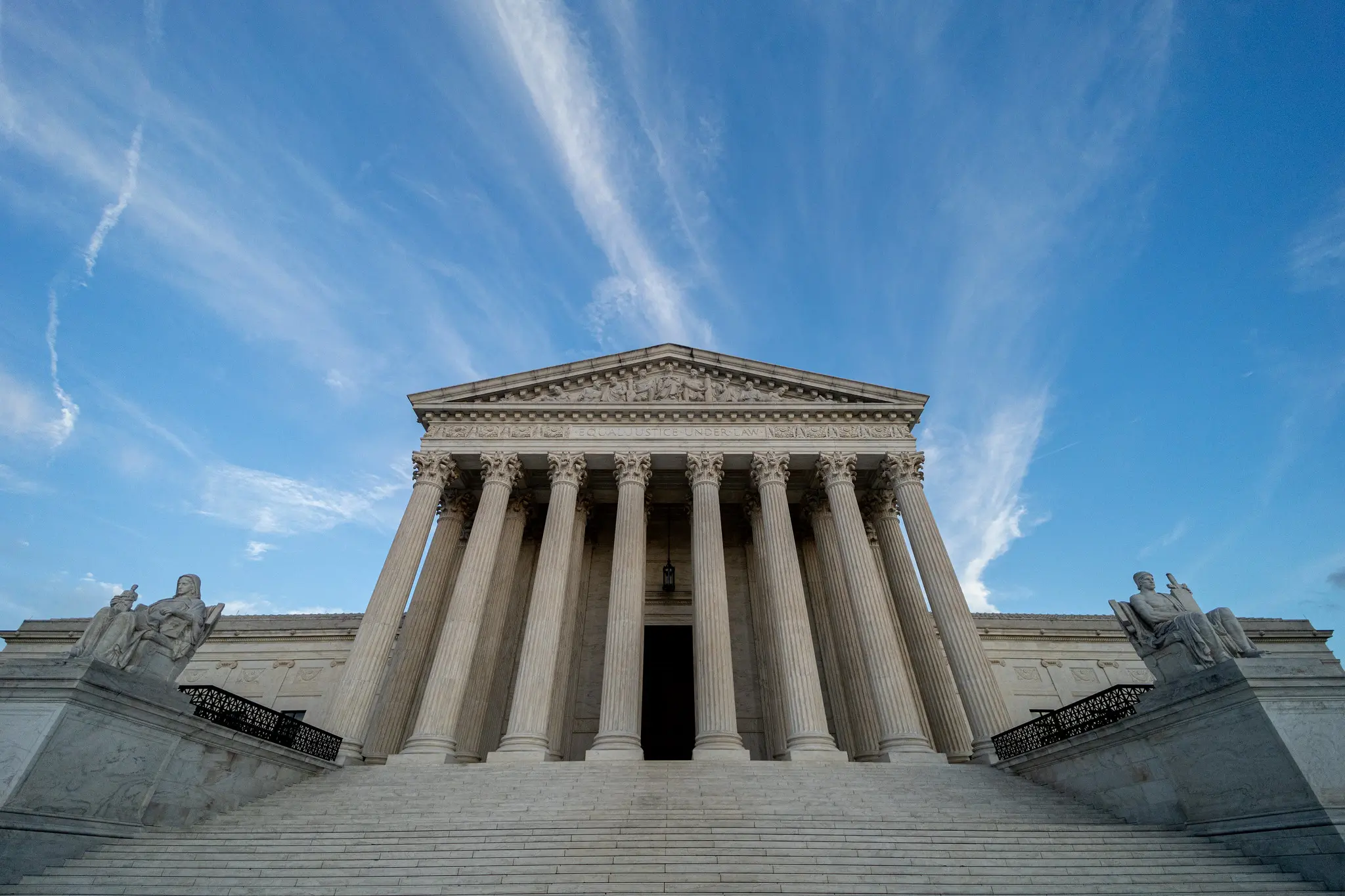
WASHINGTON — When Justice Ruth Bader Ginsburg was released from the hospital last weekend after another in a string of health scares, blue America breathed a sigh of relief. Only one more month, many whispered, until the start of a presidential election year when filling a vacancy on the Supreme Court would be off limits in the Senate.
But would it?
That was the case in 2016 when Senate Republicans stonewalled President Barack Obama’s nomination of Judge Merrick B. Garland to fill an opening that occurred with 11 months left in Mr. Obama’s tenure. “Let the people decide,” was the Republican mantra at the time, as they argued that it was improper to consider Mr. Obama’s nominee when voters were only months away from electing a new president who should get the opportunity to make his or her own choice on a Supreme Court justice.
But with the tables turned and Republicans holding the White House, that almost certainly would not be their refrain in 2020 if a court seat were to open up through death or retirement.
Senator Mitch McConnell, the Kentucky Republican, majority leader and unapologetic mastermind of the 2016 Garland blockade, has made clear that he would move ahead with a Supreme Court nominee from President Trump. The only potential barrier would be resistance from his own party on the grounds it would be hypocritical and unfair for Republicans to do what they prevented Democrats from doing four years ago.
Widespread defections on that basis seem highly unlikely.
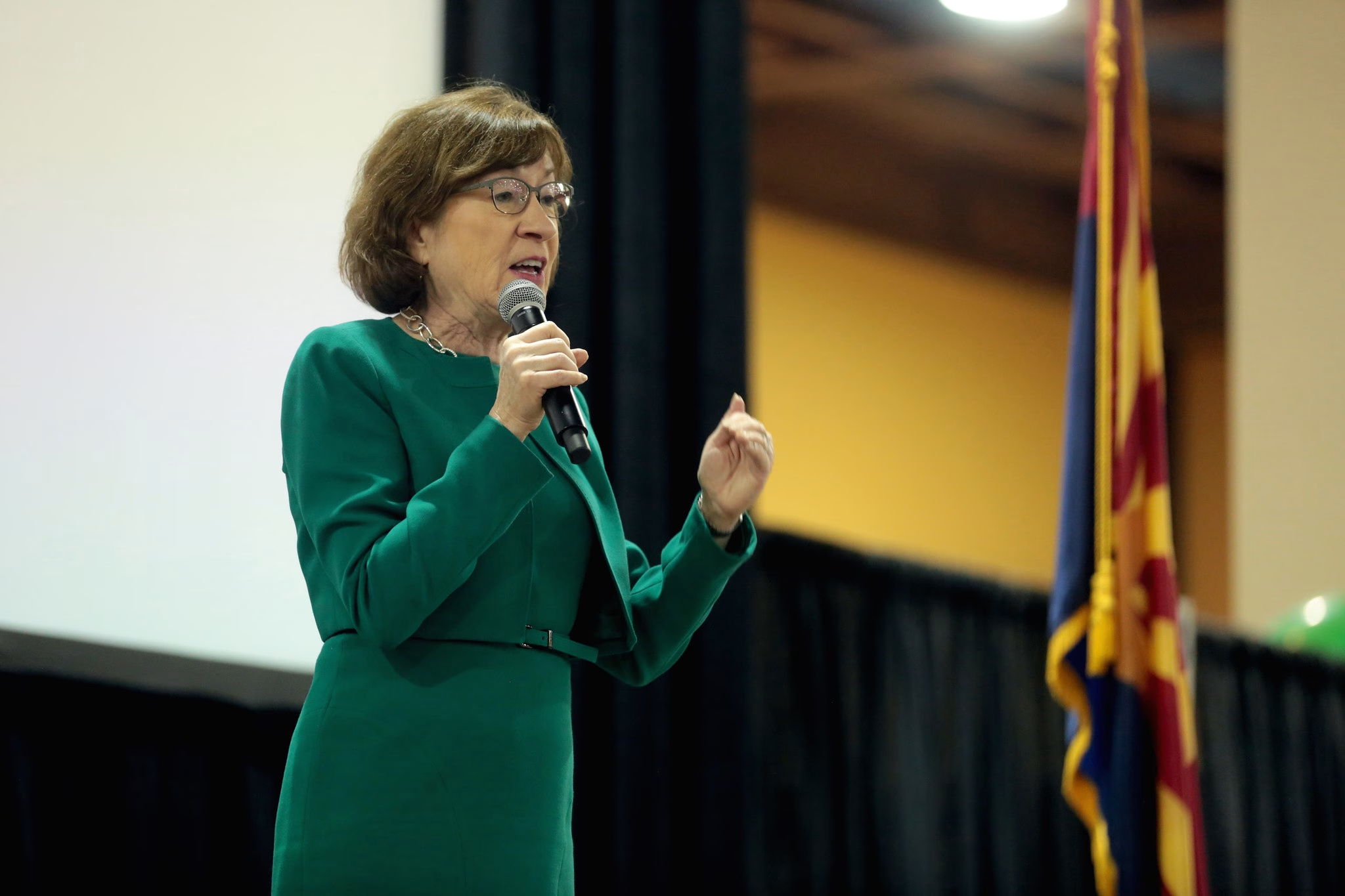
And Senator Susan Collins, the moderate Republican from Maine who broke with her party and backed holding a confirmation hearing and vote on Judge Garland in 2016, said she would take the same position in 2020: Should a vacancy arise, the sitting president should get the chance to choose a nominee, and the Senate should move forward to confirm.
“My standard on the nomination of Supreme Court nominees remains the same,” she said. “As long as the president is in office, he has the constitutional right to nominate. I thought that Merrick Garland should have had a hearing and a vote. Now obviously, senators could have voted against him based on the timing. But to block the nomination from proceeding at all, I thought was wrong.”
Senator Charles E. Grassley, Republican of Iowa, oversaw the Judiciary Committee but refused to convene a hearing for Judge Garland and met with him only grudgingly. As a result, he said last year that he would not consider a nominee in 2020 if he were still chairman of the panel. But he has since left the top spot on the panel to take over the Finance Committee, sparing him the prospect of either going back on his word or infuriating Mr. Trump and his colleagues. Allies say they doubt he would take a stand against a nominee since he is no longer chairman.
Republicans say the difference between 2016 and 2020 is one of political alignment. Democrats held the White House and Republicans controlled the Senate in 2016; Republicans now control both. To Mr. McConnell and his colleagues, that shift justifies their new position. But in 2016, Republicans focused most of their argument against taking up Mr. Obama’s nominee not on party control, but on the basis of the approaching presidential election, and they would face thunderous charges of hypocrisy if they took up a nomination next year.
Democrats remain angry over the treatment of both Mr. Obama and Judge Garland and expect Republicans to move aggressively if the chance arose for Mr. Trump to place a third nominee on the court. Should any nominee replace one of the four justices picked by Democratic presidents, it would cement a commanding 6-to-3 conservative majority on the Supreme Court, and the lure of that lineup would probably prove irresistible to Republicans.
“Do you have any Republican senator saying that in 2020 we won’t ram through a Supreme Court nominee?” asked Senator Chris Coons, Democrat of Delaware and a member of the Judiciary Committee. “Of course they will.”
In some sense, The question that Hulse asks here was answered back in May when Senate Majority Leader Mitch McConnell stated that the Senate would indeed proceed forward with hearings and a vote in the event of a vacancy before the election. His reasoning, as specious as it seems, is that the supposed rule only applied when the Senate and the White House were held by two different parties. At the time, this came as a surprise to many observers who seemed to clearly remember that McConnell said nothing about the partisan makeup of either the Senate or the White House when he and the rest of the Republican caucus took the position that they would not consider Garland’s nomination but would instead allow the seat held by the late Justice Antonin Scalia to remain unfilled until a new President and Congress took office in 2017.
As I noted at the time, there was and, and still is, no legal argument against the position that McConnell andGOPtook back in 2016. The Constitution provides that a Supreme Court nominee must be approved by the Senate, but it does not require the Senate to hold either hearings or a floor vote within any set specific period of time. Nonetheless, the Republicans back then were taking a rather obvious political risk given the fact that all of the available polling indicated that Hillary Clinton would likely beat Donald Trump or any of the other potential Republican nominees in a General Election In that event, she would be the one who would have gotten to choose the nominee to replace Scalia, and he or she would have likely been much younger and further to the left than Garland was.
The one holdout on this issue, at least on paper, appears to be Senator Lindsey Graham, the head of the Senate Judiciary Committee, which of course would be in charge of holding hearings on any Supreme Court that might take place. Asked about the application of the so-called Garland Rule to the 2020 election back in early October, Graham appeared to say that he would object to proceeding forward on any nomination that took place after the primary process starts in February;
Sen. Lindsey Graham (R-S.C.) on Wednesday said he would be willing to hold a Supreme Court seat open until after the election if there is a vacancy during the last year of President Trump’s term.
The remarks came after an audience booed and jeered at him as he defended Supreme Court nominee Brett Kavanaugh
“This may make you feel better, but I really don’t care,” Graham said. “If an opening comes in the last year of President Trump’s term, and the primary process has started, we’ll wait until the next election.”
The remarks referenced the blockade by GOP senators in 2016 of Merrick Garland, former President Obama’s nominee to the Supreme Court to replace the late Justice Antonin Scalia.
Garland was nominated on March 16, 2016, but never received a hearing or vote from Republicans then controlling the Senate.
“If you look back at 100 years, no one has been replaced under that circumstance,” Graham told Atlantic editor-in-chief Jeffrey Goldberg in the interview at the Atlantic Ideas Festival. “I felt like I was doing the traditional thing there.”
Would Graham actually hold to this position if there was a Supreme Court vacancy next year? Quite honestly, I doubt it. Much like he has folded like a cheap deck of cards on other issues in the Trump Era, something that has seemingly become more commonplace as we get closer and closer to the South Carolina Primary and the 2020 General Election. The Lindsey Graham of the 2016 campaign, who stood up to Donald Trump, has given way to Lindsey Graham the toady, who defends Trump at every turn, including suggesting recently that he would use his position as Chairman of the Senate Judiciary Committee to suggest that he would launch investigations of the conspiracy theories that have been advanced by this President, including the Joe and Hunter Biden “conspiracy” and the debunked claim that Ukraine was the nation that interfered in the 2016 elections rather than Russia. Does anyone actually believe that, if sufficiently pressured by McConnell and Trump, McConnell would actually not hold hearings?
Of course, even if Graham remained a holdout on this issue, there would be nothing to stop McConnell from pishing the nomination forward. He could choose to bring the nomination to the floor without hearings as long as he knows he can count on having at least 50 Republican votes (plus the Vice-President) to push a confirmation through.
So, yes, I do expect that the GOP would seek to push a 2020 Supreme Court nomination through regardless of the timing. Given the fact that they paid absolutely no political price for blocking Garland, they’re likely to conclude that they wouldn’t pay much of a price for doing the opposite when there’s a Republican in the White House Indeed, it might just be something that would energize the Republican base ahead of the election.
All that being said, I tend to doubt that we’ll see a vacancy this year unless one of the Justices has a health issue that prevents them from staying on the bench. The Justices are as aware of the calendar as the rest of us, and even with the elimination of the filibuster for judicial nominees, the confirmation process remains a divisive and highly political process that would become even more partisan in an election year. Additionally, it’s likely that both of the elderly Justices on the liberal side of the court, Justices Ruth Bader Ginsburg and Stephen Breyer, would decide to stay in place until at least after the election in the hope that their replacement could be named by a Democratic President. The other Justice of advanced age, Clarence Thomas, seems to be enjoying his status as the longest-serving Justice, a position that gives him some influence over issues such as the assignment of opinions when he is in the majority and the Chief Justice is not. This doesn’t foreclose the possibility of a retirement necessitated by health, of course, but hopefully, the Justices will all remain healthy for many years to come.