Neal Simon, who describes himself as “a Maryland business executive, was a 2018 independent candidate for U.S. Senate. Simon serves on the boards of the Bipartisan Policy Center and Unite America,” offers two rather implausible outcomes for a government under complete Democratic control. He terms them “Retaliation or Reconciliation.”
Retaliation for Democrats would entail a full-throttled, comprehensive attempt, using every available executive and legislative power, to advance a liberal agenda. Blue power would be consolidated by forming a Cabinet constructed to unite Biden’s party rather than the country, perhaps by appointing Elizabeth Warren and Alexandria Ocasio-Cortez to high level positions.
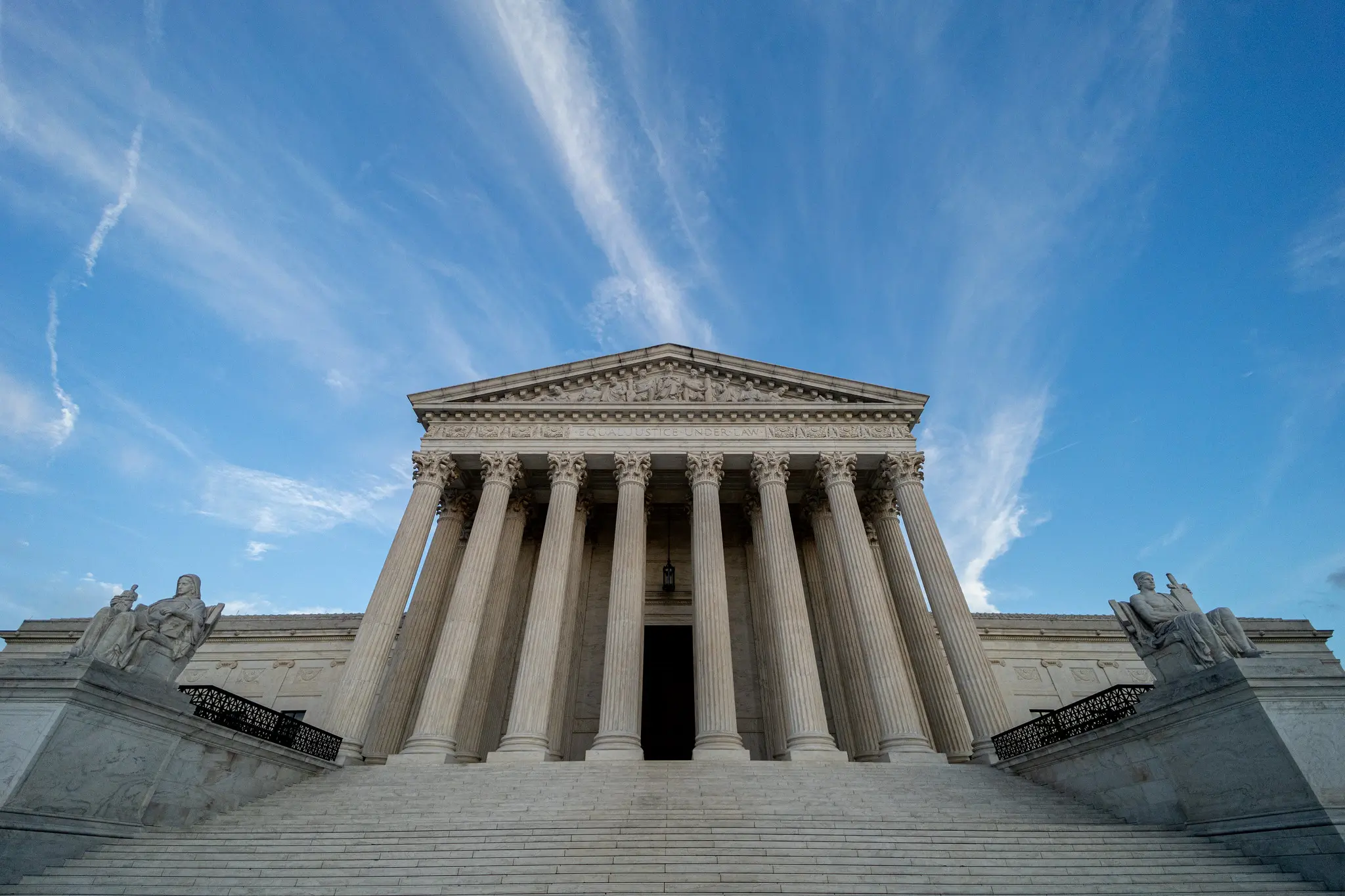
In Congress, with 51 votes in the Senate, Democrats would abolish the filibuster and advance long-dreamed-about legislation without a single Republican vote. In the judiciary, Democrats would pack the Supreme Court by adding two, or even four, new justices. Blood-thirsty activists would level criminal charges against Donald Trump and even some of his aides and family members. It would all feel good for liberals who have endured not only Trump’s lying and abuse of power, but also his outright denial of their legitimacy as political opponents.
I agree with Simon as to how such a scorched-earth agenda would be perceived:
Yet to many Americans, such actions would feel more like vindictiveness. About 43% of the country still approves of President Trump’s job performance and even if he loses big, he will have gotten some 60 million votes. This very large group of people would feel as though salt was being deliberately rubbed into their wounds.
Worse, choosing the vengeful, partisan path would hasten the tortuous ruin of our federal government. It’s easy to imagine scenarios where, in just eight years, Republicans retake control of the presidency and both houses of Congress, and seek their own revenge by packing the court further, reversing recent legislation, and passing new laws with only their own party’s support. Our country would become the proverbial idiot in the shower; the water that was too hot for most of us would then become too cold.
For all his flaws, Biden is no radical. He’s been in high-level national politics since 1973—nearly half a century—and is well aware of the value of institutions.
I do think the filibuster likely to go but it’s on death’s door, anyway. But I really don’t see Warren or Ocasio in the administration; they’d simultaneously become lightning rods and be frustrated by his moderate temperament.
Nor, as much as it’s warranted, do I think Biden and company will spend much time going after Trump and his cronies. It would just suck too much oxygen out of the room and they’ve got real work to do.
I’m less sure on court-packing. While I’m bemused that Democrats somehow think that thwarting Merrick Garland while rushing through Amy Comey Barrett counts as two outrages, there’s a reasonable sense that a seat was stolen from the Democrats and the Supreme Court thus already effectively “packed.” Biden has hinted that he is amenable to something like Pete Buttigieg’s plan of expanding the Supreme Court considerably while taking measures to ensure that it’s permanently a moderate group. We shall, I suppose, see.
Simon’s “Reconciliation” scenario is more fantastical still.
So, what might reconciliation look like? In the executive branch, it starts with President Biden forming a Cabinet designed to increase national unity rather than party loyalty. Imagine a Secretary of State Mitt Romney or Veterans Affairs Secretary Martha McSally. There’s precedent for this type of bipartisanship. In another divided time, first term Republican President Abraham Lincoln named two Democrats among his seven Cabinet members, including Secretary of War Edwin Stanton.
Such an approach might have been well-warranted after 2000 or 2016, elections in which the popular vote winner won the White House. Or even 2004, where the election was razor-thin. But it makes no sense whatsoever after a wave election soundly repudiating the other party’s agenda—let alone one following a wave election in the same direction.
In Congress, a good beginning would be replacing Chuck Schumer and Nancy Pelosi as Senate majority leader and speaker of the House. There’s too much bad blood between the Republicans and the two of them to allow any real chance of reconciliation. In their place, Democratic legislators would choose more moderate leaders who haven’t been molded by, and scarred by, decades of partisan fighting. Senate Democrats would maintain the filibuster, one of the last remaining tools that encourages cross-partisan cooperation. And they would commit to not passing legislation without at least a few Republican votes.
This, too, is rather ridiculous.
It’s likely time for Pelosi, who’s 80, to move on. But, if anything, she’s very likely to be replaced by someone to her left. While she’s a San Francisco liberal, she’s one from generations ago—and a natural pragmatist after decades of legislative infighting.
While Schumer may in fact find it hard to work with Republicans, it’s just absurd to pretend that he’s the locus of the bitterness that has been the hallmark of the Senate in recent years. While his predecessor, Harry Reid, certainly deserves his share of the blame, Republican Leader Mitch McConnell made it his mission to ensure that Barack Obama never got a single Republican vote. Granting that reconciliation has to begin somewhere, it’s absurd to commit to giving the Republicans a veto power on legislation given the history.
President Biden would take additional, purposeful actions to signal to the nation that we’re entering a new, post-partisan era. He would call for expanded national service, especially any program that enables young Democrats and Republicans to work side by side for the good of the country. He would fully endorse non-partisan electoral reforms, including ranked-choice voting, that reduce the subservience of legislators to their party bases. Our new president would minimize the partisan talk. His messaging would focus instead on our shared interests as Americans. Finally, and this will sound heretical to his most devoted followers, Biden would preemptively pardon President Trump of all federal crimes.
While a Trump pardon is almost surely not forthcoming, much of the rest is a distinct possibility. Of course, the notion that Democratic attempts to make elections more fair and transparent will be seen as “nonpartisan” is laughable. Republicans will almost surely portray it as “voter fraud” or otherwise a Democratic dirty trick to solidify their gains.
In 1861, in his first inaugural address, Abraham Lincoln proclaimed, “We must not be enemies. Though passion may have strained, it must not break our bonds of affection.”
I would note that this was followed by a civil war in which 600,000 Americans perishised.
The country would again be well served if Biden and other Democratic leaders could put country over party, follow the path towards national reconciliation, and end our decades-long dysfunctional politics. President Biden might go down in history as a unifying force similar to Lincoln, rather than as just another general in a tiresome partisan war.
Dave Schuler, from whom I got the pointer to the column, observes,
Like many Americans I find the prospect of reconciliation a lot better than retaliation but I’m afraid there is no prospect for it whatsoever. Regardless of the hypothetical position, President Biden wouldn’t be running the Democratic Party. Other than, possibly, black voters over the age of 40 he has no constituency of his own and by design power in government is mostly in the hands of the Congress and Congressional leadership is not moving towards Joe Biden but away from him. Throughout his career Mr. Biden has been what used to be referred to as a “Nixonian centrist” meaning that he is always moving to the center of his own party and that center is a lot farther left than it was during his career as Sen. Biden.
I think that’s right insofar as it goes—although almost by definition it’ll be less true in January. That is, while the two parties have sorted ideologically, the way either party makes substantial gain in the House or Senate is by running moderate candidates in swing states and districts. Democrats are running war running people like AOC in deep blue districts, shifting their messaging to the left. But they’re running heroes and astronauts in a bid to knock off unpopular Republicans in places like Georgia, Arizona, and North Carolina.
In the first debate, Biden declared “I am the Democratic Party.” That’s obviously not quite right. As Dave rightly notes, Democrats in Congress will indeed have a big say in what the agenda looks like. But Donald Trump has shown the degree to which the man in the White House dominates his party’s vision.
Biden is a natural conciliator. It comes with the territory after decades in the Senate. But, no, he’s not going to run a unity government.