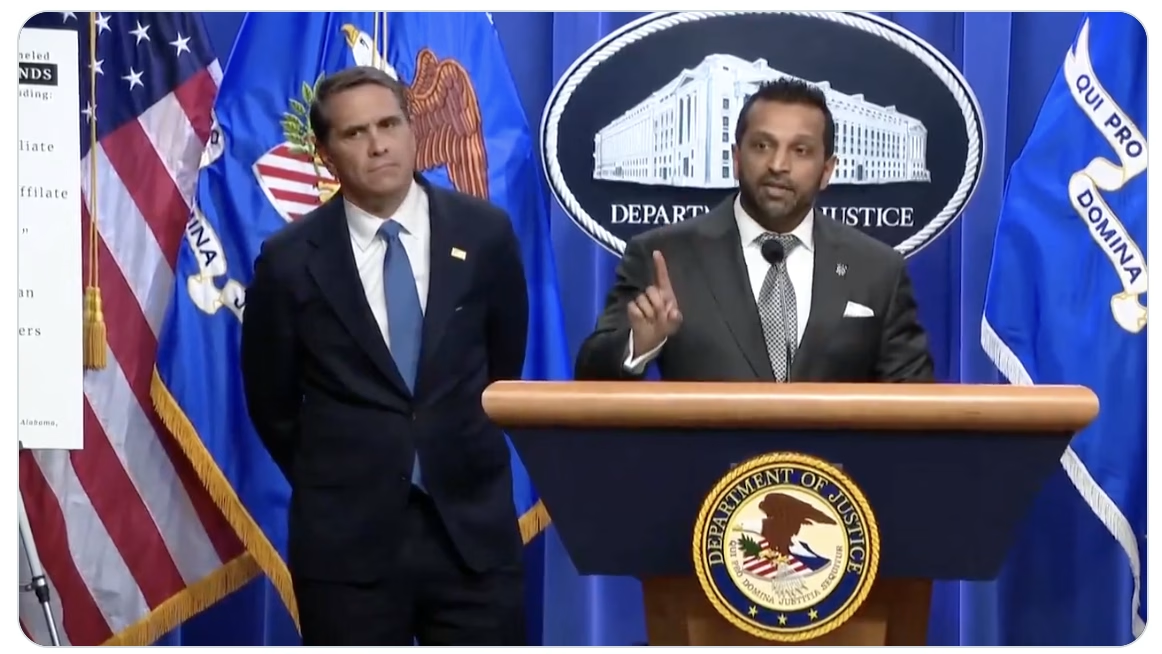
As James Joyner noted this morning, the Trump administration is cleaving pretty heavily to a pro-corruption direction. This is manifesting in things like a “pause” on prosecuting the Foreign Corrupt Practices Act. In the comment thread, a question emerged as to whether there was a case to be made for things like bribery since we can find examples of such elsewhere in the world.
An initial thought is that whenever bribery is an accepted practice, this just tends to result in officers charged with enforcing rules (whether they be traffic laws or building codes, to name just two examples) focusing more on enriching themselves than on doing the jobs they are supposed to be doing. A police officer who can extract bribes from motorists is going to be focused on finding easy marks to help line his pockets rather than actually properly enforcing traffic laws. And certainly, it shouldn’t be hard to game out what happens when building inspectors (or health inspectors, food inspectors, etc.) are on the take.
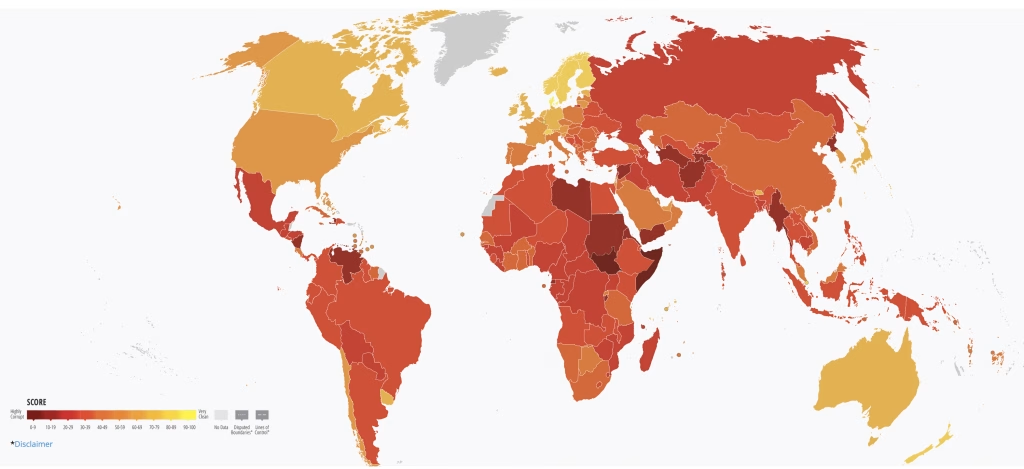
But, I don’t have to reinvent the wheel on this topic. There is a lot of literature on the subject. The work of Stephen D. Morris, now professor emeritus from MTSU whom I knew for years from various conferences we both attended, which focused on political corruption in Mexico comes to mind. And he is just one example. More to the point there are groups like Transparency International, which publishes an annual report on global corruption including its Corruption Perceptions Index, which ranks all the countries in the world on this topic.
The CPI ranks 180 countries and territories according to the levels of public-sector corruption perceived by experts and businesspeople. It relies on 13 independent data sources and uses a scale of zero to 100, where zero is highly corrupt and 100 is very clean.
Why might corruption matter?
The index highlights the stark contrast between nations with strong, independent institutions and free, fair elections, and those with repressive authoritarian regimes. Full democracies have a CPI average of 73, while flawed democracies average 47 and non-democratic regimes just 33. This highlights that although some non-democratic countries might be perceived as managing certain forms of corruption, the broader picture shows that democracy and strong institutions are crucial for combatting corruption fully and effectively.
This really shouldn’t be a shock. Do you want your accountant to be corrupt, or honest? You banker? Your lawyer? Your doctor? The list is endless.
Now, I suppose that someone will note, like Jesse Pinkman did in Breaking Bad, that sometimes you want not a criminal lawyer, but, in fact, a criminal lawyer. But keep in mind he was trying to get a petty meth dealer out of jail.
Most of us want to deal with honest people and for obvious reasons.
Regardless, one need only look at the CPI to note the kinds of countries that are towards the top, in terms of economic success, political liberty, and general living standards versus those at the bottom.
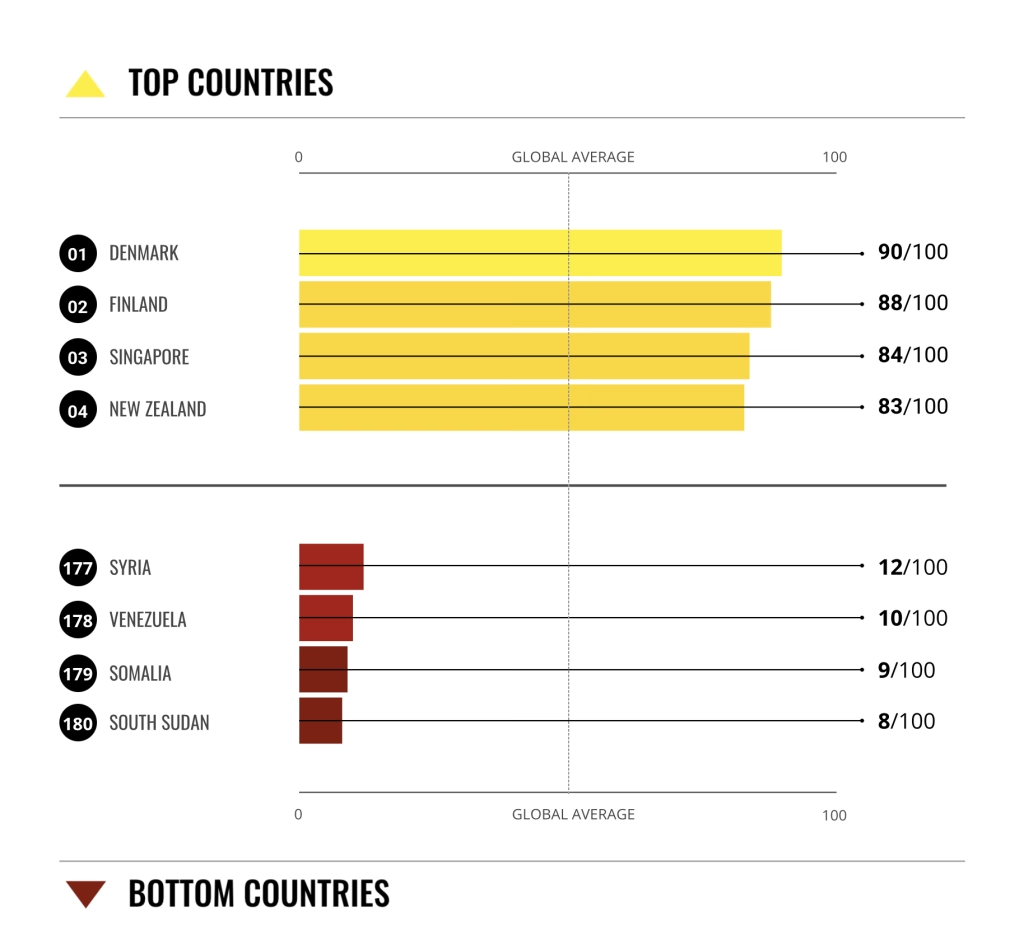
Trump’s actions will take us down the list and will do so in a way that will damage our society, politics, and economy.
Much more at the link.