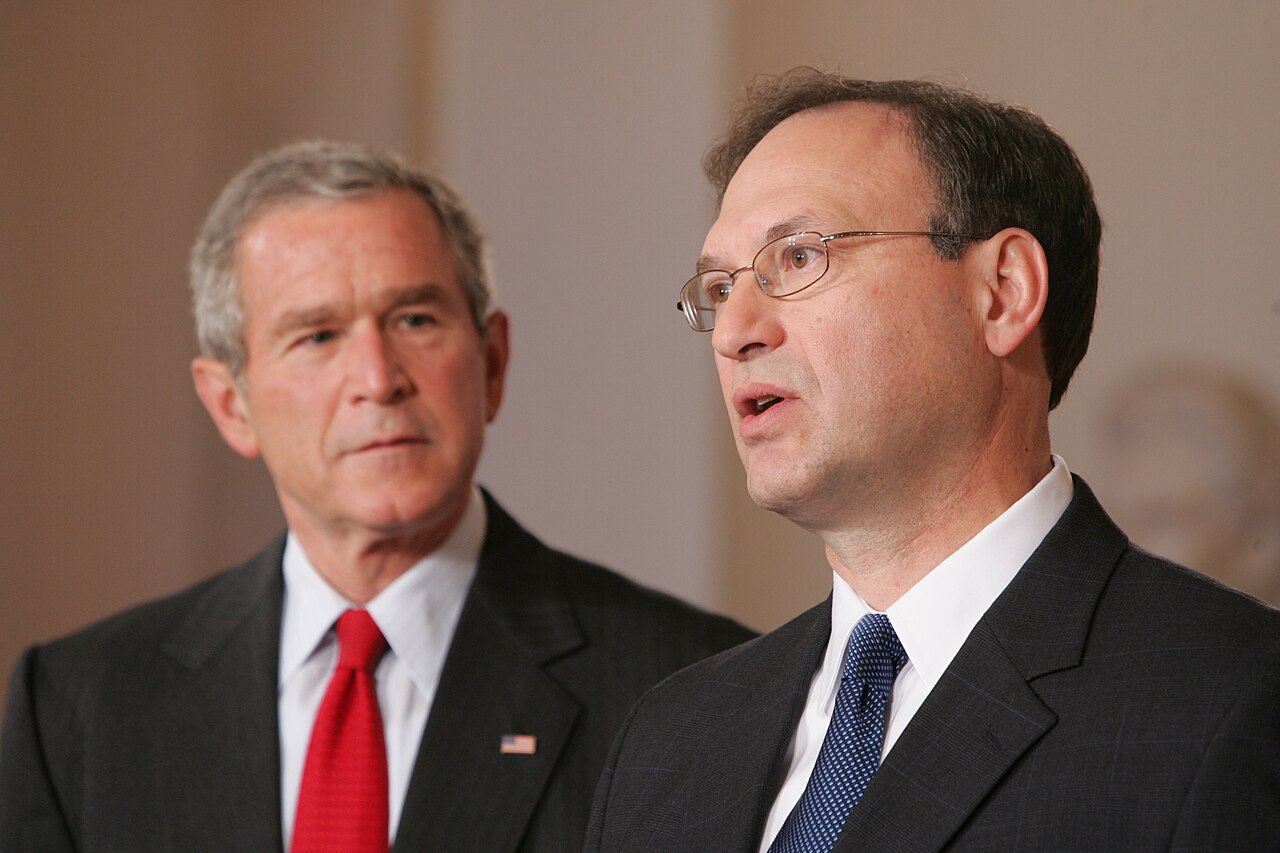
After last weeks defeat of the Manchin/Toomey background checks bill, President Obama took to the White House Rose Garden along with Vice-President Biden and several of the parents of victims from the Newtown shooting and urged Americans to hold the Senators who had voted against the bill accountable by letting them know how angry they are about the vote. As I noted at the time, it seemed unlikely that the vote itself would have much of an adverse political impact for the Senators who voted no, in no small part because gun control has traditionally been a “high support/low intensity” issue for voters. Based on the first round of polling that has come out since last weeks vote, it would seem that the American public does not share the Presidents anger over the vote, meaning that it is likely going to be difficult for Democrats to capitalize on the vote politically in 2014 or beyond.
First up, Chris Cillizza points to a new poll conducted by The Washington Post and the Pew Research Center that shows a mostly muted reaction from the public to the defeat of Manchin/Toomey:
The Senate’s defeat of a package of popular proposals aimed at curbing gun violence last week seemed certain to foment public outrage at out-of-touch politicians who don’t listen to their constituents.
Not so much, according to a new Washington Post-Pew Research Center poll. Yes, a plurality (47 percent) describe themselves as either “angry” or “disappointed” about the failure of the gun legislation, but 39 percent call themselves “relieved” or “happy” about what happened. That’s a far cry from the 90-ish percent support that expanding background checks — the centerpiece of the proposed legislation — enjoyed.
And, among those who said they were “very closely” keeping tabs on the vote, the split was even closer; 48 percent said they were angry/disappointed while 47 percent were relieved or happy. (That piece of data is indicative of the passion gap on the issue between those supporting gun rights and those pushing for more restrictions.)
Viewed broadly, the new Post-Pew poll numbers suggest that, in the end, the Senate vote last week wound up functioning in the minds of most Americans as a sort of stand-in for how they feel about gun rights more generally as opposed to the specifics (background checks in particular) of the legislation.
So, not surprisingly, those who were most angry about the failure of the gun bill were reliably Democratic groups such as those with postgraduate degrees and those living in the Northeast.
Ditto those who described themselves as “very happy” about the collapse of the legislation. Three in 10 Republicans put themselves in that category, as did one in four whites without college degrees.
The numbers suggest that the White House wound up losing the message fight over the gun legislation. Rather than a conversation centered on widely-popular measures supported by members of both parties, the debate — at least as people perceived it — became a wider referendum on the proper place for guns in society.
Reading into the poll itself, there doesn’t seem to be much difference in reaction to the vote based on where a respondent lives and how their Senators voted:
In the 21 states where both senators supported the legislation, including California, New York and Illinois, 51% say they are either angry or disappointed that the legislation failed, while 38% are very happy or relieved about the outcome. Just 16% of people in these states say they are angry the legislation was voted down, while 35% are simply disappointed.
In the 13 states where one senator voted in favor and one voted against the bill, such as Florida, Ohio and Arizona, the overall balance of opinion is similar: 49% say they are angry or disappointed, 36% very happy or relieved.
Reactions to the Senate vote are more positive in states represented by two senators who both voted against the legislation. In the 16 states where both senators voted against the legislation, such as Texas, Georgia and Tennessee, 46% say they are very happy or relieved that the bill did not pass; 37% say they are angry or disappointed.
In other words, you could say that the Senate vote was in some way a reflection of how their constituents felt. The states where both Senators voted for the bill are, by and large, solidly Democratic states so it makes sense that voters there would be slightly more upset about the defeat of the bill than the rest of the nation. The states where the votes were split are many of the so-called “purple” states such as Virginia and Ohio, and the reaction there pretty much mirrors the nation as a whole. Finally, the states where both Senators voted against the bill are all solidly Republican and, not surprisingly, in those states voters tend to be happy that the bill failed. That suggests that, to a larger degree than the proponents of gun control might be willing to admit, that the Senators who voted against the bill were reflecting the expressed preferences of their constituents rather than just kowtowing to some lobbying group. Indeed, Democratic Senator Heidi Heitkamp of North Dakota reported that the calls to her Washington, D.C. and District offices were overwhelmingly opposed to the Manchin/Toomey bill, a reflection that opponents of the bill were far more passionate about it than the supporters.
Elspeth Reeve finds more data in the poll numbers:
[A] closer look at that 47 percent — yes, it’s that number again — who are disappointed or angry shows why it’s going to be difficult to turn even that much outrage into electoral consequences for filibustering senators. First, who’s mad about the bill’s failure? According to the poll, 67 percent of Democrats said they are “angry.” They are also postgrads (31 percent), followed by people in the Northeast (26 percent). A fifth of women say they’re angry. And then take a look at who’s on the other side and “very happy” the legislation died: 29 percent of Republicans, 28 percent of people from the West, and 26 percent of independents and white people without a college education.
That’s a sizeable portion of the “swing” voter population out there, and a suggestion that this issue isn’t nearly as cut and dry politically as gun control advocates would like to think. Because of the intensity issue that I’ve discussed before, here and here, it’s fairly clear that a vote against the bill wasn’t necessarily as big a political risk for Senators as many commentators have tried to make out over the past week. This is especially true, I’d argue, in the red states where most of the “no” votes came from.
Greg Sargent, who supported the bill makes this observation:
So more Americans nationally reacted negatively to the vote (47) than positively (39). On the other hand, this is well out of sync with the 90 percent who support expanded background checks, and negligible numbers on either side have intense feelings about the vote — showing, again, that gun violence may not be a motivating issue. I’d caution against reading too much into this, however. Pew’s numbers may be influenced by the use of “gun control” in its question wording, and many recent polls still show overwhelming support for expanding background checks when respondents are asked specifically about this idea. Still, it remains unclear whether there’s any political penalty to be paid for opposing them.
(…)
[The poll numbers] don’t tell us whether an intensity gap persists in these states, in which partisans on the right do more to organize, lobby Senators, and donate money than partisans on the left do, which has historically been the case. This is something Mike Bloomberg’s Mayors Against Illegal Guns — and liberal groups — are hoping to change by building a long term pressure infrastructure.
Whether such a political campaign can actually get voters to become more “single issue” voters when it comes to gun control remains to be seen. As I’ve said before, most voters tend to base their vote on a large number of factors so it’s hard to see any campaign to get them to essentially ignore those other issues in favor of something that has been historically low intensity like gun control seems unlikely to succeed to me. Besides, you can rest assured that any campaign by Bloomberg and others in favor of gun control will be countered by others from gun rights advocates. Indeed the two campaigns likely would end up canceling each other out in terms of the impact they’ll haveon the election. For the moment, though, it doesn’t seem as though the rejection of Manchin/Toomey is going to have a significant negative impact in the 2014 elections.