WSJ (“Rolex Tries to Beat Watch Flippers at Their Own Game“):
Rolex is likely only breaking even on its official secondhand watch program. That looks intentional. Leaving profits on the table protects the brand’s reputation while it tries to put flippers out of business.
Rolex looked at the multibillion-dollar annual trade in its secondhand watches, which is rife with counterfeits and speculators, and decided it had to intervene.
Three years ago, the Swiss brand launched an official certified preowned program. The program is expected to do more than $500 million in sales in 2025, based on estimates from data analytics firm WatchCharts. One of Rolex’s main authorized dealers, Watches of Switzerland, told investors this month that certified used Rolexes are now its second-biggest seller.
[…]
An insight from the program is that consumers will pay 28% more on average for a preowned watch that has been certified genuine by Rolex than one that hasn’t, according to Morgan Stanley. Shoppers will spend extra to feel confident they aren’t buying a fake and—importantly for mechanical watches—one that is serviced and working properly.
Certain models of Rolexes are already more expensive to buy used than new. Because demand far outstrips supply, there is a waiting list for the roughly 1.2 million new watches the company sells a year, based on Morgan Stanley’s latest estimate. Collectors pay a premium in the secondhand market to get their hands on a watch immediately.
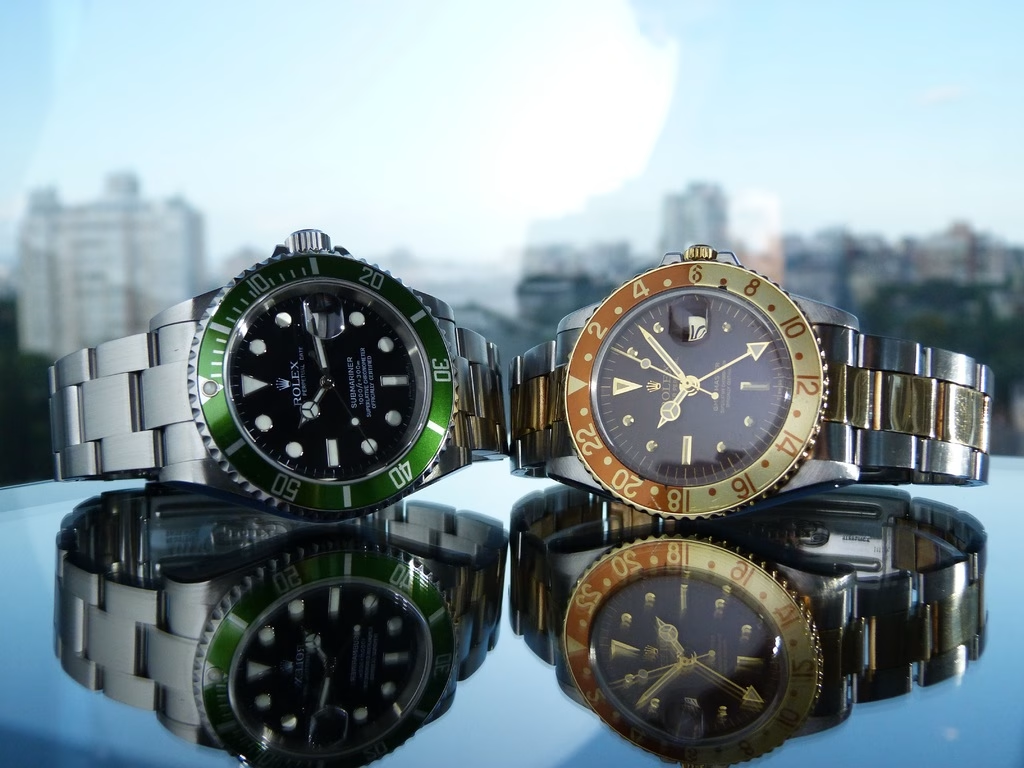
For example, one specific model of a brand-new Rolex GMT-Master II known as the Pepsi, which features a red and blue bezel, costs $12,150 including average sales tax in stores. The watch costs $22,750 on resale websites, but the median price of one that has been certified authentic by Rolex is $26,750, according to WatchCharts data.
As someone whose most expensive wristwatch was maybe $150, I find all of this rather fascinating. I can’t imagine paying the price of a small car for a timepiece.* But there’s clearly a massive market for signaling affluence.
Even more interesting is this:
Despite that premium, Rolex treats its preowned program as a tool to protect its image rather than a new source of revenue. The plan is set up so that independent retailers such as Watches of Switzerland and the 1916 Company, which are already authorized to sell new Rolex watches, do most of the legwork and get all of the financial reward.
The retailers are responsible for sourcing secondhand Rolexes. They authenticate the watches and service them to the brand’s standards. Rolex then certifies the watches as genuine, and issues a two-year warranty. The retailer, not Rolex, sets the price for the certified watches.
This seems sensible. When luxury watchmaker Audemars Piguet launched a preowned program and set the prices itself, it caused a backlash with consumers. A growing consensus in the industry is that brands should set strict rules for their official preowned programs, but let others run them.
Again, I don’t quite understand the psychology here. I get why people would pay a premium to get a Rolex-certified watch rather than risk getting scammed. But it’s odd to me that people would be upset with Rolex making money selling secondhand Rolexes.
*Indeed, I went several years without wearing a traditional timepiece at all, opting instead for a Fitbit tracker. After Google acquired and enshittified the line, I finally opted not to replace my failing device several months back and dug some watches I hadn’t worn in years out of a drawer.