
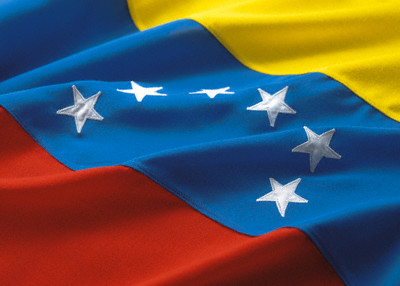

I understand, in the abstract, the allure of using US military power to oust an authoritarian regime that is immiserating its population. It is a powerful fantasy that can seduce the mind, but it is a reality that almost never works. Nonetheless, NYT columnist Bret Stephens is huffing the fumes of potential regime change in Venezuela in his latest column, The Case for Overthrowing Maduro.
I would try to deal with Stephen’s substantive arguments in favor of regime change, but he really doesn’t make one save to note that Maduro is an awful leader and that the Venezuelan people are suffering because of it. He also notes that Maduro is enmeshed in the drug trade and that he is friendly with US adversaries Russia, China, and Iran.
Ok, no argument there, but none of that is a compelling reason to unleash death and destruction on the Venezuelan population in the hopes that violence will lead to regime change and renewal. The notion that the removal of a dictator automatically results in the emergence of good governance is just a false notion. See, e.g., Libya.
As a general matter, the success rate of “regime change” is pretty terrible. People make too much of the post-WWII transformation of Japan and Germany. Those are exceptional cases in the context of a global war and massive invasions of countries with a competent, long-term process of rebuilding states (not to mention substantial expenditures by the United States).
What are the “good” examples of US military action leading to democratization? There aren’t many. Panama gets cited in terms of the ouster of Manuel Noriega in 1989, but that was in response to a coup, and I would hasten to note that the US had troops in the country to begin with and that it was not analogous to overthrowing a multi-decade regime in the hopes of magically creating democracy via strategic bombing.
In recent history, I would note that a multi-decade occupation of Afghanistan did not bear democratic fruit. The invasion and occupation of Iraq were not worth the costs (in every sense of the word), and while there is a marginally better regime in place, it isn’t exactly the shining example of democratic governance its architects promised. Exact numbers are hard to come by, but hundreds of thousands, and maybe over a million, Iraqis died as a result of the US invasion. The disruption of countless families was not worth Saddam’s ouster, no matter how much of a tyrant he was.
How about the invasion of Vietnam? That’s a symbol of failed American power.
Yes, South Korea is democratic now, but please note we didn’t engage in the Korean War to restructure the South; it was about the North, and how did that turn out?
As a general matter, whether by military action or not, the exit of dictators does not mean that the next regime will be an improvement.
Anastasio Somoza fled Nicaragua, and that led to the Sandinistas taking over (and after a democratic phase, the leader of the revolution, Daniel Ortega, rules as an authoritarian).
When Fulgencio Batista fled Cuba, the Castro regime came to power, and the basics of which remain in control of the island.
When the Shah fled Iran, the Islamic Republic was installed and continues to govern Iran.
US interventions in Latin America have never gone especially well.
These are just a variety of examples that come to mind. I can attest that, as a general matter, US interventions into governance in Latin America are not a series of pleasant tales.
But, nonetheless, Stephens persists.
Two direct observations about the column.
First,
But the larger challenge posed by Maduro’s regime is that it is both an importer and exporter of instability.
Ok, so again agreeing that if I could wish the world to be different, I would wish Maduro away (indeed, I would wish that Venezuela’s once stable democracy had not collapsed in the 1990s). But if wishes were horses, beggars would ride, as the saying goes.
But the notion that overthrowing the regime would be stabilizing is absurd. Did overthrowing Saddam lead to more stability? Am I misremembering Mosul and ISIS, and all that?
Even if we accept that Venezuela is the source of some amount of instabilty, it is a contained instability. Regime change would unleash a far less contained or predictable instability in the region. How is that a good trade?
Did Qaddafi’s ouster make Libya more stable?
I can’t say it is a bad thing that Assad is gone from Syria, but did his exit increase the stability of the region?
I guess the aforementioned fumes in Stephens’ office are quite strong.
Back to the column. Stop me if you have heard this one before.
But there are also important differences between Venezuela and Iraq or Libya. These include a democratically elected leader, Edmundo González, who could govern with immediate legitimacy and broad public support.
Every time people argue for these kinds of regime interventions, they point to some opposition leader who is ready to step in. Stephens seems to have forgotten there were such promises about Iraq that did not pan out (granted, not democratically elected ones, but the argument that there was practically a government in waiting was made at the time). The notion that in the middle of the chaos of regime collapse, an individual is capable of stepping in with “immediate legitimacy” is absurd (especially when brought to power by Yanqui invaders).
Above all else, who in their right mind would think that the Trump administration, with key actors like SecDef Pete Hegseth and ODNI Tulsi Gabbard, is prepared to guide a regime change policy?
There really should be fixed terms for NYT columnists.









