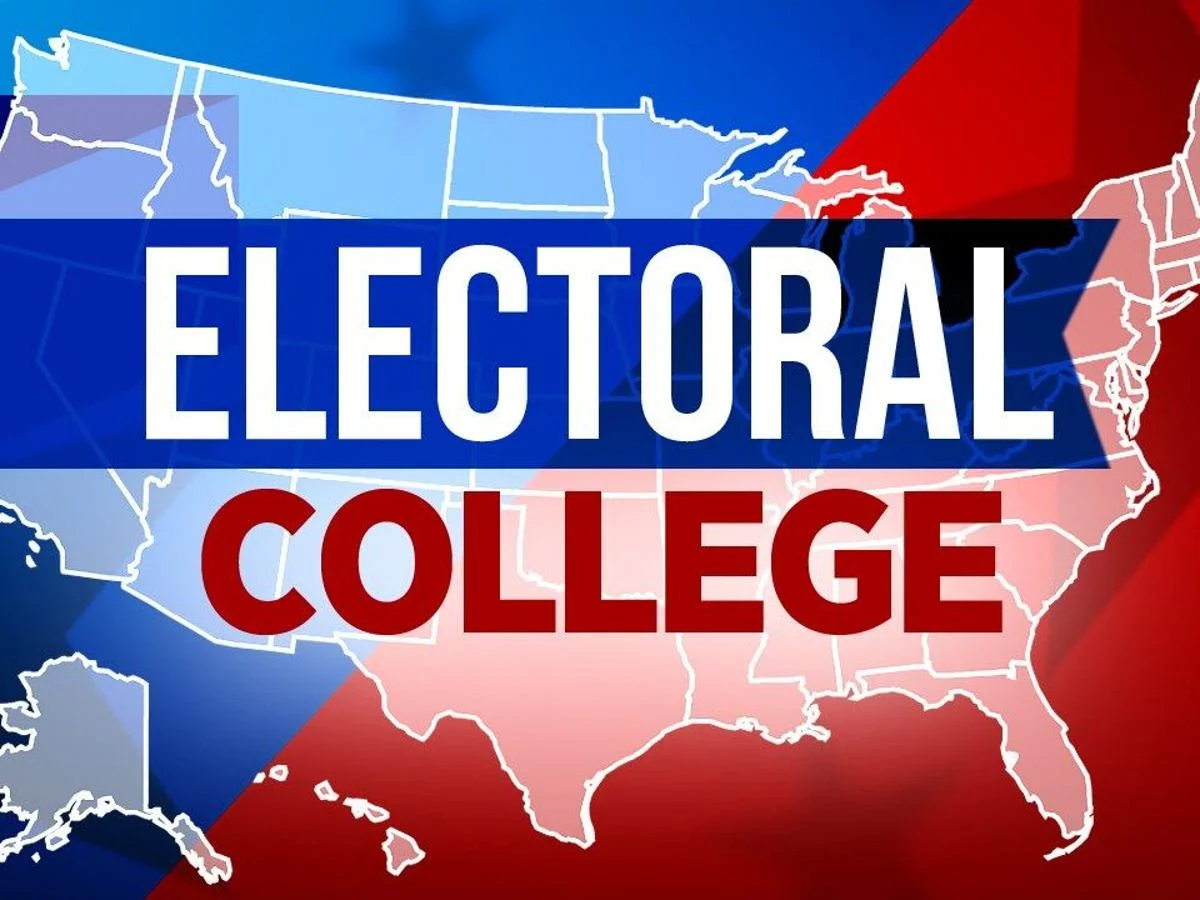
Radley Balko points to a just-released Public Opinion Strategies poll in Colorado showing a slight Bush lead and a strong likelihood that the idiotic Amendment 36 is likely to pass. As noted here previously, the amendment would award Colorado’s nine electoral votes proportionately, starting with this election. This would result in Bush getting 5 Electoral votes and Kerry getting 4, rather than Bush getting all 9 as would be the case otherwise.
Radley looks at the current electoral vote map, makes the reasonable assumption that Kerry will win Maryland (now showing as a tie) and does the math:
And that puts us right back at a 269-269 tie.
That means massive recounts in close states across the country. It means court challenges, both to recount procedures and to the Colorado ballot measure. And if we do get a tie, it means we’ll see recounts and court cases across the country in close house and senate races. Every seat in Congress will become important to selecting the president. If the Democrats retake the senate, it also means we could have a Bush-Edwards administration.
It also means lots of entertainment for us political junkies.
Quite right. Now, those figures are based on Kerry winning Florida, which I think quite unlikely absent some major change in the dynamics of the race. But we would definitely have another political crisis on our hands that would make 2000 pale in comparison if a 269-269 tie were the election night outcome.
Not only would there indeed be recounts in all the close states, but court challenges as well. Among the most obvious challenges would be to Amendment 36 itself. Changing the election rules after the fact strikes me as obviously illegal (violating 100-plus year old federal statute) and quite possibly unconstitutional as well. The Constitution allows the states to allocate its electoral votes as they please but requires that the legislature set those rules. It’s unclear to me that rules set by ballot initiative would qualify.
Update (I meant to blog on this the other day but never got around to it): As Gov. Bill Owens noted recently in USA Today, the “Plan would hurt small states.”
There’s a transparently partisan movement afoot in Colorado to distribute our Electoral College votes proportionately. The goal? To give John Kerry a four-vote Electoral College boost, putting him ahead of President Bush in a close election. But that in and of itself is not the reason proposed Amendment 36 on the Nov. 2 ballot is bad for Colorado. The fact is that if Amendment 36 passed, it would forever make it easy for presidential candidates to ignore Colorado, since our state would be an Electoral College “lone ranger” among states. Amendment 36 is bad for Colorado, which is no doubt why it’s being bankrolled by out-of-state interests. The man behind Amendment 36 is J. Jorge Klor de Alva, a multimillionaire who currently lives in Brazil. Klor de Alva could just as easily have pushed this scheme in his former home state of California — a state that will only grow in influence if small states such as Colorado surrender their Electoral College edge. It’s no coincidence that he didn’t, however: Ending the winner-take-all system in California would help Bush more than Kerry, which defeats Klor de Alva’s purpose.
The Electoral College was established for a very good reason: to protect the broad interests of all 50 states in the union, rather than merely those of highly populous states. Unfortunately, the Electoral College is also easily demagogued. Like so many bad ideas, reform sounds good to many on its face, but on closer look proves disastrous. Here’s why: Colorado is a state with a slight Republican majority, but which, nevertheless, has a longstanding tradition of electing Democrats to statewide and national office. If Colorado split its electoral votes, leaving just one or two electoral votes in play, future presidential candidates — and presidents — would ignore Colorado and its interests in favor of states with more electoral clout. They would skip over us and move on to more fertile ground.
While one can debate the merits of the Electoral College as contrasted with a simple national vote, it’s certainly the case that unilateral disarmament on the part of any state, especially a relatively small one, makes little sense. If the difference in “winning” Colorado is that between getting 4 or 5 of its electors, the value of campaigning or advertising there is miniscule indeed, even in a tight election.
Update: Votemaster reminds us that West Virginia Elector Richie Robb has threatened to vote for a Republican other than Bush, which, combined with a Kerry win in Colorado, make it Kerry 270, Bush 268. Since a Kerry win in Colorado is unlikely, the faithless Elector would make it Kerry 269, Bush 268, which would still throw the election to the House, presuming that the totals held after the recounts and court challenges. Of course, one suspects that, given all the time between the election on November 2 and the Electoral College vote on December 20, Robb would be ousted from his office by one method or another.