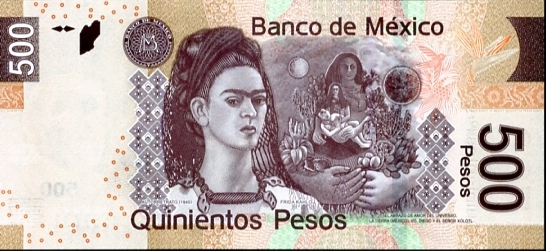
For the better part of a year, if not longer, there’s been a movement to put a woman on U.S. currency, which itself hasn’t seen changes in the identity of the men depicted on American money for about a century now. Originally, the groups behind the movement were focused on changing the $20 bill, both because of the Andrew Jackson’s own controversial history and because nobody seems to be quite sure how Jackson ended up on the $20 bill to begin with. When the Treasury Department made its formal proposal in June, though, it ended up announcing that it would be the $10 bill that would be changed, a proposal that received enough negative blowback that the Department ended up saying that the new design would preserve Alexander Hamilton’s place on the bill as well, a decision that didn’t seem to make anyone happy. Now, it appears that the success of a Broadway musical may have saved Hamilton’s central place on the $10 bill and returned the focus to changing the $20 bill:
WASHINGTON — For more than 100 years, women have waited for a portrait of someone of their sex at the center of a paper note, a wait that appeared to be ending when Treasury Secretary Jacob J. Lew announced 10 months ago that he would choose a woman for a new $10 bill in development.
But then the fame of a striving immigrant from the West Indies named Alexander Hamilton achieved unlikely heights in the lights on Broadway more than 200 years after his untimely death. The first Treasury secretary, in the 18th century, Hamilton became a 21st-century rap-musical phenomenon, and a small coterie of history-minded Hamiltonians swelled by millions to include not just well-heeled adults shelling out up to thousands of dollars a ticket but teenagers rapping Hamilton’s life story at the dinner table.
Now Mr. Lew is leaning toward keeping Hamilton at the center of the $10 note and placing a vignette of female historical figures on the flip side.
But, in keeping with his announcement last June, Mr. Lew is expected to simultaneously announce that a woman will be front and center on the more numerous $20 notes — displacing the (currently) less popular Andrew Jackson — and that one or more women will be on the $5 bill as well. Mr. Lew’s own public hints in recent weeks have pointed in this direction.
“We’re not talking just about one bill,” Mr. Lew said Thursday on CNBC. “We’re talking about the $5, the $10 and the $20.” And last month he carefully avoided saying a woman’s portrait would be at the center of the $10 bill, telling Charlie Rose in an interview on PBS, “We are going to put a woman on the face of our currency.”
Still, it would be years before the $20 and $5 bills could be redone, a time lag that would infuriate many eager to see a woman honored.
“If Jack Lew keeps Hamilton on the front, then I don’t think we’ll ever see a woman on the front,” said Shelley Zalis, founder of the Girls Lounge, a networking organization for female corporate leaders. “Who knows if that will ever be a reality?”
The $20 and $5 bills are next in the government’s process of redesigning currency to deter increasingly sophisticated counterfeiters, and also to add new tactile features for identification by the visually impaired. Given the complexity of the process, new versions would probably not enter circulation before the 2030s, government officials say.
Treasury and White House officials, including Mr. Lew, declined to comment for the record. But already speculation about the Treasury secretary’s decision has angered some of the women who have awaited it most intently, an online group called Women on 20s.
On Friday, its leaders issued a news release excoriating Mr. Lew: “Women on 20s considers it deeply disturbing that Secretary Lew would renege on his public commitment to prominently feature a single woman on the next new bill.”
“With this decision, Secretary Lew is proving, once again, that in America it’s still a man’s world,” they added. “It was a chorus of mostly men who implored him to keep Hamilton on the $10, and he listened.”
Indeed, it was Mr. Lew’s listening — not just to Hamiltonians, but to the unanticipated millions of Americans who responded to his June invitation to recommend a woman for the currency — that accounted for his missing his self-imposed December deadline. He was hearing a cacophony of conflicting opinions, mainly pitting some women’s groups against Hamiltonians.
Now leading the Hamiltonians, in effect, was Lin-Manuel Miranda, the star and creator of “Hamilton,” who, in the words of the musical’s Hamilton, was not throwing away his shot. He pressed Mr. Lew to keep Hamilton on the $10 bill when the Treasury secretary and his wife saw the musical. Mr. Miranda recently said on Twitter that Mr. Lew indicated “Ham’s fans” would be happy with the ultimate decision.
As is usually the case with decisions by the government, Lew’s decision is likely to still make some people unhappy:
With online petitions and efforts on social media, the group’s leaders — the founder, Barbara Ortiz Howard, and the executive director, Susan Ades Stone — campaigned to put a woman not on the $10 bill but on the more numerous $20, the common currency of the ubiquitous automated teller machines. Their activism, combined with Hamilton’s newly untouchable status, eventually led Mr. Lew to consider a not-so-Solomonic decision to leave Hamilton on the face of the $10 and have a woman oust Jackson from the $20.
But Women on 20s would not consider that a victory, the group’s Friday statement made clear, since the new $20 would be years away. It wanted Mr. Lew to redesign the $20 ahead of the $10, or concurrent with it.
That, however, was something Mr. Lew could not do.
The modern process for updating currency dates to the 1990s. Notes get a makeover one at a time, the sequence decided by a panel representing the Treasury Department, the Secret Service, the Federal Reserve and the Bureau of Engraving and Printing, based on confidential security concerns. In late 2012, the panel designated the $10 note as next.
(…)
And all this controversy comes before Americans even learn the identity of the woman to be celebrated on a new bill — somewhere, sometime. That in turn is sure to spawn a new spate of complaints, from all the fans of history’s heroines Mr. Lew passes over.
Women on 20s is pushing Lew to expedite the process because their goal is to have a woman on circulating currency by 2020, the 100th anniversary of the ratification of the 19th Amendment, which guarantees women the right to vote. Given the process involved in redesigning currency, though, it doesn’t seem as though there’s any easy way for Lew to expedite that process at this point. Perhaps if he had gone along with the original plan to target the $20 bill rather than spending a year targeting a Founding Father that nobody seemed to have much of anything against. Additionally, it’s unclear why Lew feels it’s necessary to change the back of the $10 bill, or to make any changes at all to the $5 bill, which features one of the nation’s most iconic leaders outside of the Founder’s generation itself.
In any case, I suppose we’ll have to wait to see what Lew announces, but if it is indeed the case that it is the $20 bill that will be changed that seems entirely appropriate. Unlike Hamilton, who served as a close aide to George Washington as well as the first Secretary of the Treasury who helped shape the financial system that powered the United States through the 19th Century and beyond, there is very little about Andrew Jackson that is admirable. He was a slaveholder, while Hamilton was basically anti-slavery, and responsible for the death of thousands of Native Americans forced from their homeland on a forced migration to what is now known as Oklahoma. He defied Supreme Court orders while President. And, his position on the Second Bank Of The United States was a large reason behind the Panic of 1837, which sent the nation into on of the most prolonged depressions of the 20th Century. If anyone deserves to be removed from American currency, it’s Andrew Jackson.