Celebrating a birthday is usually a joyful occasion. But sometimes birthdays can be awkward, poignant, or even heartbreaking—say, when the celebrant is lying in a hospital bed or down on their luck and sees the passing of another year as a reminder that tomorrow may well be worse than today. In moments like that, celebration doesn’t come easily.
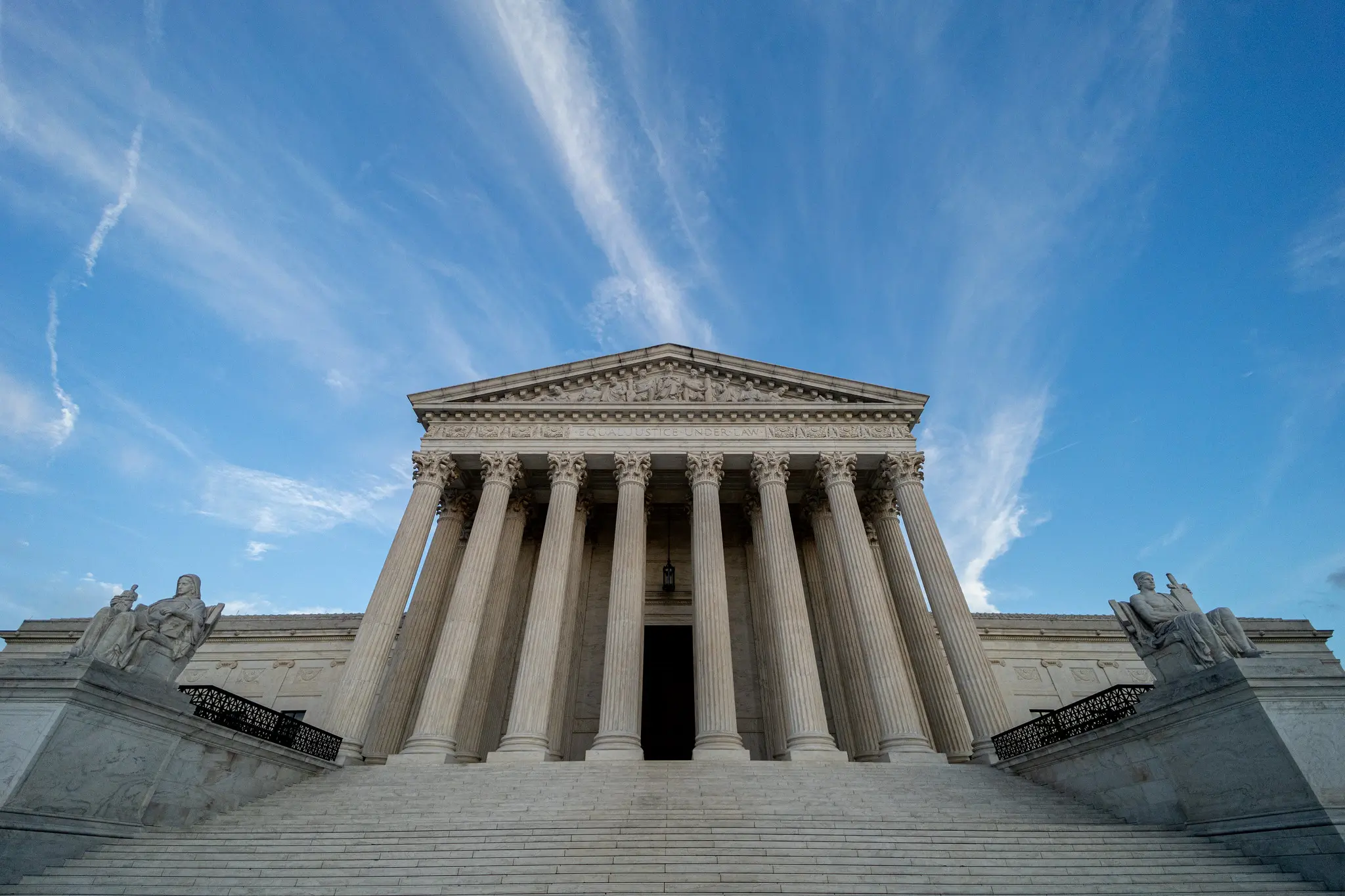
I recognize that many people feel this way about America’s 250th birthday, and I respect that. After all, we are living through dark, discouraging, and—let’s be honest—often ludicrous times. When four of the six Republican-appointed justices on the Supreme Court manage to persuade themselves that the words, “All persons born…in the United States…are citizens of the United States,” pose no barrier to an executive order denying birthright citizenship, we have to acknowledge that the will to dominance is ascendant in the highest reaches of government. In such an environment, anything goes, and those with power acquire even more.
Nonetheless, as Adam Smith once observed, “There is a great deal of ruin in a nation.” The flip side of that insight is that there is also a great deal worth preserving. That is the spirit in which I approach this list.
Below are twenty-five things I appreciate, admire, or love about the United States. (For simplicity’s sake, I use the term America.)
A few caveats. I’m not claiming these twenty-five American things are the best in the world, nor that they are uniquely or exclusively American. I readily acknowledge that this list is entirely subjective. These are simply things I happen to value. And despite the conceit of a countdown, this isn’t really a ranking. It’s simply a collection of things I appreciate and a reminder—to myself as much as to anyone else—that there is still much that is good about our country. Nor do I deny that many of these twenty-five points of celebration are a mixed bag. Virtually nothing in social life is an unmitigated good, and many of the things I celebrate I do so while acknowledging that they have incurred very real—and quite often devastating—costs.
So, without further delay, I present the eternally and objectively true, unchangeable ranking of the twenty-five things that make America great!
Okay, I’m sorry… here are twenty-five American things I like.
25. American Universities and Colleges
America has built an unmatched system of higher education that remains the envy of the world. The United States doesn’t have the smartest people, the most literate people, or even the best-educated people. But what we do have is a system of higher education that attracts a disproportionate share of the world’s most capable, creative, and intelligent people.
It is largely on account of America’s universities that the United States has won so many more Nobel Prizes in the intellectual fields than any other country. It’s also why so many of our Nobel Prize recipients are foreign-born.
I work in higher education. I recognize that the academy (to be snooty for a minute) has its share of flaws. Nonetheless, one could make a good case that our universities are this country’s most effective institution. Universities remain a powerful, if sometimes controversial, engine for innovation, productivity, and discovery.
24. Waffle House
Moving from sublime to sublime, I recommend Waffle House for your consideration.
Careful readers with keen memories will recall that I have written about Waffle House on OTB before. It keeps coming up (as a subject of conversation, that is) because it’s so darn delicious.
At the end of the day, I enjoy Waffle House unironically because it provides its customers with terrific food. The waitstaff are friendly and bust it every day to earn a living, and the food is prepared in plain view.
Waffle House is democracy packaged in a 24/7 diner, and if you can’t feel comfortable in a Waffle House, then you need to look inside your heart, my brothers and sisters. Whether by car or by teleportation, find your way to a Waffle House!
23. Voting
I leave it to our resident (and, frankly, national) expert Steven Taylor to explain the intricacies of competing electoral systems and their relative merits, but here I simply celebrate the humble act of voting—the process of waiting in line, filling in a bubble, tapping on a computer screen, or punching through a chad—just so that our vote will almost certainly not make any difference to the outcome.
As an act, voting may be kind of boring, but what it expresses is radical: the notion that the citizens are sovereign. Translated, that means the people own the government, not vice versa.
At the heart of voting is a notion worthy of celebrating: we aren’t stuck with how things are. We can change our state of affairs and throw out the bums who govern us, and we can do it peacefully. The way things are need not be the way things must be.
22. Our Big-Ass Trees
I get it. Other nations have trees—and good for them, I say! Nor would I dare claim we have the best trees. That would be absurd, a juvenile and troll-like claim. Ridiculous!
No, I’m not saying that. I’m just saying we have redwoods and sequoias and giant Douglas firs in the Northwest, huge cypress trees and loblolly pines in the Southeast, shimmering aspens in the Rocky Mountains, majestic sycamores and oaks in the Midwest, and gorgeous birches and maples in the Northeast.
To take the measure of a redwood or sequoia, you really do have to stand next to one. Photos don’t do them justice. It’s a humbling and awe-inspiring experience.
In other words, we have the best trees.
21. Our Interstate Highway System
Our addiction to cars and the fossil fuels they commonly require is killing the planet. And I, no less than others, am guilty here of planetary murder. Moreover, the interstate highway system has left a pile of victims in its wake, with small towns decimated and cities divided. Our love of cars and the highway impedes the development of public transportation and greener and more efficient modes of travel. It’s kind of a travesty.
That said, I am absolutely stereotypically American in my love of the open road. Nor am I alone in equating our highway system with freedom. It’s a cliché, but I feel it in my bones. I love touring the country by road; it remains my favorite way to travel. The American highway system does connect the country and make it more manageable to navigate—but what I love most is that, while it connects the country, it also maintains its vastness.
It’s a grand country. Get out there and explore.
20. Mexican Food
There is a fine line between cultural appropriation and homage to excellence, but I sincerely believe we’re better off for all the borrowing we do. America is at its best, in fact, when it incorporates the best that its diverse peoples have to offer.
Americans, after all, are not merely transplanted Europeans. Americans are also significantly and increasingly descended from Latin America, Asia, Africa, and Oceania. Millions of Americans are of Mexican descent, so it’s no surprise that this food has become so thoroughly American. It is American.
Nor, most of the time, is Mexican food in the United States especially “authentic” Mexican food. It’s its own thing, and it is absolutely fabulous.
19. Our Regionalism
Place still matters in the United States. Alabama isn’t Oregon; Vermont ain’t Utah. California isn’t even California.
Our regional diversity—surely preserved and even amplified by our federal system of governance—is one reason America remains an interesting place. Our many accents, economic emphases, food preferences, and other cultural differences are worth noting, experiencing, and celebrating.
There’s a reason county fairs are quite often fun, if admittedly unapologetically hokey, while our Great American State Fair is an unmitigated disaster. State fairs reflect real local activities and local concerns, no matter how trivial or provincial, while the GASF is a manufactured piece of contrived and lackluster Trumpism.
18. The Declaration of Independence
It is deeply American that the Declaration is quite literally addressed to “mankind.” What chutzpah we had coming out of the chute, thinking that the rest of the world took note of—and cared about—our carryings-on. It may be arrogant, but without that arrogance, we’d still be speaking English today! You get the point…
I like that the Declaration of Independence establishes a higher standard of authority than the government itself.
I like that its values are aspirational and provide an engine for ongoing self-scrutiny and improvement. It’s not a bit surprising that both Lincoln and Martin Luther King, Jr., quoted it endlessly.
I like that virtually all the values we associate with the American Creed—rights, liberty, equality, the rule of law, and representative democracy—are central to its message.
That it is still a relevant document seems to me beyond doubt, unsettlingly so.
17. Buster Keaton
Okay, what I really mean is American movies. Americans didn’t invent cinematography, and they hardly have a monopoly on great movies. Nevertheless, I believe that movies, along with jazz, constitute one of America’s greatest contributions to the arts. Like opera, movies encompass a kind of artistic totality, drawing on storytelling, the visual arts, theater, and music.
American movies are themselves characteristically aspirational. They don’t teach us hard reality; they teach us how to live, how to be cool, how to be American.
I chose Kansas-born Buster Keaton as a representative of the movie industry because he was a genius, and his humor and storytelling have stood the test of time. Many of his movies are on YouTube. Give them a watch and let me know what you think.
16. The Word “Partner”
This is pretty specific, I’ll admit.
I like how the word partner implicitly recognizes that we’re not self-sufficient or atomistic creatures; we are communal creatures. Still, the type of community we value most is neither forced nor hierarchical but voluntary and composed of equals.
The word partner is a small linguistic token of our democratic sensibilities, and I like it.
15. Our Ever-Changing Americanized English Language
I’ll admit it. I’m an old guy (or old-adjacent), and I find it difficult and even vexing at times to keep up with our changing language. Good grief, the English language is already wildly expansive, but we’re never quite happy with its size. We are forever borrowing words from other languages, inventing new words, and changing their meanings.
Linguistic innovation is a young person’s game, and it can be exhausting for old dudes like me. Still, I appreciate how it keeps our language fresh and vital and in keeping with our changing values.
14. Willie Nelson
He is a dissident who has become an institution unto himself. He’s an independent guy who loves duets. He’s been down, but he’s never out.
He’s a national treasure.
13. American Humor
Again, I get it. We didn’t invent humor. Other peoples have their own humor. Still, I have to wonder whether any other people in history have been as devoted as Americans are today to honing, producing, sharing, and consuming humor. Perhaps our obsession with humor is a sign of a decadent and degraded society. Perhaps we really are amusing ourselves to death.
I suspect a lot of our humor stems from our diversity. Humor surely comes at least in part from seeing something from multiple angles, and our diverse population has a myriad of perspectives to draw on in making observations.
In any case, good or bad, I’m here for it.
12. American Novelists
I would not put America historically in the international forefront of philosophy or poetry or sculpture or painting (apart from a period after World War II in NYC), but American novelists have made–and continue to make–a very strong original contribution to the humanities. I suspect we are strong at writing novels because novels depict life, and life in America is large. It’s fast-moving, complicated, and often heartbreaking and thrilling in short succession.
11. The First Amendment
The First Amendment is predicated on the radical idea that both the government and the citizenry are improved when unpopular ideas are protected from censorship. It’s a lot more than that, of course, but freedom of conscience is at its heart. It’s the amendment that protects all the others.
10. Our Multiple Foundings
America isn’t one thing only. America’s meaning isn’t fixed in amber, a fact which highlights one danger (among many) of looking exclusively to the 1770s and 1780s for what it means to live in 2026. We also adopted foundational principles during the 1860s, the 1930s, and the 1960s.
I love that we are a nation of ideas, but I love even more that those ideas aren’t fixed but are subject to ongoing scrutiny and refinement.
9. The Saturn V Program
Taking human beings to the moon and returning them unharmed remains, in my opinion, the single greatest discrete human achievement.
It’s worth remembering it was a product of American federal bureaucracy.
8. Albert Einstein
Okay, so this is a cheat. What I really have in mind is our immigrant population. One of America’s greatest innovations is attracting hard-working and talented people from all over the world. No social policy is perfect or simple in its implications, but on balance the United States has benefited enormously from the diverse foreign-born people who have chosen to live here.
As Ronald Reagan reminded us in his farewell address, immigrants bring energy, vitality, and a love for America that revitalizes this country. They are worth celebrating.
7. The Border with Canada
Until our current president informed us that we were in a state of emergency with our peaceful neighbors to the north, most of us simply took for granted that the four-thousand-mile American-Canadian border was a monument to the possibility of peaceful international coexistence. It’s one of history’s great examples of neighboring nations simply getting along.
How great is that?
6. The Oceans
Geography may not be destiny, but brother, did we ever win the geography lottery. These two moats, the Pacific and Atlantic Oceans, contributed to our security and gave us the kind of confidence that we’ll be okay—a confidence characteristic of the American psyche.
One of the many regrettable lasting impacts of 9/11 was that it erased that sense of security and plunged us into an ugly “realism” that sees threats, real and imaginary, under every rock.
5. Thomas Edison
So much of this list has been a cheat. Here’s another one. I admire Edison, but what I admire more deeply is America’s historical inventiveness.
When one examines any list of the most influential or fundamentally pathbreaking scientists in history, there are surprisingly few Americans. And, no, that’s not because all great innovations occurred before the United States was a going concern. Rather, scientific theory—or truth for its own sake—has historically not been our thing. For much of our history we didn’t have the resources or the infrastructure or even the interest in such matters to make fundamental contributions. For much of our history, survival itself could not be taken for granted, and many people were isolated enough to learn to live on their own wits and powers as much as possible.
American genius was directed less toward scientific theory—such as quantum mechanics—than toward finding practical fixes to the problems of ordinary life.
This impulse, coupled with the relative ease of making money from one’s innovations, created a culture of practical dreamers who channeled their inventiveness into the pursuit of personal wealth.
By and large, our inventiveness has served us well. Yes, many nations and countless people have contributed endless inventions worthy of note. My point isn’t that we’re the only nation that invents but that inventiveness has long been a feature of our national character that I find admirable.
4. Abraham Lincoln
Thomas Edison was an impressive American, but our greatest American was Abraham Lincoln.
Every nation produces a “type” of person, such that one can say someone is characteristically German or Mexican or Canadian. I believe that, at the end of the day, I, for example, am pretty characteristically American in my habits and loves.
A few people transcend their nation. Napoleon once said that when he met Goethe he had expected to meet merely a German; instead he met a man. One might say something in the same spirit of Lincoln. Lincoln was characteristically American, to be sure, but he was also better than America. When our country was remade more in Lincoln’s image, it was improved.
Lincoln transcended America. He was a great human being. Full stop.
3. Duct Tape
To risk repetition, history’s great philosophers include very few Americans. America’s greatest—but still remarkably modest—contribution to philosophy is the theory of pragmatism: the idea that what is true is what works.
Americans have always focused more on what works than on a thing’s eternal essence, and the unwritten national philosophy is pretty much, “Let’s see if that works.” (This may no longer hold true in politics, which is a regrettable development.)
Improvisation is part of America’s historical can-do ethos. It is connected to a culture of tinkerers (and Home Depot shoppers) who love the feeling of having fixed the problem themselves.
One of the all-time great American movie scenes takes place in outer space. In Apollo 13, things begin to go sideways for the crew, and there develops a real possibility that they may not make it home alive. In both film and real life, the astronauts, guided by Mission Control, contrived a life-saving device using a plastic bag, cardboard torn from the flight plan, a hose from a spacesuit, and, yes, a roll of duct tape.
America is not a nation of theorists; it’s a nation of practical-minded improvisers.
By the way, the Apollo 13 crew arrived home alive and in good health.
2. American Rivers
I’m not suggesting other countries don’t have rivers. That’d be coo-coo for Cocoa Puffs! And I’m not even suggesting American rivers are the best. Tha right there is crazy talk.
I’m just saying we have the best river system of any nation. That’s all.
The Mississippi River alone is basically a continent-wide circulatory system that quietly supports the life of our population. America’s rivers as a whole were, and remain, essential to our commerce. They were essential to our expansion. Before our interstate highways or railroads or airports, we largely navigated by river. In his only book, Thomas Jefferson writes a LOT about our rivers. (Like… a bit too much, to be honest.) His thinking seemed to be that if you want to understand America, you have to understand our geography—and rivers are arguably the critical component of that geography.
American rivers continue to support an astounding array of diverse ecosystems, and they’re marvelously beautiful. I’m grateful for them and am desperate to keep them clean and healthy.
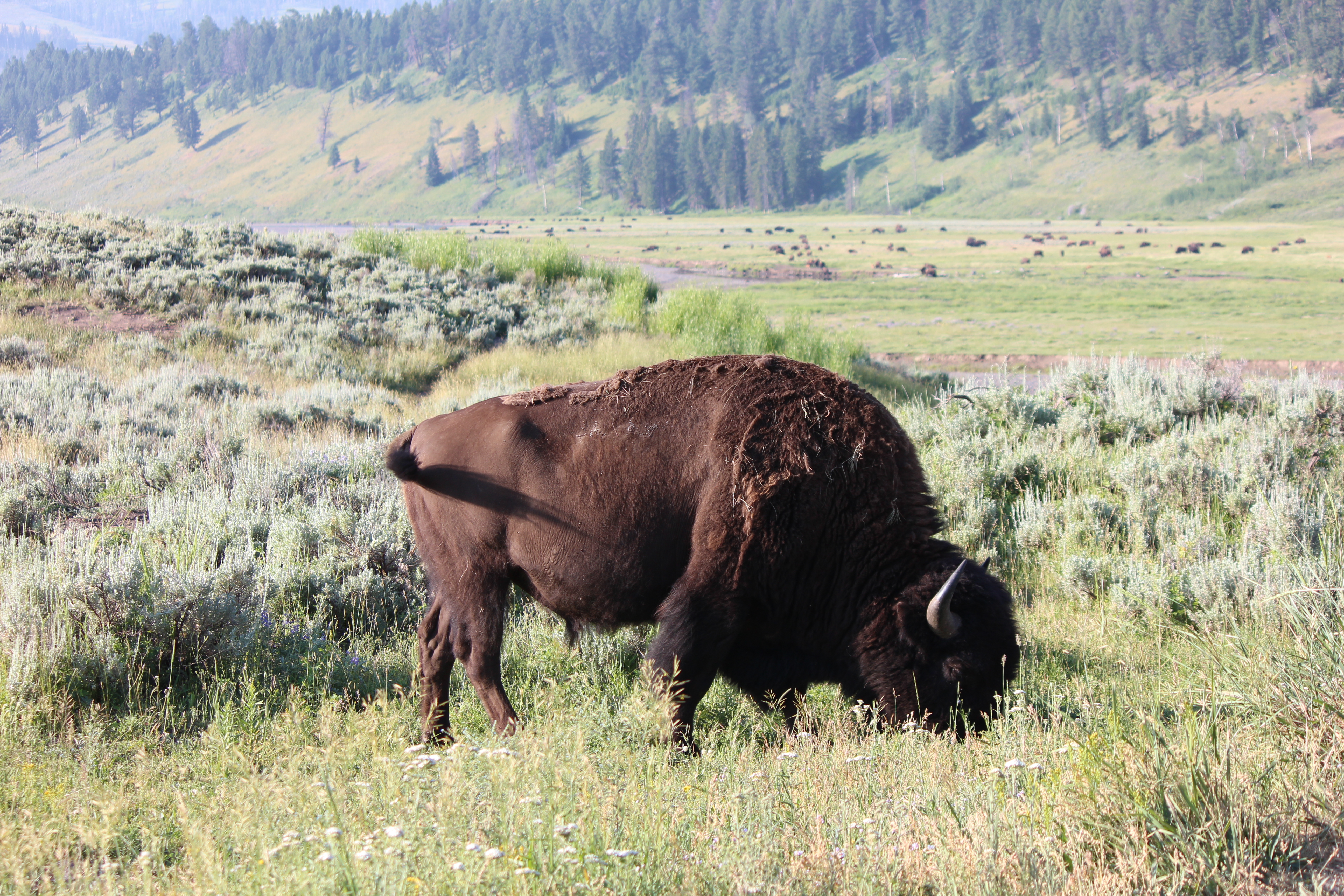
1. Yellowstone Bison
I saved my biggest cheat for last. Really, the bison stands in for Yellowstone, which itself stands in for our national parks, which stand in for America’s wondrous and wildly diverse geographical beauty.
America’s geography is almost absurdly varied: ocean shores, glaciers, deserts, marshes, canyons, volcanoes. And that’s just California alone.
The heart of the national park system is the conviction that We the People believe some of our diverse places are too beautiful or too precious to submit to private ownership or to allow them to be exploited for economic gain. America is not especially known for its forward-looking policies. Too often we take the position that future generations can take care of themselves. But the national park system is a brilliantly forward-looking policy that protects the future by preserving what nature has bequeathed us. I am so very grateful for both the beauty of our great land and for the laws that protect that beauty.
America’s vastness and extraordinary geographical diversity make it an exceptional nation. Not necessarily the best, but exceptional nonetheless.
Without that beauty, it would be a very different and far less impressive country.
In Conclusion
None of these twenty-five things are unproblematic. I recognize that. Nor are they exhaustive. They are but a small selection of what I appreciate about the United States. I do not know what lies in store for the United States in the future, and I confess I am deeply concerned about the next 2.5 years alone, to say nothing of the next 250 years. Despite my concern, I remain indebted to this country and can celebrate our 250th birthday with a grateful, if anxious, heart.
I would love to hear in the comments what you appreciate most about your country, whether it is the United States or another nation.