
There have been a lot of “hot takes” from across the political spectrum about President Biden’s January 6th anniversary speech. Unsurprisingly, allies of Former President Trump were not impressed and they let the world know. One of those takes that stands out was from disgraced Former Speaker of the House and failed Presidential Candidate Newt Gingrich:

Of the many responses to it, Fletcher School Professor and Washington Post Contributor (not to mention OG political blogger) Dan Drezner had perhaps the most cutting reply:

Drezner’s point underscores something that our own Steven Taylor (also an OG political blogger) recently explored in his post Trumpism: A Photo Essay. Followers of the former President are increasingly becoming bound up with “Lost Cause” culture. It appears that Gingrich is making (intentionally or unintentionally) the same connection. And, if unintentional, it’s an unfortunate parallelism for a History Ph.D. and former History Professor to make.
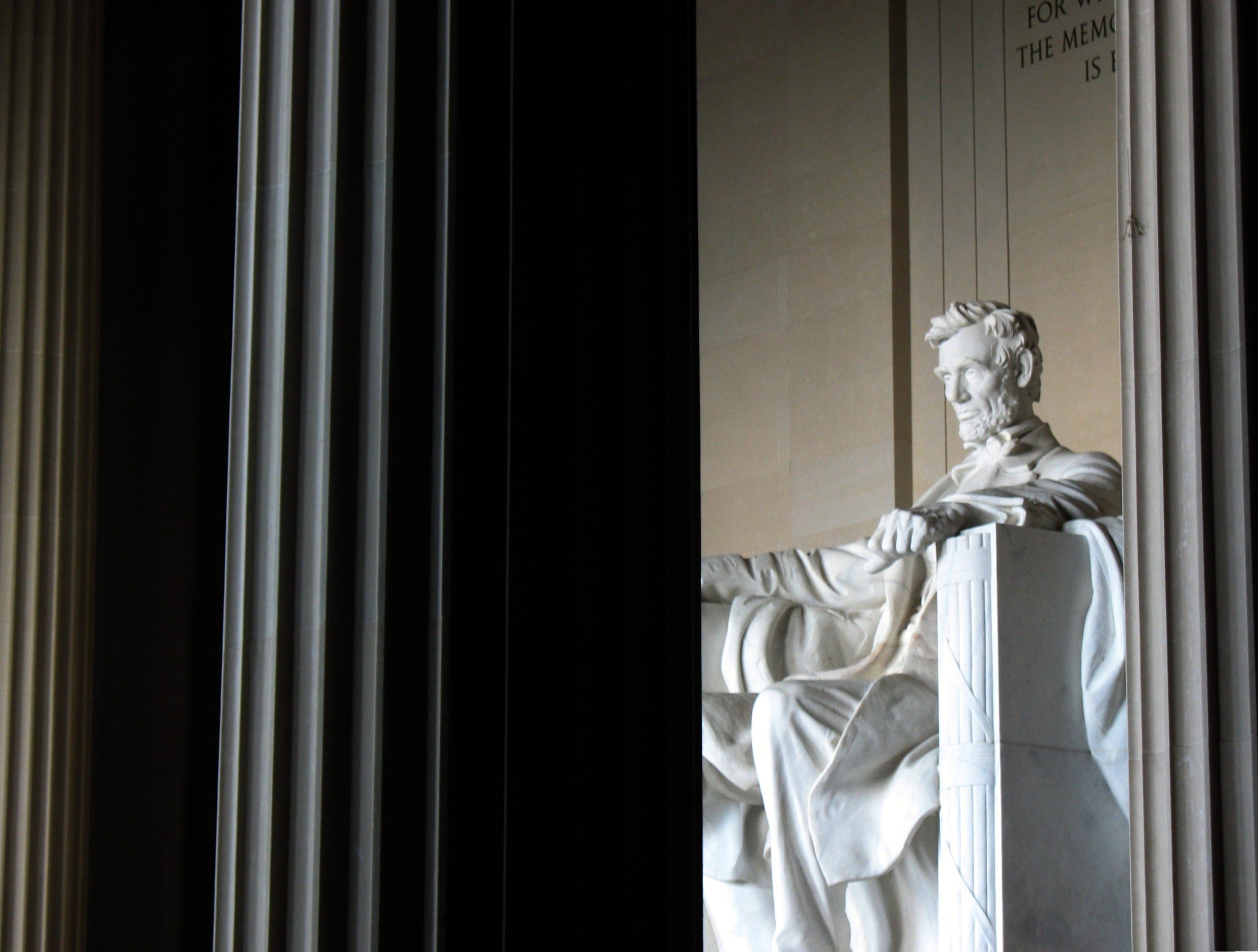
Leaving that aside his drawing a link between Trump supporters and the Confederacy, it’s also worth examining the core premise animating Gingrich’s concern: why wasn’t Biden as conciliatory as Lincoln in his second inaugural address? For that, let’s go to the brief text of that speech, made in the waning days of the Civil War:
“Fellow countrymen: at this second appearing to take the oath of the presidential office there is less occasion for an extended address than there was at the first. Then a statement somewhat in detail of a course to be pursued seemed fitting and proper. Now, at the expiration of four years during which public declarations have been constantly called forth on every point and phase of the great contest which still absorbs the attention and engrosses the energies of the nation little that is new could be presented. The progress of our arms, upon which all else chiefly depends is as well known to the public as to myself and it is I trust reasonably satisfactory and encouraging to all. With high hope for the future no prediction in regard to it is ventured.
“On the occasion corresponding to this four years ago all thoughts were anxiously directed to an impending civil war. All dreaded it ~ all sought to avert it. While the inaugural address was being delivered from this place devoted altogether to saving the Union without war insurgent agents were in the city seeking to destroy it without war ~ seeking to dissolve the Union and divide effects by negotiation. Both parties deprecated war but one of them would make war rather than let the nation survive, and the other would accept war rather than let it perish. And the war came.
“One eighth of the whole population were colored slaves not distributed generally over the union but localized in the southern part of it. These slaves constituted a peculiar and powerful interest. All knew that this interest was somehow the cause of the war. To strengthen perpetuate and extend this interest was the object for which the insurgents would rend the Union even by war while the government claimed no right to do more than to restrict the territorial enlargement of it. Neither party expected for the war the magnitude or the duration which it has already attained. Neither anticipated that the cause of the conflict might cease with or even before the conflict itself should cease. Each looked for an easier triumph and a result less fundamental and astounding. Both read the same Bible and pray to the same God and each invokes His aid against the other. It may seem strange that any men should dare to ask a just God’s assistance in wringing their bread from the sweat of other men’s faces but let us judge not that we be not judged. The prayers of both could not be answered ~ that of neither has been answered fully. The Almighty has His own purposes. “Woe unto the world because of offenses for it must needs be that offenses come but woe to that man by whom the offense cometh.” If we shall suppose that American slavery is one of those offenses which in the providence of God must needs come but which having continued through His appointed time He now wills to remove and that He gives to both North and South this terrible war as the woe due to those by whom the offense came shall we discern therein any departure from those divine attributes which the believers in a living God always ascribe to Him. Fondly do we hope ~ fervently do we pray ~ that this mighty scourge of war may speedily pass away. Yet, if God wills that it continue until all the wealth piled by the bondsman’s two hundred and fifty years of unrequited toil shall be sunk and until every drop of blood drawn with the lash shall be paid by another drawn with the sword as was said three thousand years ago so still it must be said ‘the judgments of the Lord are true and righteous altogether.’
“With malice toward none with charity for all with firmness in the right as God gives us to see the right let us strive on to finish the work we are in to bind up the nation’s wounds, to care for him who shall have borne the battle and for his widow and his orphan ~ to do all which may achieve and cherish a just and lasting peace among ourselves and with all nations.”
https://www.nps.gov/linc/learn/historyculture/lincoln-second-inaugural.htm
Significant attention is always paid to the final paragraph (beginning with “With malice toward none with charity for all…”). However, the previous paragraph (emphasis mine) is perhaps more important, in so much as it’s Lincoln again laying out the ultimate reason the war is being fought: the continuation of slavery. And that paragraph, in particular the bolded text, makes it clear there can be no reconciliation until that “peculiar institution” is ended. Lincoln leaves no room for compromise on that topic: that if necessary the war will continue “until every drop of blood drawn with [slavery’s] lash shall be paid by another drawn with the sword“).
I suspect that to many in the South at the time, including those in Gingrich’s home state of Georgia, very little about this speech would seem like it’s “bringing them together” with the North. Instead, they would most likely read those words as signaling an end to an era–a social order that had been with them for over 200 years.
All that said, perhaps I’m expecting too much of Gingrich, after all, I just discovered that the Ph.D. in History that he often proudly points to was actually in European History (TIL!). So perhaps he never actually read that address.
[Update 1]
Of course, it’s also possible that Gingrich just didn’t care because he was out to score points. On that note, I give you our illustrious EiC’s (another OG Political Blogger) reply to Drezner:

[Update 2]
In the comments section below, my co-blogger Steven Taylor linked to two articles he wrote from a decade ago examining Gingrich’s academic record: Newt Gingrich, “Academic” & More on Newt Gingrich’s Academic Career. Spoiler alert: Steven was not impressed by what he found.
One other thought on this topic came up as I was drafting the post. In the final paragraph of the speech, Lincoln writes: “let us strive on to finish the work we are in to bind up the nation’s wounds.” Following his speech yesterday, President Biden was asked by the press whether calling out former President Trump divides more than it heals.
His response: “The way you have to heal, you have to recognize the extent of the wound.“