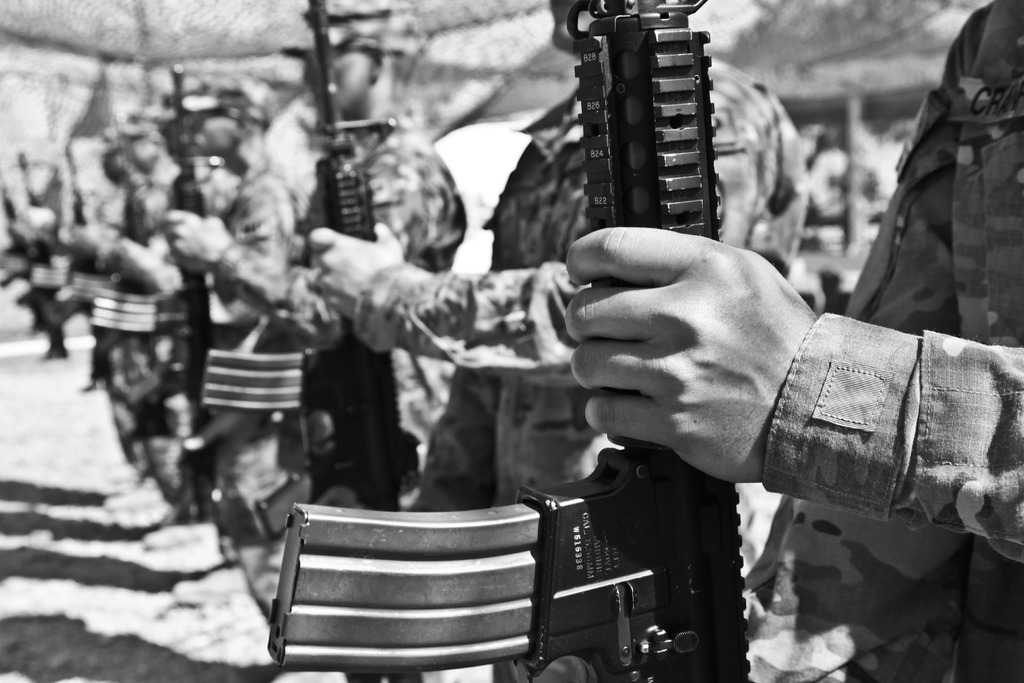

A new CNN Poll shows public approval of the War in Afghanistan hitting lows that surpass even the levels reached by the wars in Iraq or Vietnam, raising the question of whether Afghanistan is now the most unpopular war in history:
Washington (CNN) – Support for the war in Afghanistan has dipped below 20%, according to a new national poll, making the country’s longest military conflict arguably its most unpopular one as well.
The CNN/ORC International survey released Monday also indicates that a majority of Americans would like to see U.S. troops pull out of Afghanistan before the December 2014 deadline.
“Those numbers show the war in Afghanistan with far less support than other conflicts,” CNN Polling Director Keating Holland said. “Opposition to the Iraq war never got higher than 69% in CNN polling while U.S. troops were in that country, and while the Vietnam War was in progress, no more than six in 10 ever told Gallup’s interviewers that war was a mistake.”
The U.S. timetable for Afghanistan calls for the removal of nearly all troops by roughly this time next year, and that can’t come fast enough for the vast majority of Americans. Just over half would rather see U.S. troops withdrawn earlier than December 2014. Only a quarter say that America should still have boots on the ground in Afghanistan after that deadline.
Fifty-seven percent say the conflict is going badly for the U.S. and only a third say America is winningthat the war in Afghanistan.
(…)
The discontent evident in the CNN poll is also seen in two other national surveys conducted earlier this month. Two-thirds of those questioned in an ABC News/Washington Post poll said the war has not been worth fighting, and an Associated Press/GfK survey showed 57% saying the U.S. did the wrong thing in going to war in Afghanistan.
What is perhaps most interesting about these numbers is that they come at a time when the war itself has virtually disappeared from American media. Other than brief mentions over the past couple months of the status of the negotiations between the United States and Afghans regarding a new Status of Forces Agreement to cover American troops that may stay behind after 2014, and the occasional mention of an attack that results in the death of an soldier, the Afghanistan War has very much disappeared from American television screens. Of course, this last point as always been true; as I’ve noted several times before, the conflict in Afghanistan has received minimal media coverage for years now. Additionally, casualties in the war have actually dropped over the past couple years, largely due to the fact that American and allied troops appear to be involving themselves in fewer large scale battles and handing more routine patrolling duties over to the Afghan Army and police. According to this chart, for example, total allied casualties in Afghanistan hit a high of 499 in 2010, and have fallen steadily ever since then. The number for 2013 is currently set at 127, although it’s unclear how recently the chart was updated. More interesting to note, though, is the fact that the casualty rates in Afghanistan have never come close to those that the nation experienced during the height of the Iraq War, or most certainly during Vietnam. Of course, that’s in no small part due to the fact that the number of American troops on the ground in Afghanistan have never been as high as those in Iraq, and well below those of Vietnam. In any case, on some level at least, these two facts — the low level of media coverage this war has historically gotten and the relatively low and, since 2010, declining casualty figures, makes it somewhat puzzling that the War in Afghanistan would rank as low as it does in polls at this point.
The most plausible explanation for this, I suppose, is that it is simply just another example of the war weariness that the American public now feels about the decade or more of war that the nation has been through since the September 11th attacks. At the beginning, of course, the Afghan War had near universal support given its connection to our justified desire to punish those responsible for the attacks themselves, and the nation that was giving them safe haven. As time went on, though, and especially as the War in Iraq unraveled in the wake of a post-Saddam insurgency that many had warned about, the tide began to turn. That turn in public opinion also seems to have coincided with the time during which the war in Afghanistan changed its nature from one of seeking to eradicate al Qaeda or hunt down their leadership to one of nation-building in a nation where the central government still doesn’t seem to have much real control outside of Kabul and the other major cities. When President Obama took over and, on the advice of his Generals and civilian advisers, sent a “surge” of U.S. troops into the country and vastly increased the level on-the-ground combat that they were engaging, polling seemed to shift into a permanently downward direction. Was this because of the mostly mixed results of the Obama surge, or because Americans were just getting sick of the wars themselves?
Public opinion in other areas seems to suggest that it’s largely war weariness that was pulling public opinion along rather than something specific about Afghanistan. Evidence in favor of that can arguably be seen in polling during the U.S.’s involvement in the Libyan Civil War, when the public largely opposed President Obama’s policies, as well as the polling in August and September of this year when President Obama was pushing the nation toward military intervention in Syria before the Russians stepped in with a diplomatic solution to the issue of Syria’s chemical weapons. Even polling about military action against a three decade old adversary like Iran shows an American public that is far less eager to be the world’s policeman than they used to be. All in all, that strikes me as a good thing.