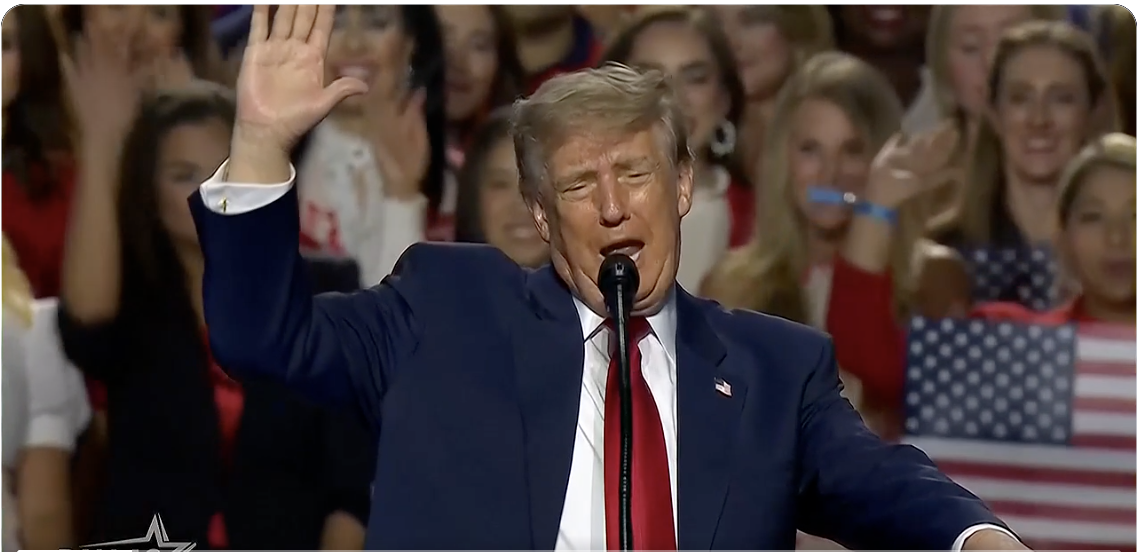
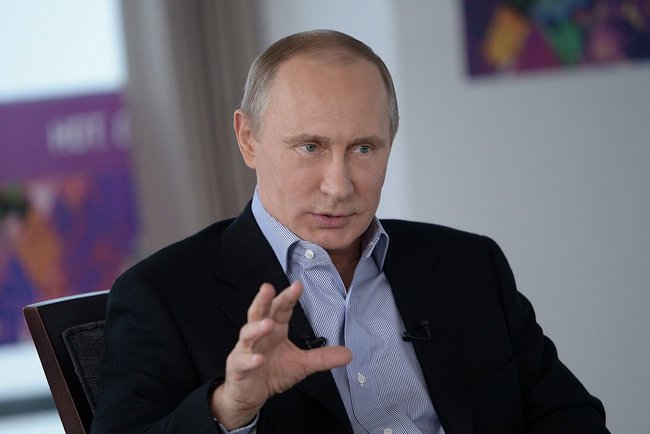
President Bush used yesterday’s Veterans Day speech to defend the war, especially against the increasingly-held view that he lied to Congress and the public to in making the case for the war.
Bush Spars With Critics Of the War (WaPo, A1)
President Bush and leading congressional Democrats lobbed angry charges at each other Friday in an increasingly personal battle over the origins of the Iraq war. “It is deeply irresponsible to rewrite the history of how that war began,” Bush said as he used a Veterans Day address here to lash out at critics. “These baseless attacks send the wrong signal to our troops and to an enemy that is questioning America’s will.” Democrats retaliated with a barrage of statements accusing the president of skewing the facts, just as they maintain he did in the run-up to the invasion of March 2003.
Although the two sides have long skirmished over the war, the sharp tenor Friday resembled an election-year campaign more than a policy disagreement. In a rare move, Bush in his speech took a direct swipe at last year’s opponent, Sen. John F. Kerry (D-Mass.), while the White House issued an unusual campaign-style memo attacking Sen. Edward M. Kennedy (D-Mass.). Republican National Committee Chairman Ken Mehlman followed with a speech blistering 10 Democrats for “political doublespeak.”
From their campaign-style war rooms, the Democrats and allied liberal interest groups churned out “fact sheets” dissecting Bush’s comments and comparing them with past statements and investigation findings in an effort to undercut his arguments. Kerry accused Bush of “playing the politics of fear and smear on Veterans Day.”
The blogosphere is all abuzz about the speech, too.
Don Surber proclaims the speech, ” Bush’s Gettysburg.”
Michelle Malkin wonders why Bush didn’t make the speech fourscore and seven days ago:
What took him so long? He could have made this speech while Sheehan was gaining traction outside his Crawford, Tx. ranch this summer with her “Bush lied!” brigades. He could have made this speech while the anti-war movement and the media were busy politicizing the “2000 dead” milestone in the most macabre and dishonest way. He could have made this speech as Harry Reid was jumping up and down like Rumpelstiltskin behind the Senate chamber’s locked doors.
Glenn Reynolds, too, thought it “About time” and issued this provocative statement:
The White House needs to go on the offensive here in a big way — and Bush needs to be very plain that this is all about Democratic politicans pandering to the antiwar base, that it’s deeply dishonest, and that it hurts our troops abroad.
And yes, he should question their patriotism. Because they’re acting unpatriotically.
[…]
[I]t’s not “dissent” that’s unpatriotic, something I’ve been at pains to note in the past. It’s putting one’s own political positions first, even if doing so encourages our enemies, as this sort of talk is sure to do. And that’s what I think is going on with the sudden surge of “Bush Lied” stuff from Congressional democrats.
Of course, outrage over questioning of patriotism is kind of one-sided. You can say that Bush and Cheney started the war with a bunch of lies to enrich their buddies at Halliburton, and that their supporters are all a bunch of chickenhawks on the White House payroll. But that’s different because — because Bush is anti-evolution, and doesn’t support gay marriage! Or something.
Kevin Drum finds this quite insulting and retorts,
[T]here’s been steadily growing evidence that the Bush administration suppressed official dissents about the WMD evidence before the war, and the fact that we now know this seems like a pretty good reason for even the most patriotic among us to suspect that Bush did, in fact, mislead the American public.
Dana Milbank and Walter Pincus offer this “Analysis” piece on the front page of today’s WaPo:
Asterisks Dot White House’s Iraq Argument
President Bush and his national security adviser have answered critics of the Iraq war in recent days with a two-pronged argument: that Congress saw the same intelligence the administration did before the war, and that independent commissions have determined that the administration did not misrepresent the intelligence.
Neither assertion is wholly accurate.
The administration’s overarching point is true: Intelligence agencies overwhelmingly believed that Saddam Hussein had weapons of mass destruction, and very few members of Congress from either party were skeptical about this belief before the war began in 2003. Indeed, top lawmakers in both parties were emphatic and certain in their public statements. But Bush and his aides had access to much more voluminous intelligence information than did lawmakers, who were dependent on the administration to provide the material. And the commissions cited by officials, though concluding that the administration did not pressure intelligence analysts to change their conclusions, were not authorized to determine whether the administration exaggerated or distorted those conclusions.
[…]
Bush does not share his most sensitive intelligence, such as the President’s Daily Brief, with lawmakers. Also, the National Intelligence Estimate summarizing the intelligence community’s views about the threat from Iraq was given to Congress just days before the vote to authorize the use of force in that country.
In addition, there were doubts within the intelligence community not included in the NIE. And even the doubts expressed in the NIE could not be used publicly by members of Congress because the classified information had not been cleared for release. For example, the NIE view that Hussein would not use weapons of mass destruction against the United States or turn them over to terrorists unless backed into a corner was cleared for public use only a day before the Senate vote.
The lawmakers are partly to blame for their ignorance. Congress was entitled to view the 92-page National Intelligence Estimate about Iraq before the October 2002 vote. But, as The Washington Post reported last year, no more than six senators and a handful of House members read beyond the five-page executive summary.
This is pretty thin rebuttal. [Update (0954): Cori Dauber agrees; Joe Gandleman dissents.]
- Congress saw the intelligence but they didn’t get every document and they got some of them right before the vote.
- Congress got the consensus view of the intelligence community but not the dissenting views of the minority.
- Congressmen read the executive summary of a report but not the details.
These are “asterisks” worthy of front page emphasis?
Yes, the PDB is the timeliest, juicest information. But did they conflict with the NIE? No.
Remember, George Tenet, the Director of Central Intelligence who had been appointed by Bill Clinton and retained by the Bush, infamously described the evidence for Saddam’s WMD “a slam dunk.” Yes, there were dissenters but they were in a distinct minority.
After every debacle, we are able to find documents “proving” that those in charge “should have known” that the course of action taken was wrong. Why, if only we had listened to Kathleen Rowley, we’d have avoided 9-11. If only we’d heeded the warnings on Pearl Harbor, we could have been ready. But leaders make judgment calls based on the information they have and the environment they’re in.
Saddam Hussein was already considered Public Enemy #1 when Bush took office, the 9-11 attacks made us much more fearful of WMD in the hands of rogue actors, and the DPRK had just announced that they had nuclear weapons and there wasn’t a damned thing we could do about it.
Update (0931): In compiling the “Related” list below, I’ve noticed a curious evolution in my own arguments on this subject.
In the beginning (they’re in reverse chronological order, with older post titles in ALL CAPS), I was writing things like, “[G]iven that we based virtually our entire case before the UN on Saddam’s threat as a WMD possessor, the fact that we haven’t found any is a collosal embarrasment that can’t be glossed over.” Within weeks, though, the debate shifted to one of whether “Bush LiedTM.” While the latter had far more payoff for the Democrats if proven (or, they could simply persuade a majority of the public of its truth) the former was a more interesting discussion.
Rather than discussing relevant matters of public policy, though, we seem to be in the mode of ginning up major scandals and defending against them.
Related:
-
Did Administration Used Discredited Source for Iraq War Case?
Zogby: Americans Support Impeachment if Bush Lied about Iraq Intel
Decision-Making for Afghanistan and Iraq
Iraq War Conspiracy Theories
Sixteen Truthful Words
Saddam, Niger, and British Intelligence
Conspiracy Theories
Damned if You Do . . .
WHITHER WMD?
CIA DIDN̢۪T SLANT DATA
KAY REDUX
BUSH DIDN̢۪T LIE; PEOPLE DIED
INSIDE THE WMD DEBATE, II
INSIDE THE WMD DEBATE
INTELLIGENCE FAILURE
BUSH DIDN̢۪T LIE, PART V
BUSH DIDN̢۪T LIE, PART IV
BUSH DIDN̢۪T LIE, PART III
WHAT BUSH SAID (BUSH DIDN̢۪T LIE, PART II)
DRUM ON KRISTOL
BUSH SUCKERS DEMOCRATS
NO, HE DIDN̢۪T (BUSH DIDN̢۪T LIE, PART I)
INTELLIGENCE INTERPRETATION
BUCKLEY ON WMD
INTEL HOAX?
WMD MIA
I KNEW THOSE CLASSES WOULD COME IN HANDY