
As I’ve observed here before I opposed the invasion of Afghanistan in 2001 largely on prudential grounds and because I foresaw a situation not unlike the one we face now: the difficulty of achieving and maintaining a worthwhile objective by invading at a cost and in a timeframe that the American people will accept. Along with most Americans, I think, I was delighted and relieved at the speed with which Al Qaeda and the Taliban were removed from power in Afghanistan. That still left the problem of maintaining our victory and that’s the conundrum we’ve faced ever since.
Some, including President Obama, have been critical of our efforts in Afghanistan on the grounds that we invaded with too few troops and have devoted too few troops to Afghanistan since then. I believe this ignores the logistical reality in Afghanistan, something I’ve written about at length both here and elsewhere. Suffice it to say that supporting an American soldier in Afghanistan is substantially more expensive than, for example, in Iraq and, had we committed an OIF-style force to Afghanistan, presumably instead of Iraq, we would long ago have spent more on Afghanistan than we have on Iraq and Afghanistan together, likely without any more progress in Afghanistan than we have actually accomplished.
I see an unstated assumption that counter-terrorism, which prevailed as a strategy in both Afghanistan and Iraq until counter-insurgency was perceived to be effective in Iraq, could have been more effective in Afghanistan than it actually was, that counter-insurgency would have been employed in Afghanistan more quickly than it was if we had more troops there, or that some other strategy could have been more effective (and would have been employed). I think that all of these are wrong.
I’ve also noted my misgivings about the President’s current strategy there, outlined by him in December 2009:
These are the three core elements of our strategy: a military effort to create the conditions for a transition; a civilian surge that reinforces positive action; and an effective partnership with Pakistan.
I believe that all three of these elements are unachievable, at least within a timeframe and at a cost that the American people will accept. First, Pakistan. The logistical reality of our military efforts in Afghanistan is that we must transport substantial materiel, particularly fuel, through Pakistan. That in turn implies that we can’t tread to heavily on the Pakistani authorities. The Pakistani authorities have proved chancy allies; they face their own political realities that aren’t in complete alignment with ours and that is likely to remain the case for the foreseeable future. I doubt that we will ever have a more effective partnership with Pakistan than we have right now.
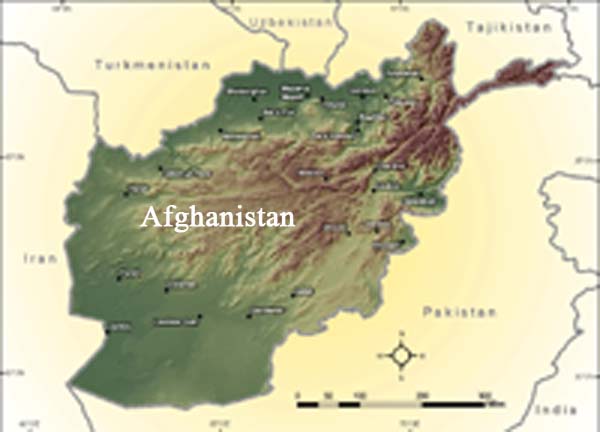
Second, creating the conditions for a transition. Counter-insurgency, the strategy we’re currently employing in Afghanistan, is peculiarly unsuited to the country. You can’t establish security for the people of Afghanistan, one of the necessary steps in a counter-insurgency strategy, by securing a few urban areas. If President Obama has been told this by his advisors, he has been cruelly misinformed. Unlike Iraq Afghanistan is overwhelmingly rural with some 80% of its population living out in its countryside. Villages in some provinces aren’t even reachable by road from the provincial capitol. The number of troops required for successful counter-insurgency in Afghanistan is daunting and Afghanistan’s poverty, lack of education, and faction ensure it will be virtually impossible for Afghanistan to supply most of those troops for the foreseeable future.
The Afghan government enjoys less of its people’s confidence that do the American forces there, if anything. It’s in no position to be a partner either in creating the conditions for a transition, contributing to the “civilian surge”, or even taking part in a transition.
If, as President Obama has said on several occasions, we begin removing our forces in 2011 and, as he has strongly implied, that we withdraw our forces from Afghanistan in the near term, it will allow a return to the status quo ante.
These are the two unpalatable alternatives we face in Afghanistan: either we leave to allow a return of the Taliban and, potentially, Al Qaeda or we remain indefinitely. I favor a version of the latter proposed by Afghanistan expert Rory Stewart: what Ralph Peters has described as a “compact, lethal force” to prevent substantial Al Qaeda bases from returning to Afghanistan and ongoing civilian aid and support. I have little doubt that we can accomplish the first part of that plan by paying off a few warlords. I fully recognize that my preferred approach is a political non-starter. I think we’d be better off finding a way to sell it than we will be doing what we’re doing.
In 2001 I would have preferred the strategy proposed by OTB friend Bernard Finel of what might be termed “repetitive raiding” over what we actually did. That has been described by some as “killing alligators” or “swatting flies” but IMO that would have been better than massive ongoing even permanent operations with little hope of a more successful outcome than would have been accomplished by a raid. Unfortunately, should we leave Afghanistan allowing Al Qaeda and the Taliban to re-assert control there after having spent billions of dollars there and at the sacrifice of more than a thousand American lives I doubt that another attack on the United States mounted from Afghanistan would be met by a carefully regulated raid. Following Adam Elkus’s lead, today’s United States is not a sort of 21st century Von Motlke’s Prussia, “a state with strong executive planning organs and a political culture capable of digesting sophisticated strategies”. Contrariwise, I suspect that any repetitive raiding would be much, much harsher than either I or Bernard would prefer.
The rest of the series: