
After lagging the obvious polling trends for a few days, RealClearPolitics finally shows Kamala Harris with a slight lead over Donald Trump:

At this point, there’s just little doubt that the momentum is on her side. The replacement of a befuddled octogenarian with an energetic 59-year-old has simply upended the contest.
Longtime Republican pollster Patrick Ruffini hits the nail on the head here in explaining why the hypothetical polls about Harris (and others) replacing Biden didn’t predict this:
[T]hese polls got the psychology of the electorate wrong, suggesting a replacement would fare almost as badly as Biden, with all of the downsides Flaherty outlined in his memo.
What polls didn’t capture was the enormous sense of relief that would wash over the Democratic Party once the Biden drama was resolved, leading at least for now to a consolidation of the party’s base behind Harris. Three weeks ago, the party was anything but unified, so the polls taken at the time, with their dejected and despondent Democratic samples, weren’t that helpful in making the case for a switch.
What was needed to finally push Biden out was not data, but vibes. Nate Silver has been pilloried by the left this cycle for becoming something of a “vibes” guy, but his common sense read on the situation was absolutely correct. Simply going from a moribund candidate to one who could actually wage a vigorous campaign transformed the psychology of the party almost overnight—even if Harris was not the ideal candidate.
Similarly, his more famous competitor, Frank Luntz, observes:
‘Make no mistake, Trump’s advantage with the Republican Convention after that ended is gone. It is wiped away. And if the election were held today, I actually believe that Harris would beat Trump. That’s how much things have changed over the last two weeks,’ he said.
[…]
‘If this campaign is about inflation and immigration, Donald Trump wins. If it’s about the attributes of the candidates, Kamala Harris wins,’ he said.
[…]
He has been polling in national elections since 1990s.
‘In the end, voters tend to vote for the more optimistic candidate,’ Luntz noted.
She’s portraying herself as a “joyful warrior” right now, while Trump is flailing about trying to recapture the media’s attention. Advantage: Harris.
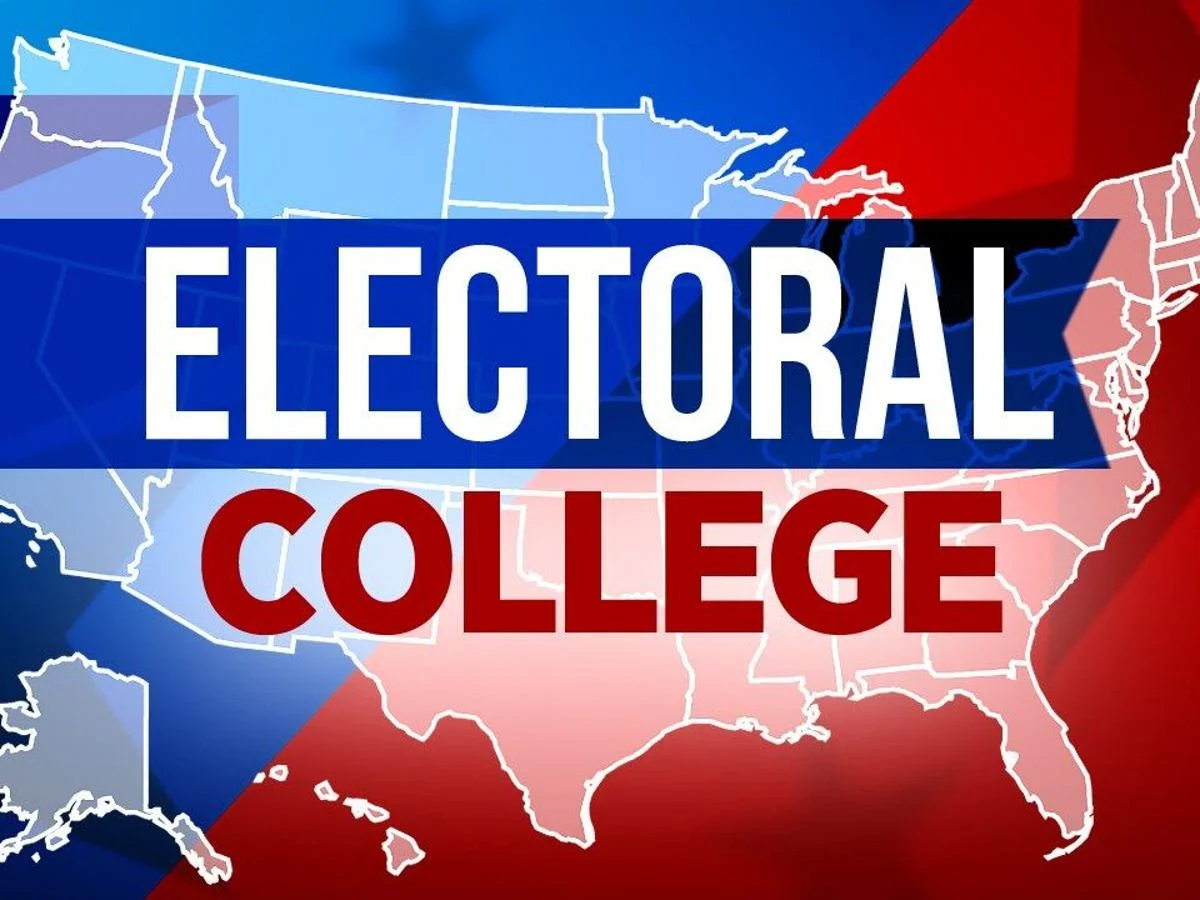
Larry Sabato’s Crystal Ball, which had been bearish on Biden’s chances even compared to the national polls, also shows a “reset.” They shift Georgia from “Leans Republican” to “Toss-up” and shift both Minnesota and New Hampshire from “Leans Democratic” to “Likely Democratic.”
[I]t appears that at least in the short term, Harris has reversed the slippage—or has at least been able to stop the bleeding—that Democrats have seen since the Biden-Trump debate in June. Looking nationally, Harris currently leads in all national polling aggregators. When Biden left the race, he was generally polling behind Trump. Harris making the race into more of a 50-50 proposition means we should adjust our own ratings to better reflect the state of the race.
Before this week, one of the more recent changes we made to our Electoral College ratings was when we downgraded Democrats’ prospects in Walz’s Minnesota. Our reasoning was that the Gopher State was just not that much bluer than Michigan, a state we simultaneously moved in the Toss-up column. But some recent Fox News polling was telling: while Harris was tied with Trump in Michigan, her 52%-46% lead over Trump in Minnesota was close to what Biden carried the state by in 2020. Shortly after that Fox poll came out, a KSTP/SurveyUSA poll gave Harris an even more comfortable 50%-40% lead in Minnesota. So, from what we can tell, while Michigan (along with Pennsylvania and Wisconsin) remain on a knife’s edge, Minnesota is true to its usual form, as a state that typically leans a few points bluer than the nation as a whole.
Though we wrote last week that vice presidential candidates, on average, deliver only marginal home state boosts, we feel that Walz’s placement on the Democratic ticket, combined with recent polling, provides more than enough justification to move the state into a firmer rating category. We are moving Minnesota from Leans Democratic to Likely Democratic.
In the 2020 presidential election, the state that voted closest to Minnesota was New Hampshire, which was actually a few tenths of a point bluer. Though its electoral votes helped to put Republican George W. Bush in the White House in 2000, in the Trump era, New Hampshire’s federal politics have taken on a mild, but consistent, shade of blue. We would also note that with educational attainment becoming increasingly synced to voting preference, New Hampshire has a slightly more college-educated population than Minnesota. And, as with Minnesota, the sampling of Granite State polling that we’ve gotten over the last few weeks suggests an overall picture similar to that of 2020. So New Hampshire also goes from Leans Democratic to Likely Democratic.
One recent ratings change that we made came in the state that hosted the pivotal first debate: Georgia. When Biden was in the race, it seemed clear that his (narrow) path to reelection would run through the Midwest, as several Sun Belt states that he carried in 2020—specifically Arizona, Georgia, and Nevada—were slipping away. Still, we, somewhat charitably to Biden, kept Arizona, where Democrats are favored in a key Senate race and where an abortion ballot measure may help them, and Nevada, where Democrats have some history of beating their poll numbers, in the Toss-up category. But we pushed Georgia, which is hosting a relatively low-stakes set of down-ballot races this cycle, into the Leans Republican category in mid-June.
Now, this is hardly a slam dunk. Indeed, Trump still holds a slight lead in their Electoral College projection:

The key battlegrounds all remain “toss-ups.” But the fact that Georgia, where most polls had Trump up by 5 points (and some had him up by double digits) before the switcharoo, now joins them is an indicator of a changed race.