 Stephen Saideman writes (In Crimea’s sham referendum, all questions lead to ‘yes’):
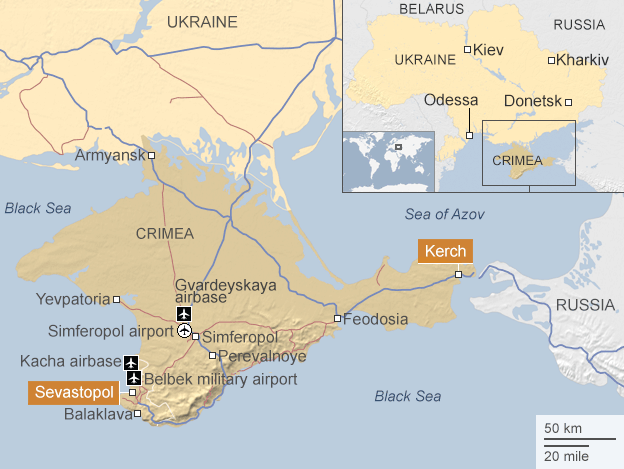
The language of the new Crimea Referendum makes Quebec’s referendums appear to be models of clarity. According to the Kyiv Post, voters in Crimea next Sunday will be asked whether they support the union of Crimea with Russia (an act of irredentism) or whether Crimea should be independent (secession). There is no alternative – one cannot vote for the status quo ante of remaining within Ukraine.
This would suggest that the referendum might just be a bit of a sham.
Indeed.
(Saideman links to the ballot here, and I have posted it below as well—although it is in Russian, so I will have to trust that it has been translated properly).
Of course, the very short electoral calendar, the presence of Russian troops, and the manipulation of the local government are also clues to the, well, shamocity of it all.
Saideman also notes that international observers will not be allowed to witness the vote. He also notes the following:
Certainly Vladimir Putin and his friends in Crimea are not concerned with impressing the international community with how free and fair this referendum will be. Otherwise, they might not be printing about 66 per cent more ballots than needed (2.5 million ballots for 1.5 million Crimean voters).
(Those numbers were reported by the UPI here).
And to partially address a question that Doug Mataconis raised about a different authoritarian context:
those who disrespect democracy still feel compelled to use the guise of democracy to appear less authoritarian and more legitimate. It may not play well outside of Russia, but it might do ok within.
Indeed, some scholars have found that these kind of elections can be used to scare the opposition. That is, holding such an event puts opponents in difficult positions, as the fakeness may actually suggest that the government is strong, rather than weak.
Further, a referendum of this type always creates a dilemma for opposition forces. Do they show up and vote, in the hopes of defeating the referendum, but in so doing partially legitimize the process by participating (as well as inflating turnout numbers)? Or, do they boycott, which guarantees that the authoritarian’s preferences will win overwhelmingly? After all, if the opposition stays home, the results are foregone, even if with minimal to no cheating. Also: if the opposition vehemently campaigns against the measure, or protests the process, it is marking itself for easy targeting by the regime. (Plus, as noted above, heads the Russian win, tails the Ukrainians lose—this process is rigged from the start).
Of course, Saideman does note: “faked elections can serve as focal points for political protest. And these protests can help to bring down governments (see Ukraine last month).”
I will say this: this is not a democratic solution by any measure of the term.