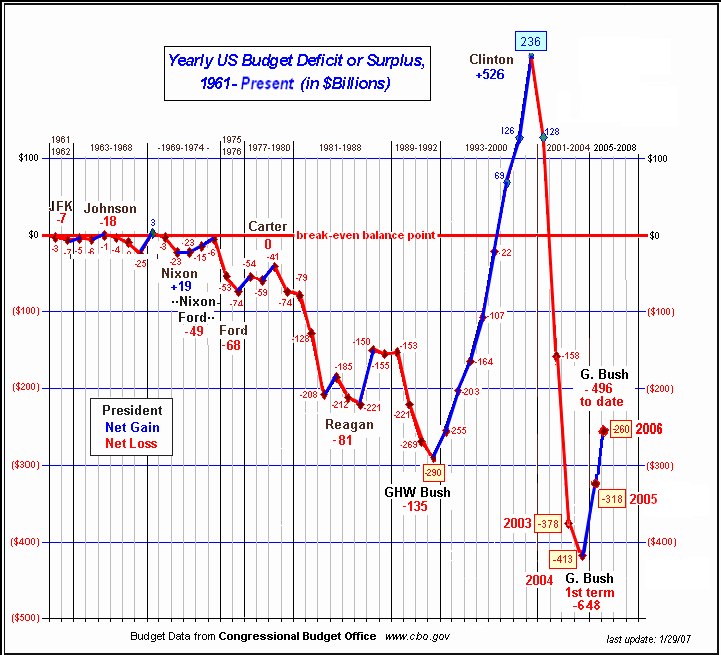
 In commenting about John McCain’s budget plans, Matthew Yglesias threw out this comment:
Given the present circumstances, I can’t think of any good reason for a presidential candidate to be promising to that we’ll be at balanced budgets in four years. It would be nice to see the deficit on a decreasing trajectory rather than an increasing one, but achieving short-term balance isn’t necessary or even necessarily desirable.
While it’s true that a balanced budget probably isn’t possible in the next four years, getting the deficit back on a decreasing trajectory is an absolute necessity. Why? Because it’s one of the easiest steps we can take towards strengthening the dollar, which as of today is now trading at an all time low against the Euro.
A weak dollar right now is part of the cause of high oil prices, and is causing a cascading effect of higher prices everywhere else in the economy, too. Wholesale prices rose 1.8% last month alone, and are up 9.2% over the past year. When you consider that the U.S. is a large net importer of goods, it’s impossible to think that a weak dollar isn’t behind this rise in prices.
Now, with our credit markets in crisis, the last thing this country needs is for foreign investors to get scared off by a weak dollar. As this excellent post at Information Arbitrage explains, we need those investments if we’re going to carry through this problem in the credit markets, and that ain’t gonna happen if investors don’t have confidence in the dollar.
One of the best ways to stengthen the dollar and bolster U.S. credit is to show that we can get our spending under control. In other words: we can cut spending and put ourselves on a trajectory towards a balanced budget. Alas, this is Presidential campaign season–which means that all investors can see right now are promises of tax cuts and spending increases from both candidates.
That’s not the message we need to be sending.
Image: Market Preview blog.
UPDATE: One thing that needs to be made clear, as my colleague Dave Schuler points out in the comments below, that part of “balancing the budget” means we need to stop accounting federal expenditures as “off-budget.” It’s easy to make it look like you’re doing something about the deficit when you “don’t count” large expenditures. The reality is that ALL federal spending needs to be in balance with ALL federal income, period.