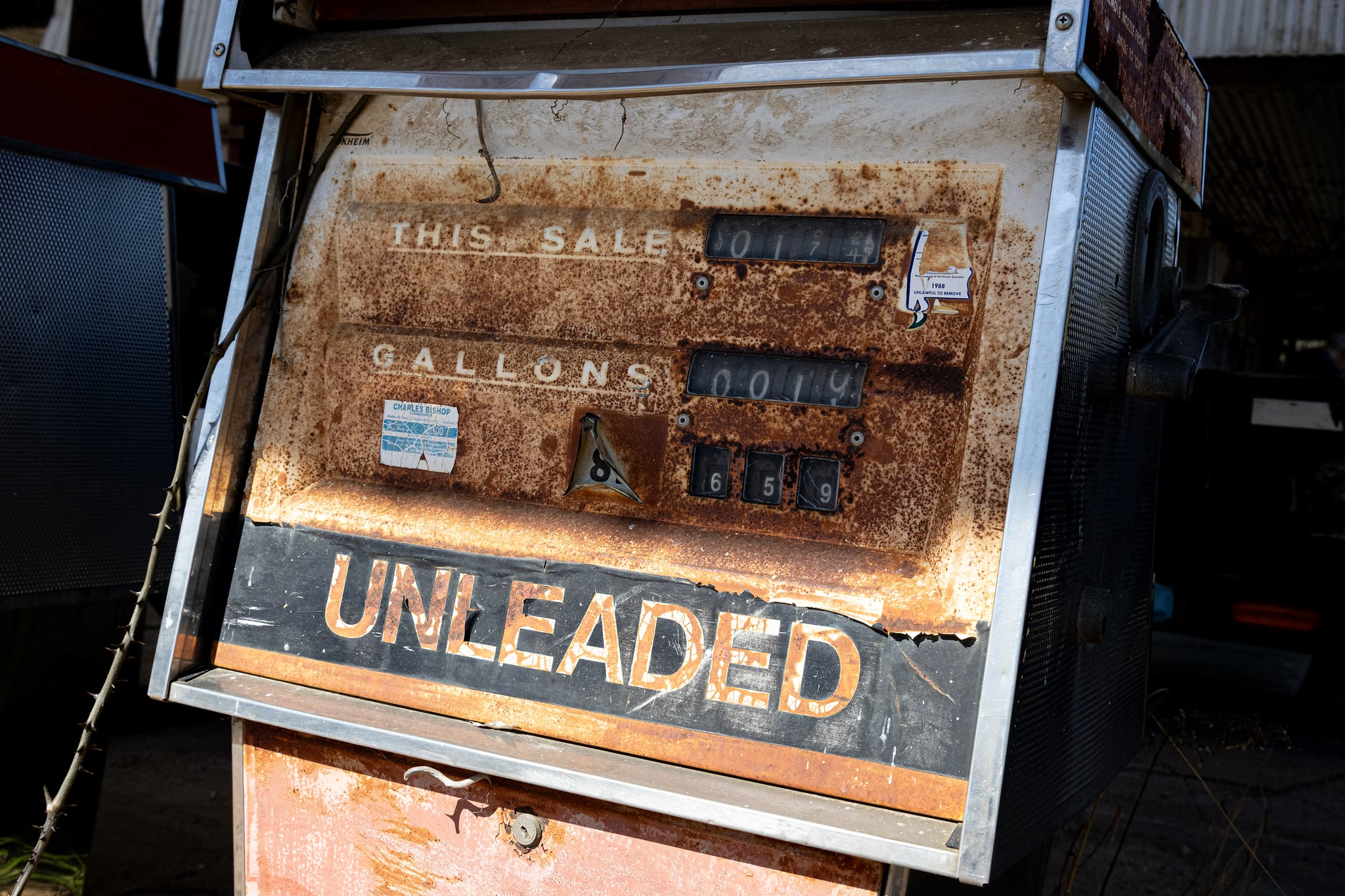
One thing I hear over and over whenever gasoline prices go up is the following question (often rhetorical) from callers to various talk radio programs.
If the oil was purchased before there was a spike in oil prices, and the gasoline was refined before there was a spike in prices, why is the price going up almost instantly when there is news of a supply disruption in far off countries? Somebody is getting gouged!
The answer is quite simple. The actors in markets are basically forward looking. Being sentient creatures human have the ability to think about things like tomorrow and the day after that and even thirty years into the future (this is why many people have things like 401ks when they are 35). I know this seems terribly, terribly obvious, but apparently to most people who subscribe to the above view point this observation has gone right past them.
What does the above have to do with the price of gasoline? Well it is simple. Suppose we have a market for cookies and typically the market clears with 10 cookies being bought (sold) each day. Now, there is a big explosion at a cookie making plant and tomorrow there will only be 2 cookies. You own a cookie retail store so what do you do? Keep prices the same and then close up shop and sell nothing tomorrow because the 2 cookies went to your competitor? Further, your competitor having the only two cookies on the market is now a monopolist and will set the price of cookies quite high. Or do you raise your price now, knowing that some of our cookies won’t be sold today and you can sell them tomorrow at the higher price?
At the same time consumers are also forward looking. What are they likely to do? If the price doesn’t go up, people might buy more cookies today than they normally would. The idea here is that consumers are trying to insulate themselves from the supply shock as well. So tomorrow’s shortage can appear today. Thus, today cookies become relatively more valuable.
What the above is basically saying is that markets are dynamic and forward looking. As things change, prices change to smoothe out consumption, production and so forth over time. This is all accomplished via the price. Distort the price and you distort how the various actors in the market will react. We saw precisely this problem in California during the electricity crisis. State law mandated that the retail rate–i.e. the rate the final consumer sees–be fixed. The wholesale price on the other hand was allowed to go up and down. Further, State law held that the investor owned utilities had to provide electricity to meet the demand of their customers. The customer sees a price of $0.11/kWh, the whole price on the other hand goes up to $0.50/kWh. Demand is totally unresponsive to the price because the price the final consumer sees is artificially set too low. Final result: a complete disaster.
Mandating that a gas station cannot raise the price on the gasoline in the tanks right now even though they bought the gasoline prior to the supply disruption would only ensure that we have shortages. The ability to raise prices is what keeps market economies from not having shortages. When a good becomes more scarce the relative price increases to keep demand and supply in balance. Legislation that tries to circumvent this us about as successful as legislation that tries to suspend the law of gravity.