
With the near universal consensus that his debate performance on Wednesday was both very good and far better than the President’s, it was likely inevitable that Mitt Romney would get at least a temporary bump in the polls. Indeed, I noted on Friday that Romney had jumped significantly in polling in Ohio, Virginia, and Florida. Since then, we’ve noticed up-ticks for Romney in the Gallup and Rasmussen Daily Tracking polls, along with a few other national polls, and Nate Silver thinks it may be only the beginning:
Four of the five national polls published on Saturday showed improvement for Mr. Romney. In the Rasmussen Reports tracking poll, which conducted about two-thirds of its interviews after the debate, we went from a two-point deficit against Barack Obama to a two-point lead. Mr. Romney gained two points in the Gallup tracking poll, which now shows him down by three. He also gained roughly 1.5 percentage points in the RAND Corporation’s online tracking poll, reversing a gain that Mr. Obama had made on Friday. And a companion pair of polls published by Clarus Research Group just before and after the debate showed a five-point swing toward Mr. Romney. He trailed Mr. Obama by four points in a poll that Clarus Research Group conducted on Tuesday night, before the debate, but led him by one point in a poll they conducted on Thursday.
All of these national surveys except for the Clarus Research Group poll still contain some predebate interviews, meaning that they may underestimate the gains that Mr. Romney may eventually realize. This particularly holds for the Gallup and RAND Corporation tracking polls, which use seven-day filed periods; only about 30 percent of the interviews in those polls postdate the debate. In general, the surveys seem to be consistent with a universe in which Mr. Romney has been polling about evenly with Mr. Obama nationwide in interviews conducted after the debates.
There were few state polls published on Saturday, but a Gravis Marketing poll of Colorado also showed a sharp reversal toward Mr. Romney. He led in its newest survey, which was conducted on Thursday after the debate, by 3.5 percentage points. Although Gravis Marketing polls have had a very strong Republican lean so far this cycle, the trend in the poll is nevertheless extremely favorable for Mr. Romney, since he had trailed Mr. Obama by roughly five percentage points in a poll it conducted in September.
Silver goes on to note that the one piece of good news for the President in these numbers may be the fact that Romney’s numbers aren’t as strong in polls of Registered Voters as they are in polls of Likely Voters, which may be important because Likely Voter polls tend to be more sensitive to what end up being temporary changes in the numbers than Registered Voter polls. [PDF] Even assuming this is true, though, it’s still worth noting that Likely Voter polls are generally considered to be a more likely indicator of the mood of the electorate when you’re this close to Election Day, especially when you factor in early voting.
Because of these changes in the national polls, the RealClearPolitics average for the national race is now down to a +1.4 point advantage for the President, with a rather dramatic change in the chart:

As Silver goes on to note, though, it’s still too early to tell if this is a temporary bump or something that amounts to a more fundamental change in the race in the final 30 days before election day. It’s entirely possible that the debate bump will fade as we get further away from it, for example, or that a positive spin on what was otherwise another disappointingly weak jobs report could help blunt some of the damage that the President may have done to himself on Wednesday. For the moment, though, it seems fairly clear that in the immediate days after the debate Mitt Romney has managed to both pick up support from voters who previously described themselves as undecided as well as apparently picking away some of what Silver calls Obama’s softer supporters. How long it lasts, though, is another question.
On that point, ABC News’s Amy Walter notes that, despite the debate, the fundamentals in the election continue to favor the President:
1) Voters are feeling (somewhat) better about the economy and direction of the country.
On Friday, the Bloomberg Consumer Comfort Index reported that consumer confidence had climbed for a sixth straight week, the “longest such stretch since early 2006.”
The latest NBC/Wall Street Journal poll found that 44 percent of Americans thought the economy will get better over the next year – the highest percentage since the fall of 2009, and six points better than the fall of 2008.
2) Despite frustration with Obama, Romney is not seen as better able to handle the economy.
A majority of voters continue to disapprove of the job Obama is doing on the economy. But, they are less disappointed in him than they used to be. And, they don’t see Romney as able to do any better.
(…)
Meanwhile, voters’ confidence that Romney will do a better job on the economy has dropped significantly between August and September. Back in August, Romney had a seven point lead on the question of who’d do a better job on the economy.
Today, Romney and Obama are tied. Gallup showed a similar trend between August and September.
3) Electoral map is shrinking, not expanding.
Despite earlier predictions by the Romney campaign that they would be competitive in traditionally blue states like Michigan, Minnesota and Pennsylvania, they are putting no serious effort into any of them. Moreover, the Paul Ryan pick gave Romney only a short-lived bounce in Wisconsin. The latest polls in the Badger State show Obama with a healthy advantage in the state.
4) Romney’s image problem.
Thanks to the efforts of millions of dollars of negative advertising over the summer by Obama and his allies, and little to no effort by Romney to rebut them, Romney entered the fall campaign with more people feeling unfavorably toward him than favorably
5) The Money Gap
Obama’s $181 million haul last month is impressive. More important, however, is the fact that his campaign has been smart in how they spend it. As the New York Times reported last week, the Obama team has been able to stretch their dollars further thanks to a sophisticated ad buying strategy. This has meant that even as Republicans (Romney plus the outside independent groups supporting him) have outspent the Democrats (Obama plus his independent group allies) by more than $40 million on TV ads since April, Obama and his allies have run 35,000 more ads.
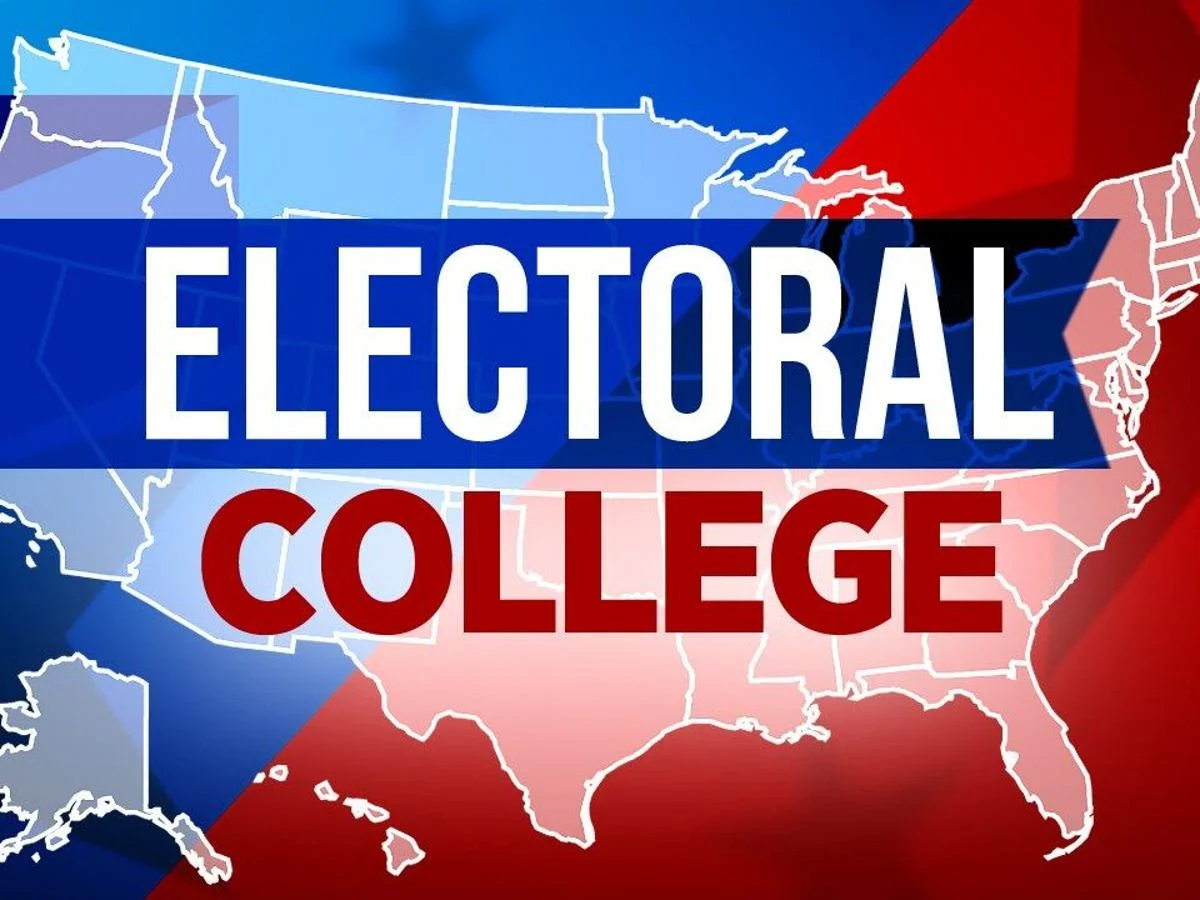
All of these factors are important, but I think the most important of all is the Electoral College. I’ve been noting for months now that Mitt Romney has an incredibly narrow path to victory (see here, here, and here), and none of that has changed. As Walter notes, the possibility of the GOP being about to pick up a state like Wisconsin seems to be out the window at this point. The same appears to be true of Michigan, where the Romney campaign had been hoping that they’d be able to perform better. Pennsylvania, long a state that Republicans have thought they had a chance of winning, similarly seems to have slipped out of their grasp. That leaves a group of about eight states (Colorado, Florida, Iowa, Missouri, Nevada, North Carolina, Ohio, and Virginia) totaling 106 Electoral votes for the candidates to fight over.
The current RCP Electoral College Map looks like this:

Based on these projections, President Obama would only need to win 19 additional Electoral Votes to get to 270. Mitt Romney, on the other hand, would need to win at least 86 Electoral Votes, representing 84% of the outstanding Electoral Votes. That means he most certainly would have to win Florida, Ohio, and Virginia (60 Electoral Votes) to even have a chance of getting a victory here. Is it possible? Well, recent polling in all three states shows Romney gaining on the President, but it’s worth noting that all of that polling comes from Rasmussen, We Ask America, and Gravis Marketing, polling firms with a decidedly Republican bias. They also all happen to be firms that engage in robo-calling, which means they are missing cellphone-only voters, which tend to favor Obama. I’d wait until we get some more reliable numbers before saying that there’s a real Romney trend going on in any of those states.
So yes, Mitt Romney is ticking up in the polls in the wake of the debate. What we don’t know yet is whether this is something that’s going to mark a new turn in the race itself, or whether it’s simply a temporary phenomenon. We also don’t know the true impact of Friday’s jobs report, or this Thursday’s upcoming Vice-Presidential debate, although the effect of that debate is likely to be minimal if history is any guide. We also don’t know if the gains in the national polls will filter down to the state level polling to such an extent that Romney’s path to Electoral College victory becomes more plausible. If we’re still seeing this trend a week from now, then maybe we can say it’s something. Right now, though, it’s just a matter of waiting and seeing.