I have spent most of the year dealing with a copyright troll. Some $21,000 later, the ordeal is over.
Back in February, I got served out of nowhere with a lawsuit seeking hundreds of thousands of dollars in damages for OTB’s use of a rather generic photo of a government building. I spoke to a couple of copyright attorneys referred to me by the Electronic Freedom Foundation, and they had some good news for me:
The photo was first posted on OTB way back in 2010. The statute of limitations requires that suits for damages be filed within three years. (While this is mitigated by a bizarre rule that only tolls the clock when the rights holder claims to have found the infringement, we had direct proof that they had in fact done so over a decade prior to filing.)
The generic nature of the photo (there are literally hundreds of quite-similar ones at Getty and other photo archives and, indeed, several available under various free Creative Commons licenses) would make it hard to claim damages.
The fact that OTB is a registered Limited Liability Company, one that has garnered a profit (of less than $100!) in only one year of the past ten likely precluded them from collecting damages in any case.
That the photo was posted at OTB by the late Doug Mataconis, who had died before the suit was filed, adds to that difficulty.
But, alas, some bad news:
Because the case didn’t break any interesting new ground in terms of case law, they wouldn’t take it pro bono. (Or, indeed, at all in the case of the first lawyer, who works for a nonprofit group.)
Despite the fact that I would likely win, it would cost me an inordinate amount of money to take it to court and find out. Indeed, it would almost certainly be cheaper to settle. As the first lawyer put it, “you will have to decide whether to give in to extortion.”
With the benefit of hindsight, I should have decided to give in to extortion.
Instead, I made the mistake of hiring the third lawyer I talked to. He reiterated the points in my favor and gave me every impression that copyright trolls like this litigant (who seems to make more money from lawsuits, of which he has filed dozens, than his photography) back down quickly when confronted with an experienced copyright attorney. I expected to pay him a couple thousand dollars and pay the claimant a nominal sum for the use of the photo.
Instead, the case dragged on for most of the year. Every back-and-forth email and phone call cost me hundreds of dollars. I repeatedly told my attorney that it was obvious that the other side was intentionally dragging the case out, causing me to fight a two-front war, with both his client and my lawyer driving up my costs. While my attorney had litigated hundreds of copyright cases, he apparently never dealt with opposition counsel that was so obstinate and unwilling to reason.
Finally, we got to the point where I would have to take time off work and spend thousands on depositions, court reporters, and attorneys’ fees. With the prospect of spending unknown time in court, unknown money, and still some possibility of losing the case (there were also prospects of recovering all of my fees, but there was no certainly of that), we finally reached a deal.
Given both the stress of the case and the prospect that this could happen again at any time, I seriously considered shutting the site down over the summer. Spending hundreds of man-hours a year running a money-losing website is one thing; facing the stress and financial costs of frivolous lawsuits is quite another. Ultimately, Steven, Tom, Matt, and I spent weeks going through the media archive, which at the time consisted of 23,479 images, and deleting any whose provenance we could not readily identify.* Given the sheer volume, we were extremely aggressive and certainly deleted hundreds of images that we were entitled to use.
It has all been, to say the least, quite frustrating.
*We’ve been pretty careful over the years to use public domain or CC-licensed images, but plenty of images marked as free for use on Google Image or Flickr—and even on U.S. government websites!—are actually copyrighted images. And earlier versions of the WordPress software we use didn’t make it as easy to document sources and link to licenses.
James Joyner is a Professor of Security Studies. He's a former Army officer and Desert Storm veteran. Views expressed here are his own. Follow James on Twitter @DrJJoyner.
Q3 GDP Grew 4.3%
Better late than never numbers are better than the vibes suggested.
The U.S. economy grew robustly in July, August and September, powered by steady consumer spending, especially on health care.
The gross domestic product — the broadest measure of the nation’s economic activity — for the third quarter grew at an annual rate of 4.3%, much faster than the 3.8% expansion seen between April and June, according to the Commerce Department on Tuesday.
Growth has picked up from the early months of 2025, when the U.S. economy actually shrunk at an annual rate of 0.6% as President Trump prepared sweeping global tariffs.
These numbers should have been out in October, but the government shutdown delayed their release. I will confess that it is a healthier number than I expected. I will also say that growth fueled by health care spending doesn’t seem ideal, but that is just an initial impression.
Here’s a longer-term comparison by quarter. Q3 of 2024 grew at a 3.3% rate, and Q3 of 2023 was at 4.7% for some other comparative notes.
I expect there will be some crowing from the usual suspects in the administration, as well as some skepticism from the opposition. I would suggest that overreaction and overgeneralization is probably a bad idea one way or the other.
Some other economic numbers:
Inflation has been cooling off notably, with consumer prices rising a modest 2.7% in November from a year earlier. Some food items have continued to drop in price, but not enough to offset the growing big costs, like rent, electricity and health insurance.
On average, workers’ wages have been growing faster than prices. But those wage gains have slowed in recent months as the softening job market has chipped away at workers’ bargaining power for higher pay. Wealthier shoppers have been propping up much of U.S. spending at stores and restaurants.
Steven L. Taylor is a Professor Emeritus of Political Science and former College of Arts and Sciences Dean. His main areas of expertise include parties, elections, and the institutional design of democracies. His most recent book is the co-authored A Different Democracy: American Government in a 31-Country Perspective. He earned his Ph.D. from the University of Texas and his BA from the University of California, Irvine. He has been blogging since 2003 (originally at the now defunct Poliblog).
Follow Steven on Twitter and/or BlueSky.
The debate over the direction of the post-Trump right is underway, and one of the first casualties is the Heritage Foundation. On Monday some of its most important conservative scholars and their policy departments said they are leaving Heritage to join Mike Pence’s policy shop.
Some 15 or more Heritage employees, including the leaders of three prominent policy departments, are jumping to the Advancing American Freedom foundation that the former Vice President established in 2021. The defectors include the leaders of Heritage’s most important policy shops: The Edwin Meese III Center for Legal and Judicial Studies, the Center for Data Analysis, and the Roe Institute for Economic Policy Studies.
The move by John Malcolm and his colleagues at the Meese Center is especially notable. We’re told it is endorsed by Mr. Meese, the Reagan-era Attorney General who is now 94 years old and has been a fixture at Heritage. The Roe Institute is the think tank’s free-market shop—or it was before Heritage embraced Trumpian industrial policy. One data project stifled at Heritage is to map the district-by-district impact of the Trump tariffs.
“They called us first,” says Mr. Pence about the defectors. “They see us as being a consistent, reliable home for Reagan conservatism.” Or maybe simply conservatism, which Heritage was founded to promote and did for decades. But that changed with the arrival of Kevin Roberts as president, who tried to play the game of populist politics rather than promote the think tank’s traditional principles.
Heritage once supported free trade; now it is protectionist. It once supported a robust American foreign policy; Heritage purged its defense hawks two years ago. Heritage was a supporter of the originalist judicial revolution and the rule of law; now it defends Mr. Trump’s expansion of executive power whether or not it has a constitutional basis.
The Heritage turn has been the work of Mr. Roberts and the young Tucker Carlson admirers he brought on board. Conservatives need to “know what time it is,” Mr. Roberts likes to say as a sneer at conservatives who believe the movement should still stand for more than a lunge for power.
Tension has been building inside Heritage for a long time, as our Kate Odell reported in 2023. It broke into the open after Mr. Roberts said there should be no enemies to the right as he defended Mr. Carlson’s softball interview with Nazi fanboy Nick Fuentes.
Several Heritage board members have resigned, as has Trump economic adviser Stephen Moore. Monday’s departures are the largest so far, and they underscore how far Heritage has wandered under Mr. Roberts. Mr. Pence and his board have set a target of $15 million from donors to finance the defecting analysts for three years, and as of Friday we hear they had raised more than $13 million.
Later on Monday two other Heritage stalwarts, Cully Stimson and Hans von Spakovsky, also resigned with what they called “a heavy heart and profound sadness.” Readers will recognize both bylines from our pages.
This is just the latest sign of a rupture in the elite portion of the MAGA coalition. While Heritage was long rather mainstream, it was after all the home for Project 2025. A mass exodus there is more than a minor curiosity.
In this particular case, it seems motivated by genuine revulsion over the overt anti-semitism and white/Christian Nationalist turn. While it was always there, even in the 2016 campaign, it mostly operated on the fringes and offered plausible deniability. When Heritage is hosting defending the likes of Fuentes, that’s no longer possible.
In other cases, there is backlash on policy issues like the significant impact Trump’s mercurial tariff policies are having on profits, shock (for inexplicable reasons) that the administration seems to be favoring Russia over Ukraine and our NATO allies, the sheer cruelty of the immigration roundup, and the abandonment of other longstanding conservative policy positions.
Whether any of this constitutes a “vibe shift,” much less the ending of “cruelty as the dominant culture,” remains to be seen. After all, significant numbers of Republican elites, notably national security professionals who started the #NeverTrump movement, rejected the original shift and were easily replaced by working class folks brought in by the culture wars, economic frustrations, or a simple desire to burn the whole thing down.
Still, it’s noteworthy. For a decade, Republicans in positions of power bent the knee. They put their fingers in the wind and decided that the only way to survive politically in the party was to support whatever Trump was pushing, regardless of how much is violated their own ideological or ethical inclinations. We’re now seeing a growing number who either feel emboldened to resist or who are deciding it’s no longer worth it and getting out of elective office.
In this morning’s open forum, longtime commenter Michael Reynolds observes,
Is MAGA growing? No. Is Trump increasing in popularity? No. Has MAGA organized effectively? No. Has opposition faded? No. Has the opposition become more focused? Yes. Has MAGA reached the Brown Shirt level? No. Is Trump weakening physically, visibly aging? Yes. Is he increasingly unfocused, less able to craft an effective message? Yes. Did the gerrymandering maneuver work? No. Has the international community, NATO and Canada, surrendered? No. Has the military swung to Trump’s side? No. Is the frantic re-naming a sign of strength? No. Is there currently someone who can take over for Trump and keep MAGA united? No.
Alas, as Steven and I noted earlier in the week, Trump remains in power and continues to destroy longstanding institutions and otherwise make decisions that will have long-term consequences unable to be easily or quickly undone. While there are some one-offs on the Epstein files and ObamaCare subsidies, thus far the House has been unwilling to exert its power. Ditto the Supreme Court. For now, at least.
But the House majority is thin and getting thinner as Republican Members resign prematurely. And it’s possible that, once SCOTUS rules on cases in full rather than issuing preliminary rulings without explanation on the Shadow Docket, they’ll uphold the Constitution as we’ve known it in the modern era.
James Joyner is a Professor of Security Studies. He's a former Army officer and Desert Storm veteran. Views expressed here are his own. Follow James on Twitter @DrJJoyner.
Festivus Forum
Although in blog world, every day is the airing of the grievances.
OTB relies on its readers to support it. Please consider helping by becoming a monthly contributor through Patreon or making a one-time contribution via PayPal. Thanks for your consideration.
Steven L. Taylor is a Professor Emeritus of Political Science and former College of Arts and Sciences Dean. His main areas of expertise include parties, elections, and the institutional design of democracies. His most recent book is the co-authored A Different Democracy: American Government in a 31-Country Perspective. He earned his Ph.D. from the University of Texas and his BA from the University of California, Irvine. He has been blogging since 2003 (originally at the now defunct Poliblog).
Follow Steven on Twitter and/or BlueSky.
Maybe I am just in intellectual rebellion against vibes-based “analysis,” or maybe I just never thought that there was some real sense that there was some moment in which the broader culture thought Trump was “cool,” but I am finding the Ezra Klein column that James Joyner wrote about today to be more than a bit hollow. I never thought Trump won the 2024 election because he was giving the country what they wanted, save in the sense that he was the one on the ballot challenging an incumbent party that was out of favor. Things like inflation and pandemic frustration were more important than any Trump vibes. I realize that this is a bit reductive, but it is still the basic truth.
If we set aside vibes and talk about the attention economy and the cool social media output of Newsom and Mamdani, it is not a surprise that a president is less popular a year after their election. It is kind of a thing.
Moreover, it is not a surprise that a lame duck president is finding his influence starting to wane. Still, like I (and James) noted the other day, let’s not forget how much damage he has done and will continue to do, vibes or no.
But when we assess where we have been and where we are going, I can’t help but notice that the Vice President, who is vying to lead the party, is out there stoking white grievance.
JD Vance: "In the United States of America you don't have to apologize for being white anymore" pic.twitter.com/5TF3GvLxmO
JD Vance perfectly sums up how Christianity produces great men:
"Tyler Robinson is everything the far left wants from our young men. He rejected the conservatism, spiritually, and values of a small town family. He moved into a small apartment, he became addicted to porn, he… pic.twitter.com/SKOXjMvyad
Vance: "Why have rents gone down for 4 consecutive months? Because we're starting to get those illegal aliens out of the USA. Those criminals, those gang members, those people that are taking homes that ought by right go the people in this room. It's simple economics." pic.twitter.com/CydybneQLN
I may be missing Klein’s point, but even if the “Trump vibe shift is dead,” the next stage of American “conservatism,” and therefore national politics, is looking pretty bleak. Maybe all of this collapses in on itself, but when I think about how much open racism there has been in Repulican discourse of late, combined with things like the Young Republicans Nazi chat or things like the following (source), I am quite concerned with where the vibes are going, shall we say.
Steven L. Taylor is a Professor Emeritus of Political Science and former College of Arts and Sciences Dean. His main areas of expertise include parties, elections, and the institutional design of democracies. His most recent book is the co-authored A Different Democracy: American Government in a 31-Country Perspective. He earned his Ph.D. from the University of Texas and his BA from the University of California, Irvine. He has been blogging since 2003 (originally at the now defunct Poliblog).
Follow Steven on Twitter and/or BlueSky.
Bari Weiss Strikes
Although I have to wonder if she is aware of the Streisand Effect?
When the new owners of CBS put Bari Weiss in charge of CBS News, there was quite a bit of concern that she would use the position to further political and ideological goals rather than having fealty to, you know, the news. Well, in addition to putting low-rated interviews on the air, she does seem to be up to some mischief. The NYT reports: ‘60 Minutes’ Pulled a Segment. A Correspondent Calls It ‘Political.’
In a move that drew harsh criticism from its own correspondent, CBS News abruptly removed a segment from Sunday’s episode of “60 Minutes” that was to feature the stories of Venezuelan men deported by the Trump administration to what the program called a “brutal” prison in El Salvador.
CBS announced the change three hours before the broadcast, a highly unusual last-minute switch. The decision was made after Bari Weiss, the new editor in chief of CBS News, requested numerous changes to the segment. CBS News said in a statement that the segment would air at a later date and “needed additional reporting.”
But Sharyn Alfonsi, the veteran “60 Minutes” correspondent who reported the segment, rejected that criticism in a private note to CBS colleagues on Sunday, in which she accused CBS News of pulling the segment for “political” reasons.
One of Ms. Weiss’s suggestions was to include a fresh interview with Stephen Miller, a White House deputy chief of staff and the architect of Mr. Trump’s immigration crackdown, or a similarly high-ranking Trump administration official, two of the people said. Ms. Weiss provided contact information for Mr. Miller to the “60 Minutes” staff.
Ms. Weiss also questioned the use of the term “migrants” to describe the Venezuelan men who were deported, noting that they were in the United States illegally, two of the people said.
In her note, Ms. Alfonsi said that her team had requested comment from the White House, the State Department, and the Department of Homeland Security. “If the administration’s refusal to participate becomes a valid reason to spike a story, we have effectively handed them a ‘kill switch’ for any reporting they find inconvenient,” Ms. Alfonsi wrote.
Indeed, how many times in my life have I heard or read a story wherein the reporter notes that they had reached out to X, Y, or Z for comment, but had not received a response? The notion that such a lack of response would stop a story from being run is patently absurd and would, as Alfonsi notes, provide the administration with a veto (and a passive one at that).
Also, the word “migrant” is the appropriate English language word to describe someone who has left one country to move to another one. Legal status is not an issue with the core definition of the term.
Weiss has built her career on the notion that she is some kind of special truth-teller who has the courage to stand up to orthodoxy. But, of course, like many people who shout and complain about how they are censored or “cancelled,” she is really just a shill.
By the way, while I am sure that a CECOT piece on 60 Minutes might have gotten some additional press attention on the topic, there was no better way to draw even more attention to the entire issue than this maneuver. Indeed, from a “keep things as quiet as possible” standpoint, airing the piece on the Sunday before Christmas was probably the best case scenario for having as few people pay real attention as possible. You know, slow news cycle with lots of reporters gearing down for the holidays, people traveling, going to parties, visiting family, etc.
Steven L. Taylor is a Professor Emeritus of Political Science and former College of Arts and Sciences Dean. His main areas of expertise include parties, elections, and the institutional design of democracies. His most recent book is the co-authored A Different Democracy: American Government in a 31-Country Perspective. He earned his Ph.D. from the University of Texas and his BA from the University of California, Irvine. He has been blogging since 2003 (originally at the now defunct Poliblog).
Follow Steven on Twitter and/or BlueSky.
Shifting Vibes?
If the politics of cruelty has peaked, what follows?
Ezra Klein proclaims, “The Trump Vibe Shift Is Dead.”
In January, I made a prediction: “I suspect we are at or near the peak of Trump vibes.” Now, as this long year grinds to its end, I think it can be said more declaratively: The Trump vibe shift is dead. And there are already glimmers of what will follow it.
The Trump vibe shift was American culture and institutions moving toward President Trump and Trumpism with a force unexplained by his narrow electoral victory.
[…]
It was the belief that Trump’s 2024 coalition — which stretched from Stephen Miller and Laura Loomer to Elon Musk and Marc Andreessen to Robert F. Kennedy Jr. and Joe Rogan and Tulsi Gabbard — was the arrival of something new rather than, as many thought in 2016, the final heave of something old.
As 2025 closes, Trump’s polling sits in the low 40s, with some surveys showing him tumbling into the 30s. Democrats routed Republicans across the year’s elections, winning governorships in New Jersey and Virginia easily and overperforming in virtually every race they contested.
Moderate Republicans broke with Speaker Mike Johnson to bring to the House floor a Democratic bill to extend Affordable Care Act subsidies. Marjorie Taylor Greene is retiring. Elon Musk said he regretted joining the administration to lead the so-called Department of Government Efficiency. Joe Rogan called Trump’s immigration policy “insane.” The right is at war with itself over the Epstein files and how much antisemitism and anti-Indian racism is too much antisemitism and anti-Indian racism.
A year ago, we kept hearing that Trump was coolnow. Is anyone saying that now?
After several paragraphs detailing how Trump ran for re-election on the economy and that Trump’s tariff policies have actually made things worse, he continues,
Then there’s the vibes. I’ll admit to surprise that Trump’s ghoulish response to the killings of Rob and Michele Singer Reiner attracted so much opprobrium on the right. Trump routinely responds to personal tragedy with narcissistic cruelty. There is a sickness in his soul. But that sickness was, we were repeatedly told, what the culture hungered for.
Offense can be refreshing when injected into conformity. But cruelty as the dominant culture repulses most people. “The immigration thing — the way it looks is horrific,” Rogan said in October. “When you’re just arresting people in front of their kids — normal, regular people who’ve been here for 20 years — everybody who has a heart can’t get along with that.” Nick Fuentes clips might carry a transgressive charge in MAGA group chats. But how many Americans will see themselves reflected in a political movement partly led by a celibate white supremacist who thinks Hitler is cool?
This all strikes me as right. At the elite level, the Trump coalition was always fraught, with previously normie Republicans kowtowing to a man they clearly found contemptible in order to preserve their viability. Elise Stefanik is but the latest to discover that it’s not worth it. At the grassroots level, Trump’s appeal was more powerful as his crassness separated him from “normal” politicians who they saw as having failed them for so long. But, satisfying as “owning the libs” might be, policies that make their own lives harder will eventually backfire. And there’s also a legitimate backlash over the slow roll on the Epstein files.
In that sense, I hope Klein is right here:
Political backlash always seeks the opposing force to the present regime. Closed and cruel are on their way out. What comes next, I suspect, will present itself as open, friendly and assertively moral. But it will also need to credibly offer what Trump and Trumpism have failed to deliver: real solutions to the problems Americans face.
But I strongly suspect that he’s wrong in how it will happen:
Normalcy is not enough. The Democratic Party will need to represent something new, as opposed to retrenching to something old.
A year ago, Democrats understood MSNBC and The Washington Post but seemed flummoxed by YouTube and TikTok. But younger and less terminally cautious Democrats — Zohran Mamdani in New York City, James Talarico in Texas, Gavin Newsom in California — are showing that Democrats can win the attention wars.
While relative youth and an optimistic tone are likely part of the recipe, I’m skeptical that Mamdani, in particular, is the way forward for reclaiming Middle America. And I’m not alone.
CNN (“‘They’re attacking their own’: DC Democrats irked by surge of left-wing challengers with House majority on the line“):
When Rep. Dan Goldman first ran for Congress in 2022, he was cheered on the left as the party’s top lawyer during President Donald Trump’s first impeachment.
Three years on, the Manhattan Democrat is in the fight of his political life against New York City Comptroller Brad Lander, a liberal challenger backed by prominent left-wing figures like Zohran Mamdani and Bernie Sanders. In his campaign launch earlier this month, Lander declared: “We need leaders who will fight, not fold.”
“I’m running for Congress because we’re facing a five-alarm fire for our democracy” Lander declared in his mid-December launch video.
Goldman is among more than two dozen congressional Democrats battling serious primaries this year — a surge that party insiders attribute to a wave of emboldened liberals across the country who watched Mamdani’s unlikely rise and remain frustrated at their party’s struggles to fight back against Trump.
Democrats in Washington say primaries are simply part of life in a big-tent party. But privately, many see the surge in far-left challengers as an expensive headache that distracts from the party’s goal of seizing control of Congress next November. And it has infuriated some Democrats — including among the most vulnerable members — who fear the party will have to divert money away from the bigger fight against the GOP to protect incumbents in safe seats.
There are some parallels to what we saw with the Republican Party with the rise of the Tea Party wing, the forerunners of the MAGA movement. There was some pretty strong backlash to President Obama early in his first term. It was so bad that Republican Scott Brown won the race to replace the late Teddy Kennedy in deep blue Massachusetts. But the party failed to capitalize fully on the 2010 midterms because primary voters selected candidates in several states and districts who turned off independents and moderates necessary to win the general election.
Nearly half a century ago, William F. Buckley Jr. explained how he chose who to vote for in Republican primaries: “I’d be for the most right, viable candidate who could win.” It’s reasonable for Democrats to select an AOC in a deep blue Congressional district in New York. Nominating a Mamdani in New York City, where the likes of Rudy Giuliani, Michael Bloomberg, and Eric Adams have won, is riskier, as evidenced by the nervousness of so many Democratic elites.
I’m skeptical of Gavin Newsom’s chances of winning back the swing states. He’s shrewdly tacked to the center on some social issues and, yes, he’s proved adept at fighting Trump using his own tactics on social media. But his California is the epicenter of both the culture wars and the “abundance” argument Klein and co-author Derek Thompson have highlighted.
But, yes, we need leadership to de-polarize American politics and there does not appear to be a plausible Republican candidate who has demonstrated the desire, much less the ability, to do that.
James Joyner is a Professor of Security Studies. He's a former Army officer and Desert Storm veteran. Views expressed here are his own. Follow James on Twitter @DrJJoyner.
Via The Daily Beast: White House Made Bizarre Demands for Trump’s Bogus Peace Prize. I can only imagine the days of programming that FNC would have generated had Biden demanded a peace prize from FIFA, to include specifics about the size of the trophy.
Steven L. Taylor is a Professor Emeritus of Political Science and former College of Arts and Sciences Dean. His main areas of expertise include parties, elections, and the institutional design of democracies. His most recent book is the co-authored A Different Democracy: American Government in a 31-Country Perspective. He earned his Ph.D. from the University of Texas and his BA from the University of California, Irvine. He has been blogging since 2003 (originally at the now defunct Poliblog).
Follow Steven on Twitter and/or BlueSky.
Dune-A-Palooza begins! It’s the first of our three part series covering Dune, on the page and on the screen. In this episode, we discuss the original 1965 novel. If you were a science fiction fan, you read this book. Even if you weren’t a science fiction fan, there’s a good chance someone recommended it to you.
Both Steven and Tom devoured the book in our teens, when it became the touchstone for what truly great science fiction could achieve. Hear us talk about the origins of the novel, our early reactions to it, and our reactions again after re-reading it many years later. Good thing it escaped the obscurity of the auto repair publisher who originally printed it…
A fantastic setting, in every meaning of that word! Great characters! Intrigues! Meditations on political power! High tech that’s also low tech! Tragic fates! It’s all here.
Ancient Geeks is a podcast about two geeks of a certain age re-visiting their youth. We were there when things like science fiction, fantasy, Tolkien, Star Trek, Star Wars, D&D, Marvel and DC comics, Doctor Who, and many, many other threads of modern geek culture were still on the fringes of culture. We were geeks before it was chic!
For feedback, contact so**************@***il.com. You can also find us on Facebook, Reddit, and Bluesky. Also, check out the Ancient Geeks blog on Substack! And if you like what you hear, please tell a friend. Also, we always appreciate a review on the podcast platform of your choice.
Steven L. Taylor is a Professor Emeritus of Political Science and former College of Arts and Sciences Dean. His main areas of expertise include parties, elections, and the institutional design of democracies. His most recent book is the co-authored A Different Democracy: American Government in a 31-Country Perspective. He earned his Ph.D. from the University of Texas and his BA from the University of California, Irvine. He has been blogging since 2003 (originally at the now defunct Poliblog).
Follow Steven on Twitter and/or BlueSky.
OTB relies on its readers to support it. Please consider helping by becoming a monthly contributor through Patreon or making a one-time contribution via PayPal. Thanks for your consideration.
Steven L. Taylor is a Professor Emeritus of Political Science and former College of Arts and Sciences Dean. His main areas of expertise include parties, elections, and the institutional design of democracies. His most recent book is the co-authored A Different Democracy: American Government in a 31-Country Perspective. He earned his Ph.D. from the University of Texas and his BA from the University of California, Irvine. He has been blogging since 2003 (originally at the now defunct Poliblog).
Follow Steven on Twitter and/or BlueSky.
In yesterday’s post, “The Trump Administration and Long-Term Damage,” Steven Taylor argued that media attention on the president’s poll numbers and speculation about upcoming elections ignores the real consequences of his actions in office. He cites those whose lives will be permanently altered by mass deportation and the abrupt shuttering of foreign aid programs as well as the lost confidence in our public health institutions and strained relationships with longstanding allies.
Two Washington Post pieces expand on that point. One that hits particularly close to home for me is the interactive feature “The year Trump broke the federal government.” It’s mostly anecdotal, but here are some highlights:
The United States’ 2.4 million federal employees were about to get caught up in a once-unthinkable overhaul of the nation’s sprawling bureaucracy, carried out in less than a yearby one of the most polarizing presidents in American history.
Missions have shifted or shattered. Entire agencies were deleted. Nearly 300,000 employees were forced out of the federal workforce. The Trump administration froze or shut off billions of dollars in scientific research, gutted or eliminated offices and programs devoted to civil rights and diversity, rewrote the federal hiring system to reward loyalty to the president, and shrank Social Security while installing Immigration and Custom Enforcement agents in hundreds of new offices across the country.
Google searches for “federal workers return to office” spiked by 600 percent as soon as Trump ended remote work. Then instructions began to go out.
A Department of Health and Human Services staffer in the Southwest was given five days to move to D.C. A Defense Department worker had two months to report to an office in another state. In Pahrump, Nevada, a Bureau of Land Management employee received an email with the address of the nearest federal building: more than 70 miles away. Edward Brandon Beckham looked at his wife, dying of cancer in home hospice, and knew he couldn’t leave her to commute for three hours a day.
Workers turned a conference room in a Veterans Affairs office in California into desk space for six nurses. Veterans who called to confess thoughts of suicide could hear people speaking in the background. In the Southwest, a woman who conducted background investigations into federal applicants showed up to her new office to find she could hear every word of her co-workers’ conversations — and they could hear hers. She moved into a musty closet, closing the door.
[…]
Ten thousand health staff, including biomedical scientists and researchers who studied patient safety, lost their jobs. Senior leaders at the NIH received letters offering new posts in remote areas such as Alaska or Billings, Montana. At the Centers for Disease Control and Prevention, those who oversaw chronic disease, HIV and tuberculosis programs were reassigned to the Indian Health Service.
When Tony Schlaff arrived at the Health Resources and Services Administration, he was astonished to see hundreds of people queued up outside. “What’s going on?” he asked. “Everybody is going through a full screening,” the person standing next to him said. Schlaff filed into line and, alongside hundreds of colleagues, waited for nearly two hours, shivering in the frigid wind.
Once indoors, Schlaff watched employees walk through a TSA-style screening machine and undergo badge checks. Some walked back outside, tearful. After half an hour, he got close enough to hear what was happening: “You do not have access to the building,” one security guard told a woman whose badge failed to swipe, which is how she found out she’d been fired. “Leave. Go home.”
[…]
Ten thousand health staff, including biomedical scientists and researchers who studied patient safety, lost their jobs. Senior leaders at the NIH received letters offering new posts in remote areas such as Alaska or Billings, Montana. At the Centers for Disease Control and Prevention, those who oversaw chronic disease, HIV and tuberculosis programs were reassigned to the Indian Health Service.
When Tony Schlaff arrived at the Health Resources and Services Administration, he was astonished to see hundreds of people queued up outside. “What’s going on?” he asked. “Everybody is going through a full screening,” the person standing next to him said. Schlaff filed into line and, alongside hundreds of colleagues, waited for nearly two hours, shivering in the frigid wind.
Once indoors, Schlaff watched employees walk through a TSA-style screening machine and undergo badge checks. Some walked back outside, tearful. After half an hour, he got close enough to hear what was happening: “You do not have access to the building,” one security guard told a woman whose badge failed to swipe, which is how she found out she’d been fired. “Leave. Go home.”
I’m sure many Trump supporters are happy about all this. But the point is that, should the voters decide we need a course correction in the next election, most of this can’t be undone. Like the East Wing of the White House, the destruction is permanent.
The covid.gov website says covid-19 most likely originated in a Chinese lab, although scientists are in fact deeply divided over its origin. A widely read report posted on energy.gov/topics/climate concludes that humans’ impact on climate is relatively small, a finding sharply at odds with the scientific consensus.
On DHS.gov, the government informs Americans that nearly 2 million undocumented migrants have “self-deported” this year, an assertion that mystifies researchers. And cdc.gov/vaccine-safety dismisses the conclusion that vaccines do not cause autism as not “evidence-based.”
Researchers and activists increasingly fear that under the Trump administration, the U.S. government is abdicating its historic role as a clearinghouse for reliable information — a momentous shift for what has been the world’s foremost producer of widely accepted data for everyone including academic researchers, local governments and ordinary citizens.
[…]
The issue arose again Thursday when the Labor Department announced a surprisingly low inflation figure of 2.7 percent for November. Economists immediately noted quirks that could have artificially lowered the rate: prices were not gathered until the second half of November, when Thanksgiving discounts kicked in, and no increase was shown in housing costs, though they clearly went up.
[…]
Across the government, much information is simply no longer being collected.
The Department of Homeland Security for years had issued monthly reports on immigration statistics; the Trump administration stopped that practice in February. The law requires the administration to conduct an annual report on the federal workforce; officials did not deliver it this year. Dozens of climate change reports and data collections have been taken down across the government.
When information is produced, it may be in skeletal form. The Education Department is required by law to produce a yearly report on the condition of education in America, but the 2025 version omits key data and is “extremely truncated,” according to Rachel Dinkes, president of the Knowledge Alliance, a coalition of research education groups.
“Data is a flashlight that lets us see, and if we don’t have that light, we’re in the dark,” Dinkes said. “There is no other entity that can provide reliable, high quality timely data that the federal government provides. It’s unique to the federal role.”
[…]
It is hard to overstate the U.S. government’s importance as the world’s leading producer, collector and disseminator of trusted information on almost every topic, including population, employment and weather. The Constitution ordered the government to conduct a census every 10 years, and that role has only expanded as the U.S. has assumed global leadership.
“It touches every aspect of our lives,” said Denice Ross, former U.S. chief data scientist. “Federal data are like invisible infrastructure that we take for granted, like the internet or bridges. It’s fundamental to running a modern society, and we don’t even notice that it’s there.”
In the comments to Steven’s post, I noted Warren Buffett’s famous message to those who lead the companies Berkshire Hathaway owns: “We can afford to lose money — even a lot of money. But we cannot afford to lose reputation — even a shred of reputation.” We have lost more than a shred.
James Joyner is a Professor of Security Studies. He's a former Army officer and Desert Storm veteran. Views expressed here are his own. Follow James on Twitter @DrJJoyner.
OTB relies on its readers to support it. Please consider helping by becoming a monthly contributor through Patreon or making a one-time contribution via PayPal. Thanks for your consideration.
Steven L. Taylor is a Professor Emeritus of Political Science and former College of Arts and Sciences Dean. His main areas of expertise include parties, elections, and the institutional design of democracies. His most recent book is the co-authored A Different Democracy: American Government in a 31-Country Perspective. He earned his Ph.D. from the University of Texas and his BA from the University of California, Irvine. He has been blogging since 2003 (originally at the now defunct Poliblog).
Follow Steven on Twitter and/or BlueSky.
The Trump Administration and Long-Term Damage
Debates about whether Trump is strong or weak often ignore the fundamental fact that he has power.
One of the ongoing elements of coverage of the Trump administration that drives me more than a little crazy is the constant parsing of whether he is “strong” or “weak.” This is usually in the context of public opinion and, therefore, about electoral strength. While his popularity matters and I do continue to think that the Republicans are going to suffer at the polls next November,* these are all about future weakness and the possible consequences thereof. This is part of the general problem of the horseracification of political analysis. Who’s up? Who’s down? What’s the word of the moment?
This TNR headline is a great example of what I am talking about: Trump Is a Weak, Failing President, and the Media Is Finally Saying So. I should have been keeping a running tally of such stories and could do the research to provide examples, but if you are reading this, you read enough political news to know what I am talking about.
I am not saying that all of that doesn’t matter; I think it does. It would matter, for example, if Trump were popular. Popularity would help him consolidate his authoritarianism. If people were happy, electoral outcomes would be different, etc. As such, I am not utterly opposed to such analysis.
But.
BUT.
But it has precious little to do with the power that Trump and his administration currently hold.
Trump, like all presidents, serves a fixed, four-year term. His popularity rating, while a relevant predictor of future electoral outcomes, has precious little to do with his power, especially if the Congress and the Supreme Court are largely compliant (if not utterly supine). It should be further noted that even if the Democrats win power in the House and/or the Senate, they can make life more difficult for Trump, but their ability to force him to do anything would be nonexistent, and their power to fix any of what I discuss below would be zero.
A simple example: Trump’s poll numbers and long-term electoral prospects are irrelevant to ICE’s ability to harass, detain, and even deport people to hellish conditions.
Nor do popularity ratings stop him and his cronies from utterly upsetting the international order in ways that are likely irreparable. Europe and our other allies will not be able to trust us as the global leaders we were after electing Trump twice. They can’t gamble their futures on a US electorate that might do something similar again. This is going to have profound long-term effects on trade, diplomatic relations, and military alliances. Trump may be “weak” and “failing” in terms of public opinion and electoral calculations, but he still has the power to do substantial long-term damage, and he isn’t even finished with his first full year in office.
To move to a specific choice: the gutting of USAID was not linked, one way or the other, to popularity. It just happened, and people are dying as a result. Here is an example from ProPublica: Trump Officials Celebrated With Cake After Slashing Aid. Then People Died of Cholera. See also, NPR: Study: 14 million lives could be lost due to Trump aid cuts.
You know, just some pesky details.
In terms of domestic politics, Trump’s unleashing of white nationalism and a deeply racist America First mentality is not going to be put back in the bottle any time soon.
Another key example is public health. Trump’s appointment of Robert Kennedy, Jr., to be Secretary of Health and Human Services is going to have profound long-term effects on American citizens. Trump has been helping increase vaccine skepticism as a general matter, but empowering Kennedy has accelerated that notion beyond belief. For example, the NYT reports: R.F.K. Jr. Likely to Swap U.S. Childhood Vaccine Schedule for Denmark’s.
Granted, Europe does a pretty good job with public health, so maybe that’s a good thing?
Well…
But emboldened by a directive from President Trump, Mr. Kennedy is now poised to make a seismic shift. He is expected to announce in the new year that American children should be immunized according to a different schedule with fewer vaccines, used by the much smaller, largely homogenous country of Denmark.
A wholesale revision of the schedule would bypass the evidence-based, committee-led process that has underpinned vaccine recommendations in the country for decades, and could affect whether private insurance and government assistance programs will cover the shots.
And many medical experts worry that losing strong endorsements of some vaccines will create financial and logistical hurdles to obtaining them, further erode Americans’ confidence in immunizations and increase the chances of disease outbreaks. Measles and whooping cough are already resurgent in multiple states because of dropping vaccination rates.
[…]
“They’re going to bring back suffering and death,” said Dr. Sean O’Leary, chair of the infectious disease committee for the American Academy of Pediatrics. “I don’t say that with any hyperbole, that’s exactly what’s going to happen.”
That doesn’t sound good. But I bet the Danes are proud to share!
With one or two exceptions, the schedule in the United States is nearly identical to those of Canada, Britain, Australia and Germany. Japan omits some vaccines in the American schedule but includes others, like a shot against Japanese encephalitis, that are not routinely administered in the United States.
On the contrary, they said, it is Denmark, a country with a population the size of Wisconsin’s and universal health care, that is the outlier among richer nations.
The United States currently recommends immunizing all children against 17 diseases. Adopting Denmark’s schedule would skip shots against seven of these: respiratory syncytial virus — the leading cause of infant hospitalizations in the United States — influenza, rotavirus, chickenpox, meningitis, hepatitis A and hepatitis B.
Health officials in Denmark and Germany said they were baffled by the Trump administration’s push to emulate their countries. Traditionally, they have looked to the United States as a leader for its meticulous process of review and recommendation of vaccinations.
The officials noted that the childhood vaccination schedule in the United States had been tailored for the country’s large and diverse population and patchy system of medical care. Denmark and Germany have comprehensive free prenatal care and an infant mortality rate that is about half of that in the United States.
“It’s not at all fair to say look at Denmark unless you can match the other characteristics of Denmark,” said Anders Hviid, who leads research on vaccine safety and effectiveness at the Statens Serum Institut, Denmark’s equivalent of the U.S. Centers for Disease Control and Prevention.
I recommend the entire article. Not only is it highly concerning that the RFK HHS is seeking to turn the clock back to my youth, when kids regularly contracted these very serious diseases, some of whom died as a result, but he is sowing the seeds of distrust of medical science in a way that will continue to damage public health for at least a generation.
Just like our allies have to be wary of US leadership going into the future, things like being told “the CDC recommends” already do not have the same power that they once had. Note that I am not saying the CDC was perfect. But quite clearly, a “CDC recommendation” meant a lot more before Bobby was allowed to put his cranks and quacks in charge. Further, the politicization of all of this means that for years to come, people will filter what they hear and follow based not on whether the science is good or not, but on which party they trust. This is bad for all of us.
All of this means that it is difficult for me to accept assessments of Trump’s weakness and failures. He is instituting serious, long-term change to domestic and international politics that will either be permanent or very difficult to reverse. In that sense, he is powerful and successful. As I noted in a recent post, he is shaping up to be one of our most consequential presidents. We usually assign that mantle to people who expand the rights of Americans, build new policy regimes, or truly enhance American greatness. But in this case, the consequences are division, damage, death, and long-term loss of American power.
And I still think he is in the process of transforming the presidency (with the aid and abetting of SCOTUS) to make the presidency into an electoral dictator, where the next occupant will just spend a lot of time issuing EOs to overturn what has been done, and then trying to use the same power routes to do what they want done. And then every four-to-eight years, rinse, wash, repeat.
All of this is happening even with the real possibility that Trump will leave office as one of the most unpopular presidents of all time.
At a minimum, this post is a reminder of the difference between power and popularity as metrics of “failure” and also a note that one of the major flaws of American political journalism is the propensity to horseracify everything.
*I know there is understandable anxiety about possible electoral interference in 2026. I remain concerned, but apart from the Gerrymandering Wars, the administration has largely seemed disinterested in trying to get involved in elections. Maybe it is all a feint, and they are going to really try to affect outcomes. If one wants to really affect outcomes, some practice in the off, off-year elections and special elections would have been warranted, I would think. The admin seemed utterly disinterested in all of it. Trump’s weird warm embrace of Mamdani looked more like resignation to reality than a plan to manipulate outcomes. Again, we shall see.
Steven L. Taylor is a Professor Emeritus of Political Science and former College of Arts and Sciences Dean. His main areas of expertise include parties, elections, and the institutional design of democracies. His most recent book is the co-authored A Different Democracy: American Government in a 31-Country Perspective. He earned his Ph.D. from the University of Texas and his BA from the University of California, Irvine. He has been blogging since 2003 (originally at the now defunct Poliblog).
Follow Steven on Twitter and/or BlueSky.
Stefanik Drops Out of Governor’s Race, Leaving Congress
Nicholas Fandos reporting for the NYT (“Elise Stefanik Drops Out of N.Y. Governor’s Race and Will Leave Congress“):
Representative Elise Stefanik of New York, a top Republican with close ties to President Trump, abruptly suspended her campaign for governor on Friday and announced that she would give up her seat in Congress next year.
The decision was a stunning turnabout for one of the Republican Party’s most ambitious stars, and it upended what was set to be a high-wattage governor’s race.
In a statement posted on social media, Ms. Stefanik framed her motivation as a mix of political pragmatism and family priorities. But allies privately acknowledged that years of intraparty fighting and a series of embarrassing disappointments at the hands of Mr. Trump had taken a toll.
[…]
Ms. Stefanik, 41, was a Harvard-educated phenom when she took office a decade ago, becoming the youngest woman to serve in the history of the House up to that point. But over the years, she went to extraordinary and sometimes brazen lengths to transform herself from a moderate Republican in the mold of George W. Bush into a full MAGA warrior.
Embracing Mr. Trump helped propel her into a national figure, beloved by many conservatives and loathed by Democrats. She shot up through congressional leadership ranks, briefly becoming the highest-ranking woman in the House, and nearly became ambassador to the United Nations.
But she also suffered a series of painful setbacks and humiliations that demonstrated the limits of her approach. The president pulled back her U.N. nomination this spring, fearful of losing her House seat in a special election. And after she entered the race for governor expecting to have his support, it was surprisingly withheld.
Now, Ms. Stefanik will join a growing list of Republican lawmakers headed to the exits of the Capitol as they openly bristle under the leadership of Speaker Mike Johnson. She is the second high-profile Republican who had been close to Mr. Trump to call it quits in about a month, following Representative Marjorie Taylor Greene of Georgia, who is leaving office in January.
[…]
The congresswoman was widely viewed as the front-runner for the Republican nomination for governor when she entered the race in November. A Fox News regular with an aggressive style and a national fund-raising machine, she lined up state party leaders behind her as she relentlessly attacked Democrats.
But her hopes of running unopposed in a primary were dashed in recent weeks when Bruce Blakeman, the Nassau County executive, joined the contest and began to compete for Mr. Trump’s blessing.
Allies said Ms. Stefanik, who represents a safely Republican district in New York’s North Country, had always believed she would have a steep uphill fight to defeat Gov. Kathy Hochul, a Democrat, in a state where Democrats outnumber Republicans and have held the governor’s mansion for two decades.
Surveys showed her far behind Ms. Hochul in a head-to-head contest, with a recent poll by Siena University showing her trailing by 19 points.
[…]
An ally familiar with Ms. Stefanik’s thinking was more blunt, saying that she was not interested in running a “suicide mission” against Ms. Hochul.
The person, who was not authorized to speak publicly, blamed Mr. Blakeman and his supporters in Nassau County Republican circles for squandering the party’s shot at beating Ms. Hochul.
Whatever the wisdom of tacking to the MAGA side in advancing her career as a Republican politician, it was fatal to any ambitions of a New York governorship. Hochul isn’t super popular and a charismatic, young, moderate Republican might have stood a chance. But a MAGA firebrand? No way.
Fandos’ colleague Annie Karnie (“Elise Stefanik Tried Everything to Please Trump. He Still Jilted Her.“) adds:
Representative Elise Stefanik, Republican of New York, was willing to be the team player with the stiff upper lip.
But everyone has their limits.
After a series of public humiliations delivered to her by President Trump — his yanking of her nomination to serve as U.N. ambassador; his Oval Office love fest with New York City Mayor-elect Zohran Mamdani, during which the president undercut her; and the coup de grâce of his refusal to endorse her in the Republican primary for governor — Ms. Stefanik on Friday afternoon announced she’d had enough.
She was done with the governor’s race, for which she had raised more than $12 million from donors who may now be frustrated with her decision to pull out. And done with Congress altogether: She said she would not seek re-election next year.
Now, at war with Speaker Mike Johnson, privately livid at Mr. Trump and deeply frustrated with her job in Congress, it is not clear whether Ms. Stefanik even has any interest in finishing her term, although people close to her said she planned to stay until the end of her term.
[…]
Her tumble from grace crystallized the limits of MAGA loyalty and the risks of building a political identity around Mr. Trump, who can turbocharge or torpedo a career — sometimes both. Once one of the president’s most stalwart defenders, Ms. Stefanik, who referred to herself as “ultra MAGA” and styled herself after Mr. Trump, ultimately found herself undermined by him and politically adrift.
In truth, Ms. Stefanik, first elected in 2014 as the youngest woman to serve in the House, has been burned out on Congress for years.
Instead of seeking to rise in the House, Ms. Stefanik set her sights on serving in a second Trump administration. When every other member of House Republican leadership ran for speaker in 2023, she sat it out. Instead, she looked in the mirror and saw a cabinet secretary looking back.
Representative Marjorie Taylor Greene, the hard-right Georgia Republican who was a true believer but dared to break publicly with the president on a variety of issues, recently experienced the inevitable falling out with him for doing so.
But Mr. Trump’s treatment of Ms. Stefanik was more surprising because no one had ever viewed her as a true believer, and she still never dared to vent frustration or disagreement with the president.
It’s a shame when trading your integrity for political advancement doesn’t pan out. A real shame.
James Joyner is a Professor of Security Studies. He's a former Army officer and Desert Storm veteran. Views expressed here are his own. Follow James on Twitter @DrJJoyner.
OTB relies on its readers to support it. Please consider helping by becoming a monthly contributor through Patreon or making a one-time contribution via PayPal. Thanks for your consideration.
Steven L. Taylor is a Professor Emeritus of Political Science and former College of Arts and Sciences Dean. His main areas of expertise include parties, elections, and the institutional design of democracies. His most recent book is the co-authored A Different Democracy: American Government in a 31-Country Perspective. He earned his Ph.D. from the University of Texas and his BA from the University of California, Irvine. He has been blogging since 2003 (originally at the now defunct Poliblog).
Follow Steven on Twitter and/or BlueSky.
Steven L. Taylor is a Professor Emeritus of Political Science and former College of Arts and Sciences Dean. His main areas of expertise include parties, elections, and the institutional design of democracies. His most recent book is the co-authored A Different Democracy: American Government in a 31-Country Perspective. He earned his Ph.D. from the University of Texas and his BA from the University of California, Irvine. He has been blogging since 2003 (originally at the now defunct Poliblog).
Follow Steven on Twitter and/or BlueSky.
OTB relies on its readers to support it. Please consider helping by becoming a monthly contributor through Patreon or making a one-time contribution via PayPal. Thanks for your consideration.
Steven L. Taylor is a Professor Emeritus of Political Science and former College of Arts and Sciences Dean. His main areas of expertise include parties, elections, and the institutional design of democracies. His most recent book is the co-authored A Different Democracy: American Government in a 31-Country Perspective. He earned his Ph.D. from the University of Texas and his BA from the University of California, Irvine. He has been blogging since 2003 (originally at the now defunct Poliblog).
Follow Steven on Twitter and/or BlueSky.
I truly cannot fathom why so many of you have been clamoring for me to rank the suits of politicians.
No, I insisted! I know about the Federalist Papers and the Fab Four, not fashion. I have some dignity. Let me stay in my lane! I also reminded you that I mostly purchase my clothes at thrift shops and Walmart. I am simply in no position to judge.
And yet you persisted.
So, by incessant popular demand, here you go.
First, the Republicans:
JD Vance — This guy’s tailor is really good. I’d wear eyeliner too if I could pull off a suit like he does. People make unfair fun of his youngish face, but honestly, he looks pretty amazing in a lot of his suits. Or at least his suits do. Fashion grade:A+
Mike Johnson — Unlike this guy, I’m not going to lie. Mike Johnson wears his suits beautifully well. He always looks crisp, like he arrived at work five minutes ago, and his clothes are consistently sharp. Immaculately groomed (in a George Will–priggish way), always nicely put together. Fashion grade: Solid A
Marco Rubio — For unknown reasons he gets some heat for his (tiny little) boots, but I quite like them. They’re nearly a little early Beatles. His suits, though, epitomize what a suit on a decently fit person looks like when the suit is perfectly…fine. Nothing wrong, nothing flashy, nothing memorable. Fashion grade: B+
Donald Trump — The dude has a style; I’ll grant him that. I prefer ties that run slightly long rather than slightly short, so I cut him some slack there. You might think he’d look sharper given his wealth and rhetorical obsession with aesthetics, but he has a brand and it’s clearly worked for him. Fashion grade: A for an effective brand/ C for aesthetics
Pete Hegseth — Maybe because I’m a kind of a big guy (i.e., in need of going on a diet), I dislike super-tight clothes. But it’s not just how they feel; I don’t love how they look, even on very fit people. Hegseth gives the impression of being just a touch too impressed with his own physique and determined to show it off through spray-paint-close tailoring. When his jacket is unbuttoned, he looks fine, that is, if one can look past the Fox News hair and the too-short pants. When he buttons his jacket, though, I worry about the safety of anyone standing nearby, given the very real risk of a button achieving escape velocity and permanently blinding someone. Fashion grade: B– unbuttoned / D+ buttoned
Bonus: Melania Trump — Think of her what you will, but she dresses killer when she’s not sending horrifically cruel political messages with her jacket. Fashion grade: A+ for galas / F for mocking migrants
Now, on to the Democrats:
All Democrats: Yeah, I don’t care if Democrats dress like the Times Square Super Mario guy, as long as they resist Trump’s authoritarianism. Fashion grade: who gives a crap, that’s not their assignment.
Michael is Associate Professor of Government and International Studies at Berry College in Rome, GA. His academic publications address the American Founding, the American presidency, religion and politics, and governance in liberal democracies. He also writes on popular culture, and his articles on, among other topics, patriotism, Church and State, and Kurt Vonnegut, have been published in Prism and Touchstone. He earned his PhD from the University of Texas in Austin, where he also earned his BA. He’s married and has three children. He joined OTB in November 2016.
President Trump’s War on Environmental Reality
If you don’t collect the data, the problem disappears, right?
From the bottom of the ocean to the upper reaches of the atmosphere, President Trump has taken a recklessly destructive approach to the environment.
Under President Trump, the Republican Party has gone all in on a near-total abandonment of environmental protection and has adopted an even more aggressive stance against climate change mitigation. The attack on environmental protections is led by Trump, but it is widespread in scope. Conservative climate skeptics routinely dismiss climate change realists (that is, those who accept mainstream climate science) as emotional, anti-human, emotionally feminine, and irrational. Trump himself has called climate change a hoax and a scam, and his EPA administrator, Lee Zeldin, has described climate change realists as members of a cult.
One need go no further than EPA Administrator Lee Zeldin’s initiative, “Powering the Great American Comeback,” to see the administration’s abandonment of environmental protection laid bare. The plan rests on five pillars, no fewer than four of which have nothing to do with protecting the environment. In fact, they actively undermine environmental health. Instead, they commit the EPA to goals such as energy dominance, facilitating the AI revolution, and bringing back auto jobs.
The Trump administration has frequently mocked liberal administrations for losing sight of the core missions of federal departments. A familiar example is its ridicule of Defense Department initiatives that, in its telling, abandon “warrior culture” in favor of wokeness and equity. Yet here, the same critique applies—tenfold—to the Trump administration itself. The purpose of the EPA has never been to spur economic growth; it has been to protect the environment. If market-friendly mechanisms can achieve environmental goals more effectively than traditional command-and-control regulations, that is welcome. If genuinely “common sense” solutions exist, I’m all for them. But one should not lose sight that the mission of environmental governance is to protect public health.
My point is not that Trump’s approach is wrong in every particular—any more than Biden’s was right in every respect—but that the cumulative effect of these policies is profoundly misguided and dangerous.
Trump’s environmental—or environmentally relevant—policies are not all of a piece, and it is therefore helpful to examine them one at a time.
Prioritizing fossil-fuel primacy
On his first day in office, second term, Trump declared a national “energy emergency,” granting federal agencies sweeping authority to fast-track projects tied to oil, gas, coal (his “beautiful clean coal”), hydropower, critical minerals, and nuclear energy. There is a great deal packed into that declaration, but its political meaning was immediately clear: all systems go for accelerating and deepening America’s reliance on fossil fuels.
The philosophy behind the order is simple: make fossil-fuel extraction faster, cheaper, and more certain, and remove anything (including fragile ecosystems) that might slow it down. Declaring an emergency is not merely symbolic. It intimates that environmental safeguards are procedural luxuries (at best) rather than essential protections. Under emergency logic, environmental impact reviews become nothing more than bottlenecks, public comment becomes aggravating delay, and ecological risk becomes acceptable collateral damage.
Given the thrust of this “emergency,” it’s no surprise that Trump has called for drilling in the Arctic National Wildlife Refuge, one of the last truly wild places in the United States. Here, he is reviving plans first initiated during his first term and later rescinded by the Biden administration. The move is emblematic. Speed and certainty for extractive industries are prioritized over ecological preservation or cultural protection, even in landscapes long understood as deserving exceptional protection.
Trump’s vehicle policies move in the same pro-fossil fuel direction. Rather than encouraging efficiency or the adoption of electric vehicles, his administration has rolled back fuel-economy standards. While undermining EVs, it has also stripped away incentives to make gasoline-powered cars more efficient. Trump has even joked that he must support electric vehicles because he received hundreds of millions of dollars in backing from Elon Musk. (Gotta love a joke that hints at electoral corruption, right?)
Whatever Trump may feel toward Musk these days, the administration’s actions tell a consistent story more in line with his pro-fossil fuel affinities than any personal obligations. It has eliminated tax credits for EVs, halted federal funding for EV infrastructure, frozen the Biden-era transition of federal vehicle fleets, and fought to block California from adopting its own EV standards and incentives.
Defenders of these policies invoke energy independence or consumer choice. But neither explains why environmental protection itself must be sidelined. A serious energy strategy would attempt to balance reliability, affordability, and environmental risk. Trump’s approach does not seek balance, despite the rhetoric it may employ; it seeks an accelerated reliance on fossil fuels. Even where legitimate tradeoffs exist regarding EVs—around, for example, EV infrastructure—the administration’s answer is pretty much a consistent retreat from environmental responsibility.
Retreating from alternatives to fossil-fuels
Trump’s environmental approach is not limited to boosting fossil fuels. It also involves actively placing barriers in front of alternative fuel sources. Especially renewable energy, and most especially wind energy. In this respect, the policy logic is inverted: where oil and gas are fast-tracked, renewables are systematically slowed.
Wind energy has become Trump’s favorite target. The man (really really really) dislikes wind energy. Like, a lot. Trump’s hostility toward wind power is so intense, it feels personal. That impression is difficult to avoid, and there are reasons to think it may be so (more on which in a moment).
The administration’s war on wind has been methodical. On his inaugural day, Trump declared, “We’re not going to do the wind thing. Big ugly windmills—they ruin your neighborhood.” To his “credit,” he has been remarkably faithful to that vow. His administration has prohibited permits for wind farms on public lands, including the Outer Continental Shelf. It has cut hundreds of millions of dollars from wind-support programs, including infrastructure needed to connect offshore wind farms to consumers. It withdrew a promised loan for a $11 billion transmission line designed to carry Midwestern wind power to population centers such as Illinois.
Perhaps most brazenly, the administration torpedoed the “Revolution Wind” project off the coast of Rhode Island when it was roughly 80 percent complete. That decision was later rescinded by a federal judge. Trump justified the move by invoking national security concerns, though, not surprisingly, without explanation or supporting detail.
Even where wind projects are proposed on private land, the administration has ordered additional federal bureaucratic hurdles to slow their approval. At the same time, it has removed similar impediments for coal—“beautiful clean coal”—all while insisting the nation faces an energy emergency. The contradiction is in plain view. As a result of these new federal obstacles, more than 500 renewable projects—roughly half of America’s planned new wind capacity through 2030—are now at risk.
The administration has gone further still, calling on Health Secretary Robert F. Kennedy Jr. to investigate supposed health risks associated with wind farms. There is no credible evidence that such harms exist (or at least none of which I am aware), but when is collecting actual evidence ever the point with this administration? The investigation itself will likely slow the issuing of wind energy permits, and that’s the point. Plus, sowing doubt about environmental policy is more generally an ongoing goal of this administration.
Trump’s animus toward wind power may be ideological or merit-based in its origin, but it may also be personal. Here I dive into speculation. What is beyond doubt is that Trump has made a point of systematically dismantling policies associated with both the Obama and Biden administrations, for whom renewable energy was a priority. Undermining wind power is thus a way of repudiating their legacy.
But there may be an even more personal origin of Trump’s animus of “Big Wind” as well. As documented by Snopes and reported by The New York Times, Trump’s hostility to wind energy appears to trace back to at least 2012 during a dispute over a proposed wind farm near one of his golf courses in Scotland. Trump mounted a legal challenge, arguing that the turbines would ruin the view and damage tourism. He lost at every level, including before the UK Supreme Court.
Trump is a man of world-class pettiness who enjoys nursing (and rarely relinquishing) a grievance. It is therefore entirely plausible that America’s national policy toward wind energy is being shaped, at least in part, by a bruised ego and a long-held vendetta.
Big Wind hurt the Big Windy’s feelings, and he is determined to punish them—and, as collateral damage,, the American people—until his ego is satisfied, which, let’s be honest, will be never.
But again, I speculate.
What can be said without speculation is this: in 2024, the share of America’s energy supply provided by coal was eclipsed for the first time by wind and solar combined. That is a positive development for anyone concerned about pollution and climate change. But this progress is now in grave danger of being reversed by President Trump’s absurd and petty war on wind.
Deregulating environmental protections
Let’s start at the bottom of the ocean.
At present, no country on Earth has commercially viable deep-sea mining. Many nations are calling for at least a temporary moratorium, because we simply do not yet understand the ecological consequences of scraping and puncturing the seabed with industrial machinery. These are fragile, largely unexplored ecosystems, and the risks are poorly mapped at best.
The Trump administration is moving in the opposite direction. Natch.
In April 2025, Trump signed Executive Order 14285, titled “Unleashing America’s Offshore Critical Minerals and Resources,” which instructed federal agencies to fast-track permitting and development for deep-sea mining of critical minerals on the ocean floor. In practical terms, the order amounts to a green light for profit-seeking. “Hey Industry, go at it! Extract minerals from ecosystems we barely understand!” This is not a marginal policy adjustment. It marks the opening of an entirely new frontier of resource extraction, with environmental risks that remain largely speculative because the science is still catching up.
When we move up from the seabed to the surface—to wetlands, wildlife, forests, and even urban settings—a second layer of Trump’s environmental assault comes into view with the systematic shrinking of environmental law itself.
Under the banner of deregulation, the Trump administration initiated more deregulatory environmental actions in the first hundred days of his second term—well over one hundred—than during his entire first term. And the rollbacks continue nearly by the day. These actions weaken limits on pollutants from power plants and scale back protections for the nation’s waterways. For example, the administration has narrowed the definition of “Waters of the United States,” removing many wetlands and small streams from Clean Water Act protection. As a result, according to one analysis, only twenty percent of America’s wetlands would warrant protection under the CWA under Trump’s definition, a significant reduction.
Wildlife protections have been hit in a similar fashion. Proposed revisions to the Endangered Species Act (ESA) would require agencies to factor in the economic costs of protecting a species, something the law has explicitly forbidden for half a century. The effect is more mining and oil extraction on lands that would otherwise be set aside from development for endangered species. We revisit a familiar theme here: the purpose of the ESA was never economic growth; it was species protection. Under Trump’s revision, the U.S. Fish and Wildlife Service would be asked to weigh whether a species is “worth” being declared endangered.
But wait, there’s more! The rollback does not stop there. The administration will open nearly 60 million acres of national forest to road-building, logging, and mineral excavation.
Moving out of remote forests closer to home, at least for those of us who live in urban areas, the administration is dismantling federal offices dedicated to environmental justice. This matters. Urban heat islands are real, well-documented, and dangerous, contributing to asthma and other serious health problems. They are also disproportionately located in poorer and minority communities. Under the new approach, federal agencies are no longer permitted to account for–or hardly mention, for that matter– these disparities. Addressing them is apparently too “woke,” too Obama-era, and therefore off-limits.
The assault continues in less visible but no less consequential ways. According to The New York Times, the Trump administration has proposed nearly doubling what is considered safe exposure to formaldehyde, a known carcinogen found in many consumer products, as part of a broader overhaul of how carcinogens are regulated. Similarly, the EPA has proposed rolling back a Biden-era rule requiring industry to report releases of PFAS, the so-called “forever chemicals.” While the new rules are framed as making reporting more “practical” and less “duplicative,” their real effect is to introduce broad exemptions that substantially weaken oversight.
From the blatant to the subtle, air-pollution regulations have also been rolled back. On the blatant end, Trump has weakened limits on coal-plant emissions of mercury, lead, and arsenic. But let’s give credit where it’s due. Trump is an equal-opportunity pollution enthusiast.
More subtle, but arguably more consequential, is the administration’s push to impose “sunset clauses” on environmental regulations, forcing them to expire automatically unless affirmatively renewed. The American political system is famously built for inaction; just consider how difficult it is to keep the lights on by passing a budget. Virtually every action I’ve discussed above was an executive action; virtually none of these actions required congressional initiative. Trump knows that once environmental protections are set to expire by default, renewing them will be politically challenging at best. Getting Congress to override executive inaction, whether Trump’s or someone else’s, will be virtually impossible.
In this way, environmental protection is not just weakened but set up to expire.
Reversing climate-change policy
If Trump (really really really) dislikes wind energy, he abhors climate change mitigation policies.
Trump’s second term began with an immediate withdrawal from the Paris Agreement, the international effort to address climate change. This was an unmistakably clear signal of what was to come.
His most consequential move, however, is subtle and likely to escape the attention of most observers. Trump has set in motion the revocation of the EPA’s “endangerment finding,” the scientific and legal foundation for regulating greenhouse gases. It is difficult to overstate the importance of this move. Issued in 2009, the endangerment finding concluded that greenhouse gases endanger public health and welfare under the Clean Air Act. This ruling underpins nearly all federal climate policy, and without it, the legal basis for climate regulations essentially collapses without direct congressional action.
Of equal importance, Trump is eroding the government’s infrastructure for dealing with both climate change and environmental threats. He has degraded the ability of federal agencies to collect information, formulate policy based on merits, and to implement such policies. His proposed cuts to the environmental budget cuts are staggering. Trump’s proposed 2026 budget calls for an eventual 55% cut to the EPA. Implementation and enforcement of rules requires personnel, of course, so shrinking the agency is a straightforward way to limit its power, a strategy echoed in his approach to the Centers for Disease Control.
As a target of the administration’s environmental cuts, the EPA is far from alone. The NASA science budget, the National Science Foundation budget, and the National Oceanic and Atmospheric Administration (NOAA) are all facing possible future cuts of over 25 percent. Hit hardest are the core research offices.
In short, from the ocean floor to land-based drilling and mineral extraction, from protections of forests and waterways to the quality of our atmosphere and even satellite monitoring, the Trump administration’s attacks on environmental policy have been systematic, sweeping, and ruthless.
Scrubbing environmental information from public view
Reasonable people of good faith can—and do—disagree about policy. Free citizens in a pluralistic regime naturally hold different priorities, and even when they agree on the goals, they may battle intensely over how to achieve them. These debates are in principle normal, healthy, and necessary in a liberal democracy. But without reliable information, we lose the shared framework that makes such discussions possible. Without a shared framework, we lack a coherent world. In its absence, we are more likely to rely on charlatans, evidence-free claims of faith, or the pronouncements of charismatic figures.
As I suggested above, I embrace a pragmatic liberalism regarding the environment. If market mechanisms can achieve environmental goals efficiently, I support them. But however we proceed, we need information.
In times of uncertainty or disagreement, calling for more information is usually the least radical—and sometimes the most responsible—position. We may eventually need to act decisively, but in some cases it is prudent to continue collecting and analyzing data. This has long been a standard of good-faith deliberation and was historically the approach of some conservatives on climate change. Because mitigation policies are costly and deliver their greatest benefits in the future, it was arguably a good-faith (if not wholly persuasive) argument to call for ongoing data collection and investment in research and development in search of a (comparatively) low-cost technological magic bullet.
With Trump, however, even these minimal commitments to good-faith deliberation are abandoned. He is not merely declining to seek better information, he is actively dismantling the infrastructure that makes such knowledge possible.
It is worth emphasizing that while many details of how climate change will affect the planet remain uncertain, some fundamentals are well established and widely accepted by experts. There is virtually no meaningful disagreement about the reality of climate change, its anthropogenic cause, and the fact that, on balance, it will impose significant and harmful costs on human societies.
Recent meta-analyses of climate science show that virtually 100% of scientific papers describe climate change as real and caused by human activity. To put that level of consensus in perspective, scientists are in slightly greater agreement about the reality of anthropogenic climate change than American adults are that smoking a pack of cigarettes a day poses serious health risks!
The Trump administration, however, stands apart from the experts, as well as from significant global majorities of people. Trump has repeatedly called climate change a hoax and a scam—claims he has made even on the world’s largest global stage, the United Nations. More importantly, he has moved dramatically beyond rhetoric, acting systematically to undermine the collection, analysis, and public dissemination of climate data.
His administration is moving to dismantle the National Center for Atmospheric Research in Colorado, widely regarded as “one of the world’s leading Earth science research institutions.”
At the same time, two satellite programs that measure global CO₂ concentrations, among the most sophisticated tools available, have been slated for cancellation. In addition, a National Oceanic and Atmospheric Administration (NOAA) support office responsible for maintaining the Mauna Loa Observatory, which has monitored atmospheric CO₂ every day for decades, is also on the chopping block.
Just over a week ago, The New York Timesreported that the EPA website had removed references to human activity as the cause of climate change. More broadly, the Environmental Data and Governance Initiative (EDGI) has documented hundreds of significant changes to federal environmental websites within the first 100 days of Trump’s second term, a pattern that has continued well beyond that initial period. Hit especially hard for deletion are mentions of environmental justice and, of course, climate change.
The nation’s most comprehensive climate report, the National Climate Assessment, due in 2028, has been defunded and its authors dismissed. The report is required by law, though it is now unclear how—or whether—that legal obligation will be met. After the Intergovernmental Panel on Climate Change (IPCC), the National Climate Assessment is the most authoritative climate report in the United States. It typically draws on the expertise of roughly 400 contributors and takes years to complete. In its place, the Trump administration assembled a group of five climate skeptics, who somehow miraculously have already produced a report, the gist of which is, “Bruh, this whole climate change thing? Like, chillax.”
Trump’s EPA has also moved to end a program requiring industries to collect and report data on methane leaks. The Greenhouse Gas Reporting Program, which gathered emissions data from roughly 8,000 industrial facilities, had been one of the most comprehensive sources of information on U.S. greenhouse gas emissions. The administration has gone further still, granting oil companies permission not to report emissions, as required by law, for periods of up to a decade.
Beyond these high-profile moves, dozens of (or more) environmental studies have been blocked or delayed, and countless others defunded.
Finally, NOAA will stop tracking the costs of the nation’s most expensive natural disasters—those causing at least $1 billion in damage. Such events are often cited as evidence that climate-related disasters are becoming more frequent or severe as the planet warms.
But if you don’t collect the data, the problem conveniently disappears, right?
Implications:
From the bottom of the ocean to the upper reaches of the atmosphere—and even into the scientific and information systems we rely on to understand them—President Trump has pursued a recklessly destructive approach to the environment.
Trump’s environmental agenda does not merely reshape the world; it seeks in Big Brother fashion to rewrite the evidence of it. He is not simply ignoring environmental science, he is deliberately making it harder for citizens and policymakers to understand environmental problems and respond to them intelligently.
This approach is profoundly wrong-headed and, ultimately, immoral. What we are facing is not a disagreement over marginal tax rates, where reasonable people can differ in good faith. It is a struggle over whether citizens and lawmakers have access to the basic facts required for enlightened self-governance and, arguably, for the sustainability of our quality of life.
Trump’s environmental policies are an assault on reality itself. It is yet another contribution to the most serious predicament of our time, our deepening and dangerous epistemological crisis.
Michael is Associate Professor of Government and International Studies at Berry College in Rome, GA. His academic publications address the American Founding, the American presidency, religion and politics, and governance in liberal democracies. He also writes on popular culture, and his articles on, among other topics, patriotism, Church and State, and Kurt Vonnegut, have been published in Prism and Touchstone. He earned his PhD from the University of Texas in Austin, where he also earned his BA. He’s married and has three children. He joined OTB in November 2016.
OTB relies on its readers to support it. Please consider helping by becoming a monthly contributor through Patreon or making a one-time contribution via PayPal. Thanks for your consideration.
Steven L. Taylor is a Professor Emeritus of Political Science and former College of Arts and Sciences Dean. His main areas of expertise include parties, elections, and the institutional design of democracies. His most recent book is the co-authored A Different Democracy: American Government in a 31-Country Perspective. He earned his Ph.D. from the University of Texas and his BA from the University of California, Irvine. He has been blogging since 2003 (originally at the now defunct Poliblog).
Follow Steven on Twitter and/or BlueSky.
Bongino to Resign
Spouting opinions is far easier work that governing based on facts.
FBI Deputy Director Dan Bongino said Wednesday that he will resign from the bureau next month, ending a brief and tumultuous tenure in which he clashed with the Justice Department over the handling of the Jeffrey Epstein files and was forced to reconcile the realities of his law enforcement job with provocative claims he made in his prior role as a popular podcast host.
I am not surprised, given that roughly six months ago, he admitted to Fox and Friendshe didn’t like the job. At the time, I wondered how long he would last.
“The biggest lifestyle change is family-wise,” Bongino lamented, explaining that he took the civil service job at the president’s behest.
“It was a lot, and it’s been tough on the family. People ask all the time, ‘Do you like it?’ No. I don’t,” he said. “But the president didn’t ask me to do this to like it — nobody likes going into an organization like that and having to make big changes.”
At one point during his Fox News interview, the former podcaster told an anecdote about a woman who said she missed his show.
Bongino said he told the woman, “I miss me too,” and then explained to his interviewers, “Part of you dies when you see this stuff behind the scenes.”
Tim Miller takes him to task in the video, which Bongino deserved at the time (and still does). In fact, I would recommend the video because Miller does a great job of detailing Bongino’s past statements and what he has to deal with as Deputy Director–note Bongino’s face when he was asked about the Epstein suicide. Miller also correctly called Bongino’s likely return to podcasting.
I am going to give Bongino credit for speaking the truth as to his former life versus his current life (and, I assume, his future life). Back to the AP piece linked above:
“I was paid in the past for my opinions,” Bongino said in a Fox News interview. “One day I will be back in that space but that’s not what I’m paid for now. I’m paid to be your deputy director and we base investigations on facts.”
This was a pretty candid admission. He knows he spewed something other than facts on his show. That means that he was okay, and probably still is, pretending like conspiracy theories and wild accusations are fine because they are just “opinions.”
He sounds like a poor undergraduate who thinks that having an “opinion” means it can’t be judged, but can only be accepted because, well, it’s just an opinion. A favorite gripe for students who get poor scores is that they just have a differing “opinion” from the professor. Even here on the site, sometimes commenters will counter with an argument bolstered by evidence and even assert that any disagreement is just a matter of opinion.
Side note: making a more sophisticated, analytical argument based on evidence hardl automatically makes one right, but there is a far site higher chance such an approach will be closer to right than simply making assertions because, well, that’s what one thinks is true.
A lot of unsophisticated thinkers categorize the world in “opinions” (personal views that are all equally valid) and “facts” (nuggets of information like the fact that a cow is a mammal or that the typical humanbody temperature is 98.6 degrees F). Such thinking ignores argument, analysis, and the careful deployment of evidence. It tends to reduce arguments to a version of Monty Python’s Argument Clinic sketch. He who says “No, it isn’t!” the most and the loudest wins!
One’s “opinion” might be that we should colonize the Sun, given the ample access to solar energy. The fact that such a statement is couched as “opinion” does not make it immune from criticism or shield it from being dubbed absurd and therefore dismissed.
Or, you know, you might assert that the basement of a certain pizza restaurant is being used to kidnap children, all the while ignoring the pesky lack of existence of a basement. Why clutter the head with facts and actually research when spouting opinions pays the bills and then some?
To pick a real academic example, I once had a master’s student who would literally roll his eyes when a certain International relations theory was mentioned in class. I told him that he was entitled to his view that the theory did a poor job of explaining state action, but he had to be able to demonstrate why, which requires more than just an “opinion” about the theoretical construct in question.
Likewise, we are awash with people with opinions, like Bongino (and Patel, Hegseth, RFK, Jr., etc.), who made a career out of rolling their eyes at things while not being able to actually explain much of anything.
Worse, people with provocative talk shows like Bongino’s often are barely even dealing in opinion, as much as they are trafficking provocation and fiction.
That is, of course, one helluva lot easier to do than be a serious law enforcement official who is bound by the facts.
I am going to again give Bongino some modicum of credit. He admitted that the job was hard, he had to face up to real facts like Epstein’s suicide, and he admitted (unlike some of his cohorts) that there is a difference between the “opinions” spouted by podcasters and the “facts” of being in government.
But that credit will be immediately withdrawn if (and, I think, when) he goes back to his old ways because the money is too good not to do so.
Steven L. Taylor is a Professor Emeritus of Political Science and former College of Arts and Sciences Dean. His main areas of expertise include parties, elections, and the institutional design of democracies. His most recent book is the co-authored A Different Democracy: American Government in a 31-Country Perspective. He earned his Ph.D. from the University of Texas and his BA from the University of California, Irvine. He has been blogging since 2003 (originally at the now defunct Poliblog).
Follow Steven on Twitter and/or BlueSky.
The Trump Economy
Plus more white nationalism from the administration.
As a general matter, it is clearly the case that Presidents get too much credit and too much blame for economic outcomes. On balance, the forces that drive the economy are simply outside the control of the occupant of the White House, although voters tend not to see it that way.
On occasion, however, policy choices can matter, for good or ill. In the case of the current administration, I have no problem stating that its approach to the global economic system via the erratic tariff policies of the president has been a net negative. If you are going to disrupt the decades-old global economic order, there are going to be consequences. Further, when looking at things like employment, it is hard to ignore that this administration has destroyed roughly 168,000 federal jobs just since September, and the damage to many federal functions has had negative impacts on private sector jobs as well.
As such, if we look at the monthly job numbers, it is objectively impossible for Trump and his supporters to claim that his administration is doing a good job for America.
The United States gained a decent 64,000 jobs in November but lost 105,000 in October as federal workers departed after cutbacks by the Trump administration, the government said in delayed reports.
The unemployment rate rose to 4.6%, highest since 2021.
[UPDATE: section removed as per discussion below]
And yet, the propagandists in the administration (this is the accurate designation), state the following:
“The strong jobs report shows how President Trump is fixing the damage caused by Joe Biden and creating a strong, America First economy in record time. Since President Trump took office, 100% of the job growth has come in the private sector and among native-born Americans — exactly where it should be. Workers’ wages are rising, prices are falling, trillions of dollars in investments are pouring into our country, and the American economy is primed to boom in 2026.” — White House Press Secretary Karoline Leavitt
From that linked report, we get the following as well:
Since September, the private sector has gained 121,000 jobs, while the federal government has shed 168,000 jobs as the Trump Administration shrinks the runaway federal bureaucracy.
In the simplistic terms provided, that’s a net loss of jobs of -47,000.
The same press release notes that federal employment is down 217,000 jobs since Trump took office, and for some reason, job gains since August were a sub-bullet to the September numbers. It is all a confusing presentation of data, to be honest.
There is, of course, a nativist, white nationalist spin to it all: “Under President Trump, 100% of the job growth has come in the private sector and among native-born Americans — NOT illegals.”
By the way, contrasting “native-born” with “illegals” ignores that there are plenty of foreign-born persons in the US, who are here legally, if not citizens. This rhetorical focus on “native-born” of late seems to have picked up recently and bears our attention.
Indeed, Stephen Miller took to X to spew lies about past jobs data, suggesting that all past job growth was just Americans being replaced. It doesn’t make any sense, save as gross white nationalist propaganda, and seems to endorse a version of Replacement Theory.
I recommend the whole post, but would note the following:
687,000 private-sector jobs is not exactly robust job growth. A year ago the comparable number was running around 1.2 million jobs for a similar timeframe, so private-sector job growth has been cut in half. Positive growth, but weak by recent standards.
Steven L. Taylor is a Professor Emeritus of Political Science and former College of Arts and Sciences Dean. His main areas of expertise include parties, elections, and the institutional design of democracies. His most recent book is the co-authored A Different Democracy: American Government in a 31-Country Perspective. He earned his Ph.D. from the University of Texas and his BA from the University of California, Irvine. He has been blogging since 2003 (originally at the now defunct Poliblog).
Follow Steven on Twitter and/or BlueSky.
Source: screencap of White House video posted to X.
I opened up X to look for something I had saved about jobs, and was greeted with this (clip through if the embed does not work, as that has been hit or miss of late).
Like the “ASMR” video of sending people to CECOT, this is just a celebration of cruelty and an attempt to dehumanize illegal immigrants.
Not only do we know that a lot of people who are being shackled like this are not, in fact, the “worst of the worst,” but instead are mostly brown people who are in the country illegally but otherwise are law-abiding. These are grandmas, gardeners, Uber drivers, and the like.
Celebrating the shackling of human beings is grotesque. Connecting it to a holiday that is about family, peace, and love (not to mention Jesus himself was an immigrant to Egypt in his youth) is off the charts.
Without getting into some parsing of what it means to be Christian, this is clearly a perversion of the spirit of the season.
Steven L. Taylor is a Professor Emeritus of Political Science and former College of Arts and Sciences Dean. His main areas of expertise include parties, elections, and the institutional design of democracies. His most recent book is the co-authored A Different Democracy: American Government in a 31-Country Perspective. He earned his Ph.D. from the University of Texas and his BA from the University of California, Irvine. He has been blogging since 2003 (originally at the now defunct Poliblog).
Follow Steven on Twitter and/or BlueSky.
Steven L. Taylor is a Professor Emeritus of Political Science and former College of Arts and Sciences Dean. His main areas of expertise include parties, elections, and the institutional design of democracies. His most recent book is the co-authored A Different Democracy: American Government in a 31-Country Perspective. He earned his Ph.D. from the University of Texas and his BA from the University of California, Irvine. He has been blogging since 2003 (originally at the now defunct Poliblog).
Follow Steven on Twitter and/or BlueSky.
Via The Atlantic: Trump Blames Rob Reiner for His Own Murder. Kudos for perhaps the understatement of the year, “Trump has never shined in moments that call for dignity and restraint.” Plus, this.
As James Mattis, Trump’s first defense secretary, said in June 2020, “Donald Trump is the first president in my lifetime who does not try to unite the American people—does not even pretend to try. Instead, he tries to divide us.” Some signs have emerged of Americans rejecting this attitude, including huge “No Kings” protests and Trump’s sinking approval rating. But by other measures, Trump has been successful. The country is sad, angry, and divided—coming to resemble its president more all the time.
Steven L. Taylor is a Professor Emeritus of Political Science and former College of Arts and Sciences Dean. His main areas of expertise include parties, elections, and the institutional design of democracies. His most recent book is the co-authored A Different Democracy: American Government in a 31-Country Perspective. He earned his Ph.D. from the University of Texas and his BA from the University of California, Irvine. He has been blogging since 2003 (originally at the now defunct Poliblog).
Follow Steven on Twitter and/or BlueSky.
Radical Reorganization of Military Commands
The biggest reform in generations is being proposed.
WaPo (“Pentagon plan calls for major power shifts within U.S. military“):
Senior Pentagon officials are preparing a plan to downgrade several of the U.S. military’s major headquarters and shift the balance of power among its top generals, in a major consolidation sought by Defense Secretary Pete Hegseth, people familiar with the matter said.
If adopted, the plan would usher in some of the most significant changes at the military’s highest ranks in decades, in part following through on Hegseth’s promise to break the status quo and slash the number of four-star generals in the military. It would reduce in prominence the headquarters of U.S. Central Command, U.S. European Command and U.S. Africa Command by placing them under the control of a new organization known as U.S. International Command, according to five people familiar with the matter.
[…]
The plan also calls for realigning U.S. Southern Command and U.S. Northern Command, which oversee military operations throughout the Western Hemisphere, under a new headquarters to be known as U.S. Americas Command, or Americom, people familiar with the matter said. That concept was reported earlier this year by NBC News.
Pentagon officials also discussed creating a U.S. Arctic Command that would report to Americom, but that idea appears to have been abandoned, people familiar with the matter said.
Combined, the moves would reduce the number of top military headquarters — known as combatant commands — from 11 to eight while cutting the number of four-star generals and admirals who report directly to Hegseth. Other remaining combatant commands would be U.S. Indo-Pacific Command, U.S. Cyber Command, U.S. Special Operations Command, U.S. Space Command, U.S. Strategic Command and U.S. Transportation Command.
There’s no way to evaluate the merits of this plan without more detail. There are certainly synergies to be had here, but how much efficiency and cost savings are gained will be almost entirely a function of staffing sizes. If we simply consolidate existing staff into fewer headquarters, the savings will be minimal.
The most obvious loss here is geographic relationship-building. Geographic Combatant Commanders serve as regional proconsuls, spending most of their time meeting with allies and partners. That’s hard enough to do with Europe, Africa, and the Middle East; trying to do so with all three regions will be next to impossible.
To the extent that this is about reducing the number of four-star generals, it would be far easier to do at the level of service component staff. But, even there, there are relational considerations. It’s arguably problematic to have, for example, four-star Army and Air Force commanders (USAEUR and USAFE) reporting to a four-star EUCOM commander. But if allied armies and air forces have four-star commanders, their American counterpart can’t be a three-star.
This plan—which is still pre-decisional—is far less radical than other options explored:
Senior military officials considered about two dozen other concepts, the senior defense official said. At least one discussion called for a reduction to six total combatant commands. Under that plan, Special Operations Command, Space Command and Cyber Command would be downgraded and placed under the control of a new U.S. Global Command, said other officials familiar with the discussion.
Caine is expected to share at least two other courses of action with Hegseth, people familiar with the matter said. One concept calls for creating two commands to house all of the others, with all major geographic organizationssuch as Central Command and European Command placed under the control of an entity that would be called Operational Command. Other major headquarters, such as Transportation Command and Space Command, would fall under an organization called Support Command.
One proposal suggested the creation of a new headquarters unit, Joint Task Force War, to be based at the Pentagon. It would focus on planning and strategy when the United States was not at war, and be capable of controlling forces anywhere in the world when there was a conflict, people familiar with the matter said.
There is a time-honored technique in military circles for staffs to propose three options, at least one of which is so radical as to be a “throwaway” course of action, to the boss. One has to be careful that the boss doesn’t seize upon that option.
James Joyner is a Professor of Security Studies. He's a former Army officer and Desert Storm veteran. Views expressed here are his own. Follow James on Twitter @DrJJoyner.
James Joyner is a Professor of Security Studies. He's a former Army officer and Desert Storm veteran. Views expressed here are his own. Follow James on Twitter @DrJJoyner.
This is how a US president comments on the then-likely murders of two American citizens.
The narcissism is off the charts, as is the utter lack of anything approaching human compassion.
To paraphrase an old saying, “Better to remain silent and be thought an inhumane asshole than to write a post and remove all doubt.”
This is not the behavior of a mentally healthy person, and it is something we would shun if people in our lives behaved this way, but it will go ignored by millions.
Steven L. Taylor is a Professor Emeritus of Political Science and former College of Arts and Sciences Dean. His main areas of expertise include parties, elections, and the institutional design of democracies. His most recent book is the co-authored A Different Democracy: American Government in a 31-Country Perspective. He earned his Ph.D. from the University of Texas and his BA from the University of California, Irvine. He has been blogging since 2003 (originally at the now defunct Poliblog).
Follow Steven on Twitter and/or BlueSky.
Greg Bovino’s Costuming Choices
It is hard to ignore the aesthetic he is invoking.
Greg Bovino is a Customs and Border Patrol officer and has been with the organization since 1996. He is currently, according to NBC News, some kind of “Commander at Large,” and he reports directly to Noem.
The DHS officials said Bovino does not report to the chief of Border Patrol or CBP’s commissioner, as other Border Patrol sector chiefs do. The law enforcement official said Bovino reports directly to Noem, who called him the Border Patrol Commander at Large in a recent op-ed.
That he wears a uniform is, therefore, totally appropriate. However, he does seem to purposefully choose a specific aesthetic. This came to mind upon watching a Newsmax clip. Here is a screencap of what he was wearing (which matches the FNC example that I used as the main image).
As best as I can tell, this is the CBP dress uniform look. I cannot find a definitive CBP uniform guide to confirm the exact option. There is little doubt that this is not his only choice. But, ok, fine, maybe he just thinks that the dress uniform is the way to go for a TV appearance.
I am no expert on uniforms, and certainly not on the etiquette of the CBP. Still, I can’t help but think that he did not have to wear the tie and Sam Browne belt, but rather could have chosen a less formal uniform, as other online photos show him wearing (including on TV).
Still, the above images inevitably take my mind to images like these.
Identical? Of course not. But Bovino’s chosen look above is, well, evocative, of those some pretty famous shots of Der Führer.
It is not just the look as presented above, but also his affinity for a certain kind of trenchcoat. Here is a screencap of a Google image search of “Bovino’s clothing CNN” (because I was aware of some pretty amazing photos taken by Mustafa Hussain for CNN).
When you are in an administration that has been accused of fascistic, if not Nazi-like, behavior, especially in the area of immigration enforcement, it is rather hard to give Bovino the benefit of the doubt when he makes these kinds of choices.
Note: he posed for those photos. He is proud of his fit.
Again, a screenshot of a Google Image search, in case the aesthetic isn’t obvious.
Don’t get me wrong, I love a good trenchcoat. I even own a black one. But there is something rather specific about a dark (in Bovino’s case, olive drab), double-breasted military trenchcoat with the brass buttons and all the military accouterments that really takes your mind certain places.
Not only am I always suspicious of officials (or, really, people who aren’t in the entertainment industry) who are overly concerned about how they look (see also, Noem and Hegseth), but I can’t help but think of the adage about dressing for the job you want.
I can’t know what is in Bovino’s mind, but we all know that our clothing choices are a constant and ongoing deliberate act. No one wears a Dallas Cowboys sweatshirt to a self-described Philadelphia Eagles bar by accident. You don’t whoopsie your way to wearing sweats and a Sex Pistols t-shirt to your grandma’s funeral, nor do you don a tutu and crop top for an interview at an accounting firm without some forethought. The vast majority of people understand context and appropriate dress.
Bovino is roughly my age. I know how ubiquitous images like those above were in the movies and television programs of our youth. There is no way he can’t see what we all see.
Bovino has said he was inspired to join the Border Patrol when he saw a movie called “The Border” that came out when he was just 11. Produced by a distant cousin of his mom, it starred Jack Nicholson and Harvey Keitel as agents.
But the young Bovino was crestfallen that the movie portrayed the agents as bad guys and said he was moved to join the Border Patrol in 1996 to show he was the opposite — a good border cop.
“Making the border secure is my personal responsibility,” Bovino said on a podcast in 2021.
If you belong to an administration that has been accused of being fascist, if not Nazi-like, and then you show up to a photo shoot, or to an interview, looking like Bovino does, you are sending a signal. This is doubly true if your job has to do with the use of force to apprehend and expel human beings that the administration finds undesirable.
(Do read the footnote to gain even more perspective on this individual.)
*The story also notes the following, but since it deviates from the main post’s topic, I will just share it here:
But Bovino’s full story is less ma-and-pa and more nonna-and-nonno. The ancestry of Bovino’s father is Italian with rural, working-class origins not much different from the Mexicans and other newcomers who’ve been targeted lately by federal deportation efforts.
The American story of the Bovinos begins with a miner named Michele, who emigrated in 1909 from Calabria in southern Italy to Pennsylvania’s coal country, later becoming Michael, according to public records.
His wife Luigia and their children stayed behind in their rural, mountainous village of Aprigliano in a region lacking opportunity and plagued by organized crime. At the time of Michele Bovino’s arrival, there were no legal restrictions on Italians who dreamed of crossing the Atlantic.
That changed in May 1924. U.S. politicians, expressing alarm at the high percentage of foreign-born residents and driven by bigoted beliefs in eugenics, decided to stifle huge waves of immigrants from southern and eastern Europe. Congress passed a law that created strict quotas, cutting the number of arrivals allowed from countries like Italy, whose immigrants were derided as being less intelligent and more prone to crime than Protestant western and northern Europeans.
Also in May 1924, the Border Patrol was created.
Days later, Michele Bovino, 43, filed documents indicating his interest in becoming an American.
Three years later, records show, the chain migration of the Bovinos took place.
Here’s how the Bovinos managed to get around the new quotas that limited how many Italians and others deemed to be “undesirables” could end up in the United States.
After Michele was naturalized in 1927, he was reunited with his wife and four children in a Pennsylvania coal-company town after their arrival on the steamship the S.S. Giuseppe Verdi, records show.
Then, the kids, including Vincenzo, 12 — Gregory Bovino’s future grandfather — automatically benefited from a “derivative citizenship” law for minors. Luigia would become a naturalized citizen.
Nearly a century later, it’s astonishing to see “a person whose grandfather was an immigrant engaging in such abhorrent and violent treatment of contemporary migrants,” Joseph Sciorra — the director of academic programs at the Calandra Italian American Institute at the City University of New York — said of Bovino.
It is astonishing, but not surprising (see also Stephen Miller and a president who has had two foreign-born wives).
I recommend the entire piece, including:
Budd said the agency has low standards for accepting new recruits, does not vet hires thoroughly enough and routinely engages in excessive force, referring to detained migrants as “tonks” — the sound made when officers bash heads with flashlights.
“The pattern and practice down here is to make false accusations against the people you just beat up,” she said.
Budd said she quit after unearthing wrongdoing and being threatened to keep quiet. So she took delight at the rulings of federal judges in Chicago who sought to curtail Bovino. Last month, U.S. District Judge Sara Ellis found that Bovino wasn’t hit in the head with a rock before he deployed tear gas despite the Department of Homeland Security’s assertions that he was in justifying his use of force. The judge said Bovino admitted he lied.
“He laughs when they call him out on the stuff, and it’s just a bro thing,” Budd says. “He’s just going around with his bros, just capturing migrants and people of color and harassing people.
Surely such a person wouldn’t evoke Nazi imagery in their clothing, now would they?
Steven L. Taylor is a Professor Emeritus of Political Science and former College of Arts and Sciences Dean. His main areas of expertise include parties, elections, and the institutional design of democracies. His most recent book is the co-authored A Different Democracy: American Government in a 31-Country Perspective. He earned his Ph.D. from the University of Texas and his BA from the University of California, Irvine. He has been blogging since 2003 (originally at the now defunct Poliblog).
Follow Steven on Twitter and/or BlueSky.
Rob Reiner, 1947-2025
The great director and actor was killed, along with his wife, apparently by their son.
New York Times, “Rob Reiner, Actor Who Went on to Direct Classic Films, Dies at 78“
Rob Reiner, the son of a pioneering television comedian who became a popular sitcom actor himself before directing a slate of beloved films, including “This Is Spinal Tap,” “When Harry Met Sally …” and “The Princess Bride,” died on Sunday. He was 78.
His death, along with that of his wife, Michele, was announced by Mayor Karen Bass of Los Angeles. The Los Angeles Police Department said it was investigating “an apparent homicide” at the Reiners’ home.
Mr. Reiner, who initially rose to fame playing Meathead, Archie Bunker’s son-in-law, on the sitcom “All in the Family” in the 1970s, went on to become a remarkably versatile film director. He seemed equally adept at the mockumentary (“Spinal Tap,” 1984), the coming-of-age film (“Stand by Me,” 1986), the children’s classic (“Princess Bride,” 1987), the romantic comedy (“When Harry Met Sally …” 1989) and the courtroom drama (“A Few Good Men,” 1992).
Throughout his career as a director and a producer, Mr. Reiner continued to work as an actor on television and in the films of others, making himself into a rare Hollywood fixture who was known for his work both behind the camera and in front of it. He also led a vibrant political life, lending his celebrity to a variety of liberal causes, including gay marriage.
[…]
During Mr. Reiner’s eight years on “All in the Family,” from 1971 to 1978, he won two Emmy Awards for best supporting actor. He also began spending time in the writers’s room and closely observing the set, picking up an education in behind-the-scenes work.
He had an ambition to direct since he was a teenager, and while a cast member on the sitcom, he directed a little-known television movie. Five years after the show ended, in 1984, he made his directorial debut with “This Is Spinal Tap,” a mockumentary about a British band past its prime that turned into a cult classic.
[…]
Last year, as Mr. Reiner was preparing to shoot the sequel to “Spinal Tap,” he spoke to The New York Times about some of the things that were most important to him. The first things he mentioned were “my wife and kids.”
“That’s the most important to me,” he said. “There’s that joke, nobody on their death bed ever said, ‘I should have spent more time at the office.’ Nobody says that.”
People, “Rob Reiner and His Wife Michele Were Killed by Their Son (Exclusive Sources)“
Rob Reiner and his wife, Michele Singer Reiner, were killed by their son, Nick, according to multiple sources who have spoken with family members. Police have not yet confirmed the account.
On Sunday, Dec. 14, at about 3:30 p.m., the Los Angeles Fire Department (LAFD) was called to a home to provide medical aid, the LAFD told PEOPLE. Upon arrival, they found a man, 78, and a woman, 68, dead. Sources confirm the victims were Rob and Michele.
Police say Nick, 32, is alive and being questioned. No arrests have been made.
Like most of my generation, I first knew Reiner through his role as Michael “Meathead” Stivic on All in the Family, which we watched from its 1971 inception and long into its run in syndication. I’ve also enjoyed most of his movies, although I’m not sure when it was that I became aware that they were his movies. The sheer range of their styles was remarkable.
I stumbled on news that he and his wife were feared dead looking for school closure updates on Twitter while Steven Taylor and I were commiserating back-and-forth over yet another dismal performance by the Cowboys’ defense. As the night wore on, the news that they were likely murdered emerged. That their son is the likely culprit compounds the tragedy.
James Joyner is a Professor of Security Studies. He's a former Army officer and Desert Storm veteran. Views expressed here are his own. Follow James on Twitter @DrJJoyner.
Calling Blade Runner “iconic” is a bit of understatement. There was nothing like it when it premiered: a future noir thriller, based on a science fiction novel, but also taking it in directions that changed filmmaking. We were impressed at the time, way back in 1982. How do we feel about it today? Do the warnings in this cautionary tale about the near-future apply today? And why does Hollywood love Philip K. Dick? And how does it compare to the other early Ridley Scott SF classic, Alien?
A dystopian Los Angeles where it rains all the time! Amazing cinematography and production design! Heavy-handed Christ metaphors! Flying cars! More smoking! It’s all here.
Ancient Geeks is a podcast about two geeks of a certain age re-visiting their youth. We were there when things like science fiction, fantasy, Tolkien, Star Trek, Star Wars, D&D, Marvel and DC comics, Doctor Who, and many, many other threads of modern geek culture were still on the fringes of culture. We were geeks before it was chic!
For feedback, contact so**************@***il.com. You can also find us on Facebook, Reddit, and Bluesky. Also, check out the Ancient Geeks blog on Substack! And if you like what you hear, please tell a friend. Also, we always appreciate a review on the podcast platform of your choice.
Steven L. Taylor is a Professor Emeritus of Political Science and former College of Arts and Sciences Dean. His main areas of expertise include parties, elections, and the institutional design of democracies. His most recent book is the co-authored A Different Democracy: American Government in a 31-Country Perspective. He earned his Ph.D. from the University of Texas and his BA from the University of California, Irvine. He has been blogging since 2003 (originally at the now defunct Poliblog).
Follow Steven on Twitter and/or BlueSky.
Steven L. Taylor is a Professor Emeritus of Political Science and former College of Arts and Sciences Dean. His main areas of expertise include parties, elections, and the institutional design of democracies. His most recent book is the co-authored A Different Democracy: American Government in a 31-Country Perspective. He earned his Ph.D. from the University of Texas and his BA from the University of California, Irvine. He has been blogging since 2003 (originally at the now defunct Poliblog).
Follow Steven on Twitter and/or BlueSky.
WSJ (“The Chinese Billionaires Having Dozens of U.S.-Born Babies Via Surrogate“):
Clerks working for family court Judge Amy Pellman were reviewing routine surrogacy petitions when they spotted an unusual pattern: the same name, again and again.
A Chinese billionaire was seeking parental rights to at least four unborn children, and the court’s additional research showed that he had already fathered or was in the process of fathering at least eight more—all through surrogates.
When Pellman called Xu Bo in for a confidential hearing in the summer of 2023, he never entered the courtroom, according to people who attended the hearing. The maker of fantasy videogames lived in China and appeared via video, speaking through an interpreter. He said he hoped to have 20 or so U.S.-born children through surrogacy—boys, because they’re superior to girls—to one day take over his business.
One wonders what happens when the fetus is determined to be female. Does he demand the mother abort it? Abandon the child?
The judge denied his request for parentage—normally quickly approved for the intended parents of a baby born through surrogacy, experts say. The decision left the children he’d paid for to be born in legal limbo.
One would hope. Alas, Xu isn’t an isolated case.
Pellman’s decision in the confidential case, which has never been reported, was a rare rebuke to a little-known trend in the largely unregulated U.S. surrogacy industry: Chinese elites and billionaires who are going outside of China, where domestic surrogacy is illegal, to quietly have large numbers of U.S.-born babies.
[…]
Some Chinese parents, inspired by Elon Musk’s 14 known children, pay millions in surrogacy fees to hire women in the U.S. to help them build families of jaw-dropping size. Xu calls himself “China’s first father” and is known in China as a vocal critic of feminism. On social media, his company said he has more than 100 children born through surrogacy in the U.S.
Another wealthy Chinese executive, Wang Huiwu, hired U.S. models and others as egg donors to have 10 girls, with the aim of one day marrying them off to powerful men, according to people close to the executive’s education company.
Other Chinese clients, usually seeking more typical numbers of babies, are high-powered executives lacking the time and inclination to bear their own children, older parents or same-sex couples, according to people who arrange surrogacy deals and work in surrogacy law. All have the wealth to go outside China while maintaining the privacy needed to manage potential logistical, publicity and legal issues back home. Some have the political clout to avoid censure.
The market has grown so sophisticated, experts say, that at times Chinese parents have had U.S.-born children without stepping foot in the country. A thriving mini-industry of American surrogacy agencies, law firms, clinics, delivery agencies and nanny services—even to pick up the newborns from hospitals—has risen to accommodate the demand, permitting parents to ship their genetic material abroad and get a baby delivered back, at a cost of up to $200,000 per child.
The growing Asian market for international fertility services has drawn the attention of American investors, including Peter Thiel, whose family office has backed a chain of IVF clinics across Southeast Asia and a recently opened branch in Los Angeles.
This is, to say the least, all rather sleazy. It amounts to human trafficking.
In 2020, the State Department moved to curb so-called birth tourism, tightening visa rules for women suspected of visiting the U.S. to give birth. In January, Donald Trump issued an executive order denying citizenship to children born in the U.S. unless one of their parents was a citizen or permanent legal resident, which is being reviewed by the Supreme Court. It’s unclear if either regulation would apply to foreigners working with surrogates who are Americans.
While the order is almost certainly unconstitutional, it does seem perfectly reasonable to deny citizenship in cases where the sole purpose was to create an American citizen baby.
Last month, Sen. Rick Scott, the Florida Republican, introduced a bill in the Senate to ban the use of surrogacy in the U.S. by people from some foreign countries, including China. He cited an ongoing federal human trafficking investigation into a Chinese-American couple in Los Angeles who have more than two dozen children, nearly all born through surrogacy within the past four years, as reported by the Journal.
It’s honestly just such a bizarre notion. I’m uncomfortable with the idea of women renting out their womb to begin with, in that it’s so wildly exploitative. Doing it to stroke the egos of foreign plutocrats even more so.
Nathan Zhang, the founder and CEO of IVF USA, a network of fertility clinics in the U.S. and Mexico that cater to wealthy Chinese and partner with surrogacy agencies, said his clientele in the past were largely parents trying to bypass China’s one-child policy. Babies brought back to China, as U.S. citizens instead of Chinese citizens, fell outside the country’s penalty system. The one-child policy was abolished in 2015.
More recently, a new clientele has emerged. “Elon Musk is becoming a role model now,” said Zhang. An increasing number of “crazy rich” clients are commissioning dozens, or even hundreds, of U.S.-born babies with the goal of “forging an unstoppable family dynasty,” he said.
One wealthy businessman in China, who like Wang is also in the education business, wanted more than 200 children at once using surrogates, envisioning a family enterprise, Zhang said. “I asked him directly, ‘How do you plan to raise all these children?’ He was speechless,” said Zhang, who said he refused him as a client.
Other surrogacy professionals described similarly head-spinning numbers. The owner of one agency in California said he had helped fill an order for a Chinese parent seeking 100 children in the past few years, a request spread over several agencies.
A Los Angeles surrogacy attorney said he had helped his client, a Chinese billionaire, have 20 children through surrogacy in recent years.
This is farming, not parenting.
It’s not clear from the report why these men are targeting the United States. Granting that we have a lot of poor women desperate for money, one would imagine it would be considerably cheaper to exploit women in the developing world. Are our surrogacy laws friendlier? Is the American citizenship of the children being exploited in some way?
It appears that there’s very little regulation, with only the conscience of the service providers themselves constraining those seeking large numbers of surrogate births. And, even then, there are workarounds.
Oversight of the industry is so scant that it’s almost impossible to figure out whether parents are working with multiple surrogates, across different agencies and law firms, people in the industry said.
[…]
Industry groups recommend that agencies and IVF clinics not work with parents seeking more than two simultaneous surrogacies, because of the logistical and emotional challenges, and the risk that it will increase the perception that surrogacy commodifies pregnancy. But Millan said the suggestion lacks teeth. The harshest penalty for failing to follow the groups’ recommendations is to be removed as a member.
Lisa Stark Hughes, a surrogacy agency owner and board member of the Society for Ethics for Egg Donation and Surrogacy, acknowledged the difficulty of ensuring those recommendations are followed. The group has been discussing ways to more proactively detect when parents are pursuing multiple simultaneous surrogacies across different agencies without violating patient privacy laws, she said.
Some agencies don’t hesitate. Hu Yihan, the CEO of New York IVF clinic Global Fertility & Genetics, who helps connect Chinese parents with surrogacy agencies, said that when one of her clients wants three or four simultaneous surrogacies, the reaction is often enthusiastic. “I’m getting positive feedback from the surrogacy agencies, they’re like, ‘This is a big one! I want to do this!’” she said.
Agencies typically receive $40,000 to $50,000 per surrogacy, separately from payments made to the surrogate carriers.
James Joyner is a Professor of Security Studies. He's a former Army officer and Desert Storm veteran. Views expressed here are his own. Follow James on Twitter @DrJJoyner.
James Joyner is a Professor of Security Studies. He's a former Army officer and Desert Storm veteran. Views expressed here are his own. Follow James on Twitter @DrJJoyner.
The GOP’s ObamaCare Dilemma
They hate the program but have no viable alternative.
WSJ (“Republicans Relive Healthcare Nightmare as Midterms Loom“):
Republicans suffered through a recurring nightmare this week: their inability to replace or at least unwind the Affordable Care Act, President Barack Obama’s signature healthcare program.
For the past decade, President Trump and the party have raged against the 2010 law, only to see legislative attempts to decouple it from the American economy fail. This week was no different, as a Republican proposal to replace ACA subsidies with sending federal funds directly to some households for out-of-pocket healthcare costs failed to advance in the Republican-controlled Senate.
[…]
A separate Democratic proposal to extend the enhanced Covid-era ACA subsidies for three years also failed to pass in the Senate Thursday, despite the support of four Republicans—Sens. Lisa Murkowski and Dan Sullivan of Alaska, Susan Collins of Maine and Josh Hawley of Missouri. Combined, the failed votes increase the likelihood that millions of Americans will see their healthcare costs rise next year, during a pivotal midterm campaign season.
Democrats say they plan to make the issue a centerpiece of their effort to flip both chambers of Congress. House Republicans hold a narrow 220-213 majority, while senators hold a balance of 53-47. Sixty votes are needed to advance most legislation in the Senate.
[…]
The focus on health-insurance premiums has moved the political discussion onto one of the few topics on which Democrats have an advantage. Americans’ approval of the ACA edged up to a new high of 57% in December, according to a Gallup poll. An NBC poll in October found that Democrats hold a 23-point advantage among registered voters over Republicans on the party best equipped to deal with healthcare.
[…]
Republicans are caught between the belief among many GOP lawmakers that markets, rather than expensive government programs, should play the leading role in providing coverage and the fact that many GOP voters have come to rely on coverage from the law, often called Obamacare.
The GOP plan for health savings accounts could help with out-of-pocket costs for people with eligible insurance plans, but it doesn’t address the fundamental problem for individuals who are unable to afford insurance. It is also unlikely to be adequate for many insured people who need expensive care. Insurance plans that are paired with HSAs can be very skinny, with high deductibles, which could force some enrollees to pay more than $10,000 next year before coverage kicks in. That cost would far surpass the up to $1,500 the Republican bill would put into accounts to cover out-of-pocket expenses.
[…]
Republican opposition to Obamacare still runs deep. The law, described by Republicans as government overreach, helped fuel the tea party movement and Republicans’ successful effort to reclaim a House majority in 2010. Trump made it a central part of his 2016 presidential campaign. By the time Republicans had enough power in Washington to repeal the law, it had become more popular. Americans didn’t want to lose protections for pre-existing conditions, or the ability to keep adult children on their insurance until age 26, key provisions of the law. Republicans came close in 2017 but failed, with then-Sen. John McCain (R., Ariz.) delivering a decisive thumb’s down in one critical vote.
Jonathan Chait (“Obamacare Changed the Politics of Health Care“):
Fifteen years after its passage, the ACA is a gigantic political pain point for the GOP. You would think Republicans would have made their peace with the law by now and turned their attention to other issues. But unlike pretty much every other conservative party in the industrialized world, where the legitimacy of universal health coverage is largely a given, the GOP seems resigned to bleed out on health care.
Alargely unspoken article of faith for Republicans is that access to medical care is a matter of personal responsibility. They don’t generally advertise this belief, because it is not popular—a growing share of Americans believe that it is the government’s duty to ensure all citizens have health-care coverage, according to Gallup. So the party’s strategy instead was to fight proposals to expand coverage. Until the ACA, this proved effective.
[…]
The ACA broke through decades of gridlock by keeping the employer-based system intact and building up coverage options for people who couldn’t access it. Low-income workers, whose jobs mostly didn’t provide health care, would get Medicaid. People with higher incomes who didn’t have access to employer coverage would get subsidized coverage on individual exchanges, which would have to sell plans to customers regardless of health status.
[..]
[Republicans have not] fully assimilated how the politics of health insurance have changed since the law’s passage. It was easy enough for Republicans to block health-care reform when a program to expand coverage didn’t exist. Taking insurance away from people who have it, or jacking up the price they pay to get it, is a completely different matter.
I opposed ObamaCare from the outset, not because of any ideological opposition to government involvement in healthcare, but because trying to preserve the private insurance model while glomming a welfare system on top of it was in many ways the worst of both worlds. I would have preferred—and still prefer—simply expanding Medicare.
The problem is that Democrats at least acknowledged that there was a problem—access to medical care in this country is incredibly expensive and mostly dependent on employer subsidy—while Republicans whistled past the graveyard. They opposed ObamaCare but never came up with a viable alternative.
And Chait is of course right: once people get used to a government subsidy, they expect it to continue indefinitely. (Republicans use the same tactic: a “temporary” tax cut’s expiration will be painted as “raising taxes” as leverage to force its renewal.)
Rather than subsidize insurance companies, just cut out the middle man and give people healthcare.
James Joyner is a Professor of Security Studies. He's a former Army officer and Desert Storm veteran. Views expressed here are his own. Follow James on Twitter @DrJJoyner.
Steven L. Taylor is a Professor Emeritus of Political Science and former College of Arts and Sciences Dean. His main areas of expertise include parties, elections, and the institutional design of democracies. His most recent book is the co-authored A Different Democracy: American Government in a 31-Country Perspective. He earned his Ph.D. from the University of Texas and his BA from the University of California, Irvine. He has been blogging since 2003 (originally at the now defunct Poliblog).
Follow Steven on Twitter and/or BlueSky.
Cruelty to Meet Quotas
The administration continues to show its ideological stripes.
Their case illustrates how U.S. President Donald Trump’s vast immigration crackdown is increasingly relying on threats to separate families and other aggressive tactics to pressure people into accepting deportation – even if they have submitted legal claims that in previous administrations would have allowed them to stay in the country, according to immigrants, attorneys, current and former officials and court records reviewed by Reuters.
These tactics include threats of jail sentences for resisting a deportation order or crossing the border illegally – crimes that previously were rarely prosecuted and would lead to separation from children – as well as prolonged detention with no opportunity to seek release and deportation to far-flung third countries, Reuters found.
Reuters spoke to 16 immigration attorneys, who collectively have hundreds of clients, and others with broad visibility into the Trump administration’s rising use of harsh tactics to force immigrants to accept deportations.
White House border czar Tom Homan defended the Trump administration’s approach.
“We’re using every tool in the toolbox,” Homan told Reuters in an interview. “Everything we’re doing is legal.”
The legal things being done include threatening to separate parents from their children, because, obviously, the most important thing here in a hierarchy of moral goods is deportations now, deportations tomorrow, and deportations forever.
Immigration advocates and other critics say the Vargases and others with potentially legitimate claims to stay in the United States are caught in what amounts to a numbers game. The Trump administration has said it aims to deport 1 million people per year, but is likely to fall short of that goal, given current trends.
DHS said in early December that Trump had deported more than 593,000 people since taking office, putting it on pace for fewer than 700,000 deportations by the year’s end.
As a general matter, it is morally problematic to use cruelty to meet quotas.
By the way, it does appear that the government is increasingly concentrating persons in various camps across the country by unleashing masked thugs on the populace. I wonder if there is a term for that?
Jane was one month away from her naturalization ceremony, the day she would swear the Oath of Allegiance to the United States and become a citizen. It would mark the end of her decade-long journey as an immigrant since arriving from the Republic of Congo in 2015.
Then, out of the blue, she received a letter in the mail informing her that the ceremony had been cancelled.
“I followed the rules, paid the full fee, waited years, passed every step; I was at the finish line pretty much,” Jane, who is using a pseudonym to protect her identity because she fears speaking out could affect her case, tells TIME. “Having my ceremony canceled at the last minute makes me feel anxious, powerless.”
This is just cruelly pulling the rug out from under someone who did it “the right way.”
These cancellations, at the last stage of a bureaucratic journey that can last for years, have caused chaos and confusion for thousands of immigrants who did everything by the book.
The cancellations stem from sweeping new restrictions on legal immigration introduced by President Donald Trump in the aftermath of the killing of a National Guardsman in Washington, D.C., particularly targeting immigrants hailing from the 19 countries listed in a June White House proclamation that imposed new travel and visa restrictions on countries “of concern.”
If anyone wants to note that our immigration system needs a major overhaul, they will get no argument from me. But I simply cannot accept that the solution is to find the cruelest avenues within the current system. It is simply an immoral route.
Further, all of this continues to underscore a profoundly ugly nativist, anti-foreigner, and inhuman ideology at the heart of this administration.
I far prefer the notion of America and a “shining city on a hill” that accepts the “tired, [the] poor, [the huddled masses] yearning to breathe free.”
Or if the moral and the poetic are not persuasive enough, we could use the consumers, taxpayers, and laborers, given the fact that the non-immigrant population is not reproducing at replacement levels.
Plus, I like a mix of food, music, and culture to help enhance what we’ve already got.
I dunno, some idealism mixed with some economic truths mixed in with a new ethnic restaurant sure sounds better than racism, nativism, and cruelty to me!
And to top it all off, history is on my side of the argument.
Steven L. Taylor is a Professor Emeritus of Political Science and former College of Arts and Sciences Dean. His main areas of expertise include parties, elections, and the institutional design of democracies. His most recent book is the co-authored A Different Democracy: American Government in a 31-Country Perspective. He earned his Ph.D. from the University of Texas and his BA from the University of California, Irvine. He has been blogging since 2003 (originally at the now defunct Poliblog).
Follow Steven on Twitter and/or BlueSky.
Steven L. Taylor is a Professor Emeritus of Political Science and former College of Arts and Sciences Dean. His main areas of expertise include parties, elections, and the institutional design of democracies. His most recent book is the co-authored A Different Democracy: American Government in a 31-Country Perspective. He earned his Ph.D. from the University of Texas and his BA from the University of California, Irvine. He has been blogging since 2003 (originally at the now defunct Poliblog).
Follow Steven on Twitter and/or BlueSky.
OTB relies on its readers to support it. Please consider helping by becoming a monthly contributor through Patreon or making a one-time contribution via PayPal. Thanks for your consideration.
Steven L. Taylor is a Professor Emeritus of Political Science and former College of Arts and Sciences Dean. His main areas of expertise include parties, elections, and the institutional design of democracies. His most recent book is the co-authored A Different Democracy: American Government in a 31-Country Perspective. He earned his Ph.D. from the University of Texas and his BA from the University of California, Irvine. He has been blogging since 2003 (originally at the now defunct Poliblog).
Follow Steven on Twitter and/or BlueSky.
Steven L. Taylor is a Professor Emeritus of Political Science and former College of Arts and Sciences Dean. His main areas of expertise include parties, elections, and the institutional design of democracies. His most recent book is the co-authored A Different Democracy: American Government in a 31-Country Perspective. He earned his Ph.D. from the University of Texas and his BA from the University of California, Irvine. He has been blogging since 2003 (originally at the now defunct Poliblog).
Follow Steven on Twitter and/or BlueSky.
OTB relies on its readers to support it. Please consider helping by becoming a monthly contributor through Patreon or making a one-time contribution via PayPal. Thanks for your consideration.
Steven L. Taylor is a Professor Emeritus of Political Science and former College of Arts and Sciences Dean. His main areas of expertise include parties, elections, and the institutional design of democracies. His most recent book is the co-authored A Different Democracy: American Government in a 31-Country Perspective. He earned his Ph.D. from the University of Texas and his BA from the University of California, Irvine. He has been blogging since 2003 (originally at the now defunct Poliblog).
Follow Steven on Twitter and/or BlueSky.
More on Indefensible Behavior
A reminder the US government sent people to CECOT who were then tortured.
Department of Homeland Security (DHS) Secretary Kristi Noem receives a tour of the Terrorist Confinement Center CECOT with the Minister of Justice and Public Security Gustavo Villatoro in Tecoluca, El Salvador, March 26, 2025. (DHS photo by Tia Dufour)
As we likely recall, earlier this year the Trump administration deported a number of persons to El Salvador. At least 280 individuals, mostly Venezuelans, were sent to the prison in March and April of this year. For additional refreshers, see the following posts.
The piece documents and confirms what we all knew about CECOT: that the conditions in which prisoners are held in that facility conform to UN definitions of torture.
They said they were punished in a dark room called the island, where they were trampled, kicked and forced to kneel for hours.
One man said officers thrust his head into a tank of water to simulate drowning. Another said he was forced to perform oral sex on guards wearing hoods.
They said they were told by officials that they would die in the Salvadoran prison, that the world had forgotten them.
When they could no longer take it, they said, they cut themselves, writing protest messages on sheets in blood.
“‘You are all terrorists,’” Edwin Meléndez, 30, recalled being told by officers who added: “‘Terrorists must be treated like this.’”
I just want to note that our government sent these men to be treated like this simply because they were illegally in the United States. Some may have committed actual crimes, others not; we actually don’t know because there was no due process deployed.
Like with the murders of persons on boats in the Caribbean, the only “due process” is the declaration of guilt by the administration.
We are simply told that those who were deported were gang members and the “worst of the worst” the same way that people on boats can be summarily classified as “narco-terrorists.”
Do I have to point out that being a gang member, even if proven in court, does not mean that indefinite imprisonment in a torture prison is a legal option?
Do I have to point out that drug smuggling does not carry the death penalty?
Do I have to point out that we are talking about human beings here?
Do I have to point out that this behavior, the treatment of a specific group as sub-human scapegoats that can be treated worse than farm animals, sounds like evil regimes and ideologies of the past?
Will a reader of this think me infected by Trump Derangement Syndrome for pointing out what is happening in the open, right in front of our noses?
Note the photo above wherein Secretary Noem, dressed up for a social event (maybe a football game?), posed in front of men caged like animals who were subject to torture.
And note that not only were conditions in CECOT known before these men were sent there, but the reporting about the Venezuelans who were released confirms the horrors in question and that the current administration does not care.
From the podcast cited above:
Michael Barbaro
[…] this sounds like a spokesperson for the White House basically saying to “The New York Times,” we’ve seen all your reporting. We’ve seen these accounts of torture of men we put in this prison. And our response is who cares? Which is very striking.
Julie Turkewitz
Correct. And I should mention that the legal door is still open for the Trump administration to continue sending people to El Salvador.
None of this is just. None of it is humane. And the administration is doing all of it knowingly.
Steven L. Taylor is a Professor Emeritus of Political Science and former College of Arts and Sciences Dean. His main areas of expertise include parties, elections, and the institutional design of democracies. His most recent book is the co-authored A Different Democracy: American Government in a 31-Country Perspective. He earned his Ph.D. from the University of Texas and his BA from the University of California, Irvine. He has been blogging since 2003 (originally at the now defunct Poliblog).
Follow Steven on Twitter and/or BlueSky.
The department under Blinken in early January 2023 had switched to Calibri, a modern sans-serif font, saying this was a more accessible font for people with disabilities because it did not have the decorative angular features and was the default in Microsoft products.
[…]
A cable dated December 9 sent to all U.S. diplomatic posts said that typography shapes the professionalism of an official document and Calibri is informal compared to serif typefaces.
“To restore decorum and professionalism to the Department’s written work products and abolish yet another wasteful DEIA program, the Department is returning to Times New Roman as its standard typeface,” the cable said.
This is, of course, an insanely minor matter. But I think it is worth noting the way any hint of diversity or mildly compassionate choices from the past have to be denigrated. How was it “wasteful” to have been using the default font in Word? Granted, the latest update shifted the default to Aptos, so maybe that is why no one noticed. Indeed, from an efficiency point of view, is not making everyone take the time to use any font other than the default a waste of time?
I just find the need to make things like font selection somehow an ideological issue to be telling about this administration, to include Rubio’s need to fit into that mold, as he clearly looks towards a 2028 run. Can’t let J.D. have the anti-woke lane all to himself, I guess.
And let me stress: the “wasteful DEIA” aspect of this was making it more readable for people with certain visual impairments and certain learning disabilities. I mean, making a costless move to maybe help someone? Can’t have that!
I will acknowledge again: insanely minor, but it says something about these people that they have to make even the insanely minor into ideologically-driven tiny cruelties if they can.
You know, it would have been possible to just say that they like Times New Roman better than Calibri (as do I) or that they are old people who are used to the older font (which likely describes me as well). No need to say they are taking away something, at least in part, because it might be helping someone.
Steven L. Taylor is a Professor Emeritus of Political Science and former College of Arts and Sciences Dean. His main areas of expertise include parties, elections, and the institutional design of democracies. His most recent book is the co-authored A Different Democracy: American Government in a 31-Country Perspective. He earned his Ph.D. from the University of Texas and his BA from the University of California, Irvine. He has been blogging since 2003 (originally at the now defunct Poliblog).
Follow Steven on Twitter and/or BlueSky.
OTB relies on its readers to support it. Please consider helping by becoming a monthly contributor through Patreon or making a one-time contribution via PayPal. Thanks for your consideration.
Steven L. Taylor is a Professor Emeritus of Political Science and former College of Arts and Sciences Dean. His main areas of expertise include parties, elections, and the institutional design of democracies. His most recent book is the co-authored A Different Democracy: American Government in a 31-Country Perspective. He earned his Ph.D. from the University of Texas and his BA from the University of California, Irvine. He has been blogging since 2003 (originally at the now defunct Poliblog).
Follow Steven on Twitter and/or BlueSky.
SCOTUS, the Unitary Executive “Theory,” and the Debilitation of the Modern State
Permanent damage appears to be coming (oh, and it enhances the authoritarian power of the presidency as well).
Ihave argued that we are likely headed towards a government system wherein elections are held, but that most power is concentrated in the president, making each election essentially the selection of an authoritarian ruler for a four-year period (see here, for example). The Supreme Court of the United States continues to be the handmaiden of this change, and this week’s hearing about the ability of the President to fire members of independent agencies signals the further acceleration of movement in that direction.
The Supreme Court on Monday appeared poised to make it easier for President Trump to fire independent government officials despite laws meant to insulate them from political pressure in what would be a major expansion of presidential power.
[…]
A decision in the president’s favor, they said, would call into question the constitutionality of job protections extended to leaders of more than two dozen other bipartisan commissions and boards. Congress intended to protect these agencies from partisan pressures and charged them with protecting consumers, workers and the environment.
In simple terms, if the Court does as it appears poised to do, it will radically reconfigure the way government works in the United States by basically making agencies designed to function as the result of rolling appointments of experts to slowly reflect evolving national politics/balancing partisan influence (a notion that is, I would note, inherently conservative, if we are to use the word’s actual meaning) to one that will allow a new president to make sweeping changes every four years. It will gut expertise and increase personalistic rule by a given president. It will also invite corruption and diminish basic governmental capacity.
If we need an illustration of what this means, consider the way in which Health and Human Services and the Center for Disease control has been turned into a playground for the ideological fever dreams of people like Robert F. Kennedy, Jr. and Mehmet Oz and how even if a new administration comes in and says that we are going back to “normal” on vaccines how hard accomplishing that goal will be.
Now, envision that dynamic for the whole of the administrative state.
There is a lot to unpack here, and I would send readers to Don Moynihan’s Substack post, At will? Whose will? as it comprehensively covers the topic.
I would note the following paragraphs that succinctly summarize what we are facing, emphasis mine.
The Court will endorse Trump’s practice of politicizing agencies, of valuing loyalty over competence. It also is one more step along the path of unitary executive theory, the radical idea that the Founders actually wanted a King and not a President. In the hearing on the Slaughter case, Justice Sotomayor noted that “Neither King, not parliament, not prime ministers ever had an unqualified removal power” but that is what unitary executive would grant.
[…]
And so, the judiciary will kill key parts of the working model of American governance, built up over time to adapt to the needs of the country, with no functional alternative beyond handing unprecedented power to an eager authoritarian.
He also provide the following list, which I concur with (emphases in the original).
The purging of employees is important for three reasons.
First, it will worsen state capacity, in both the short term as acquiescent hacks replace principled public servants, and in the long run as talented people decide that a workplace where they can be fired by ideologues is not for them.
Second, it gives lie to the claim that Trump officials made to justify politicization: they denounced a deep state engaged in bureaucratic resistance to legitimate presidential power. Such claims were based on one-sided anecdotes. It always seemed more likely that Trump officials were either blaming civil servants for not being willing to violate the law, or for their own managerial failures. This explanation seems much more plausible when we see why people are being fired.
Third, and most relevant for future debates about the civil service, there is a push to move to a completely at-will system, while also removing union protections from employees. And this is what I want to focus on.
There is much, much more in the post, which I recommend in full.
In terms of the authoritarian turn in American politics, I am less concerned that we are going to see some massive attempt at visible electoral fraud and, instead, see the utter erosion of the foundations of democratic governance, which takes into account the long-term evolution of goverment via the collective action of elected officials, and replaces its with a more personalistic power centered on the president.
I would add that the gerrymandering wars, and what I suspect will be the gutting of the meager Voting Rights Act protections against racial gerrymandering, will lead to the death of what meager competition exists for House seats. This will mean that only massive swings in general public opinion will have much chance of changing the hands of control of the House (more on this at some point in the future).
Couple that with the massive shifts to the global political order, specifically the fact that Europe can no longer trust the US’s leadership position and the willingness of the Trump administration to see the world in terms of great powers’ spheres of influence, and it is hard not to see the Trump administration as one of the most consequential in American history.
That statement is not, it should be clear, a compliment.
Steven L. Taylor is a Professor Emeritus of Political Science and former College of Arts and Sciences Dean. His main areas of expertise include parties, elections, and the institutional design of democracies. His most recent book is the co-authored A Different Democracy: American Government in a 31-Country Perspective. He earned his Ph.D. from the University of Texas and his BA from the University of California, Irvine. He has been blogging since 2003 (originally at the now defunct Poliblog).
Follow Steven on Twitter and/or BlueSky.
OTB relies on its readers to support it. Please consider helping by becoming a monthly contributor through Patreon or making a one-time contribution via PayPal. Thanks for your consideration.
Steven L. Taylor is a Professor Emeritus of Political Science and former College of Arts and Sciences Dean. His main areas of expertise include parties, elections, and the institutional design of democracies. His most recent book is the co-authored A Different Democracy: American Government in a 31-Country Perspective. He earned his Ph.D. from the University of Texas and his BA from the University of California, Irvine. He has been blogging since 2003 (originally at the now defunct Poliblog).
Follow Steven on Twitter and/or BlueSky.
At the signpost up ahead, your next stop, the latest episode of Ancient Geeks! The Twilight Zone was a ubiquitous feature of television when we were growing up, and possibly the most generally popular bit of geek culture outside of geekdom until Star Wars. Rod Serling’s anthology series used tales of the fantastic to tell meaningful stories, often allegories about contemporary America. Serling’s life was just as interesting as his television shows, and he epitomized the screenwriter as celebrity.
“Helpful” aliens! Gremlins! Panicked suburbanites! Evil psychic children! Satan in lockup! Plot twists! It’s all here.
Ancient Geeks is a podcast about two geeks of a certain age re-visiting their youth. We were there when things like science fiction, fantasy, Tolkien, Star Trek, Star Wars, D&D, Marvel and DC comics, Doctor Who, and many, many other threads of modern geek culture were still on the fringes of culture. We were geeks before it was chic!
For feedback, contact so**************@***il.com. You can also find us on Facebook, Reddit, and Bluesky. Also, check out the Ancient Geeks blog on Substack! And if you like what you hear, please tell a friend. Also, we always appreciate a review on the podcast platform of your choice.
Steven L. Taylor is a Professor Emeritus of Political Science and former College of Arts and Sciences Dean. His main areas of expertise include parties, elections, and the institutional design of democracies. His most recent book is the co-authored A Different Democracy: American Government in a 31-Country Perspective. He earned his Ph.D. from the University of Texas and his BA from the University of California, Irvine. He has been blogging since 2003 (originally at the now defunct Poliblog).
Follow Steven on Twitter and/or BlueSky.
Steven L. Taylor is a Professor Emeritus of Political Science and former College of Arts and Sciences Dean. His main areas of expertise include parties, elections, and the institutional design of democracies. His most recent book is the co-authored A Different Democracy: American Government in a 31-Country Perspective. He earned his Ph.D. from the University of Texas and his BA from the University of California, Irvine. He has been blogging since 2003 (originally at the now defunct Poliblog).
Follow Steven on Twitter and/or BlueSky.
OTB relies on its readers to support it. Please consider helping by becoming a monthly contributor through Patreon or making a one-time contribution via PayPal. Thanks for your consideration.
Steven L. Taylor is a Professor Emeritus of Political Science and former College of Arts and Sciences Dean. His main areas of expertise include parties, elections, and the institutional design of democracies. His most recent book is the co-authored A Different Democracy: American Government in a 31-Country Perspective. He earned his Ph.D. from the University of Texas and his BA from the University of California, Irvine. He has been blogging since 2003 (originally at the now defunct Poliblog).
Follow Steven on Twitter and/or BlueSky.
At some point, the basic judgment of a given policy choice is not some sterile appeal to legality; it is instead the degree to which a choice is humane or not. The inhumanity of the Trump administration’s choice when it comes to deportations is well-documented in this piece in The New Yorker: Disappeared to a Foreign Prison.
Just months earlier, one of these men had a job with UPS in Chicago. Another had lived in Houston, where he worked for his mother’s catering business, composed R. & B. music, and babysat his little brothers. Some had lived in the U.S. from an early age. Jim, a political refugee, had come to Miami from Liberia in the early nineties, when he was twenty-three, after his parents were murdered for their tribal and political affiliations during the country’s civil war. Others, including a twenty-one-year-old woman who had fled Togo fearing genital mutilation, had arrived in the U.S. recently, seeking asylum.
All of them had been taken from the United States against their will. Nearly all had been granted forms of legal relief that bar the government from deporting them to their home countries. At the heart of the protections they’d received was one of the most basic and sacrosanct concepts in both U.S. and international law: non-refoulement. This principle means that no nation should intentionally deport or expel people to a place where they are likely to face torture, persecution, death, or other grave harms.
These people are all now in detention in Ghana.
Each disappearance was a choice by the federal government of the United States. They do not make us collectively safer. They just terrorize individuals for the crime of being foreign.
But I will stress: other choices could have been made. Different policies could be constructed. None of this is about safety; it is all about pursuing a nativist, racist, and xenophobic ideology.
In April, a Massachusetts federal judge, Brian E. Murphy, issued a preliminary injunction, saying that the government must grant people at least fifteen days to challenge third-country deportations. But two months later the Supreme Court granted a stay, reversing Murphy’s order. (Using the so-called shadow docket, the Court offered no public explanation of its reasoning.) The result is that, for now, D.H.S. can deport people to countries not listed on their removal orders without giving them any notice. Justices Sonia Sotomayor, Elena Kagan, and Ketanji Brown Jackson dissented, decrying the government’s “flagrantly unlawful conduct.” Sotomayor wrote, “In matters of life and death, it is best to proceed with caution.”
Unless, of course, we are dealing with icky foreigners. In such cases, what’s a little life and death?
On a recent evening, I spoke again to Meredyth Yoon, who told me that another deportation flight from the U.S. to Ghana—she believed it to be the fourth—had just landed. Among the latest deportees was a Maryland nurse named Rabbiatu Kuyateh, who’d lived in the U.S. for roughly thirty years and has never faced criminal charges. Kuyateh had won withholding of removal, convincing an immigration judge that she’d likely face serious harm in her native Sierra Leone. Even so, she was shackled and sent to Ghana, where she and others were held under armed guard at a hotel near Accra. Yoon had been on the phone with Kuyateh and other detainees, she said, when Ghanaian officials came to the hotel and dragged Kuyateh away. They put her on a flight to Sierra Leone.
Just imagine how much safer we all are now!
The Justice Department attorney, Elianis Perez, did not contest the basic fact of the removals. Instead, she insisted that the U.S. had obtained “diplomatic assurances” that Ghana would comply with the Convention Against Torture and other safeguards. Yet one member of the group—a bisexual Gambian man who had been granted protection under CAT by a U.S. immigration judge—had already been returned to his home country.
“How is that O.K.?” the judge, Tanya Chutkan, asked.
“Your Honor, the United States is not saying that this is O.K.,” Perez replied. “What the government has been trying to explain to the court is that the United States does not have the power to tell Ghana what to do.”
Well, sure. After all, the Ghanese government just so happened to magically acquire these persons after we paid them to take them. What’s the US government gonna do about it?
Two days later, Chutkan issued her decision. The deportations “appear to be part of a pattern and widespread effort to evade the government’s legal obligations by doing indirectly what it cannot do directly,” she wrote. Even so, she concluded, her “hands are tied.” The court lacked the jurisdiction to prevent Yoon and Gelernt’s clients from being deported by Ghana to their home countries. The resulting policy, Gelernt told me, is “unprecedented and wholly at odds with the humane discretion exercised by past Administrations of both parties.”
I recommend the entire piece, as we should be aware of what is being done in our collective name.
Steven L. Taylor is a Professor Emeritus of Political Science and former College of Arts and Sciences Dean. His main areas of expertise include parties, elections, and the institutional design of democracies. His most recent book is the co-authored A Different Democracy: American Government in a 31-Country Perspective. He earned his Ph.D. from the University of Texas and his BA from the University of California, Irvine. He has been blogging since 2003 (originally at the now defunct Poliblog).
Follow Steven on Twitter and/or BlueSky.











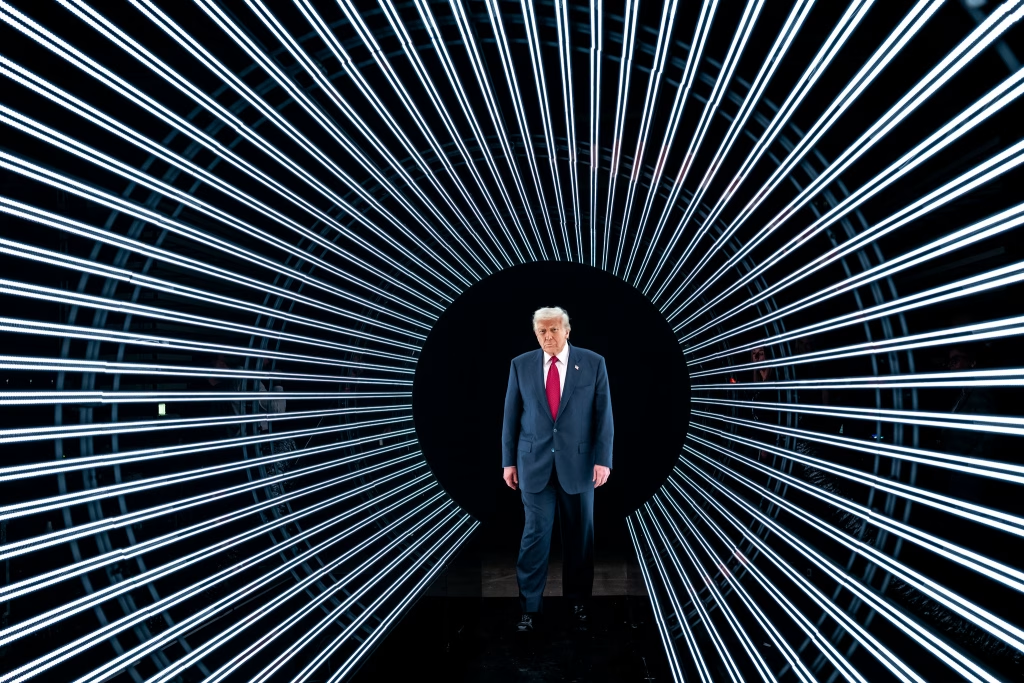
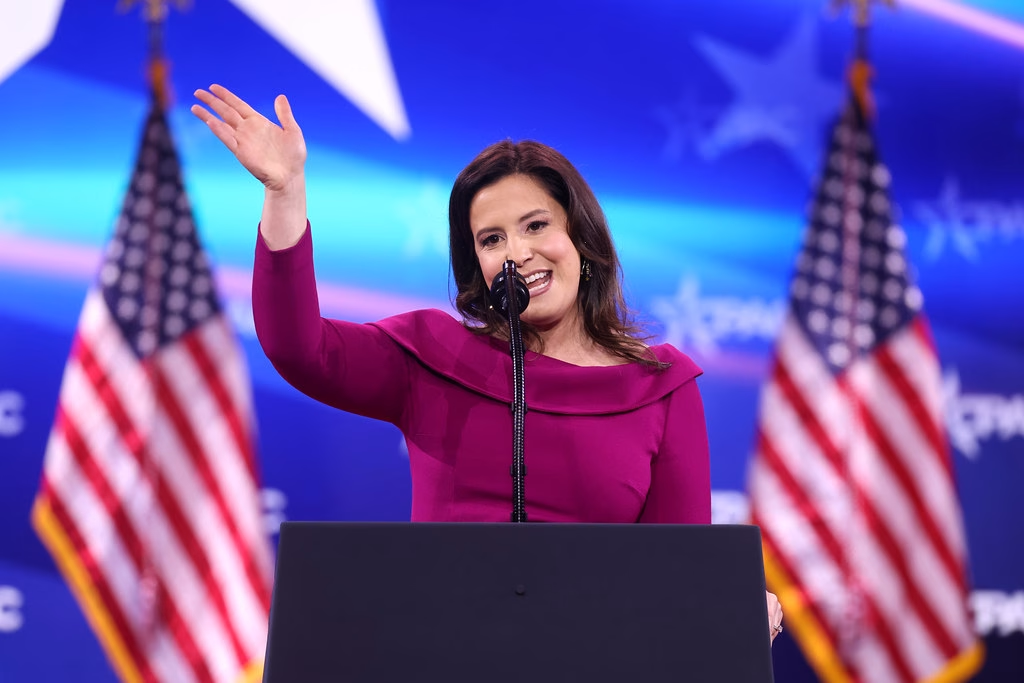


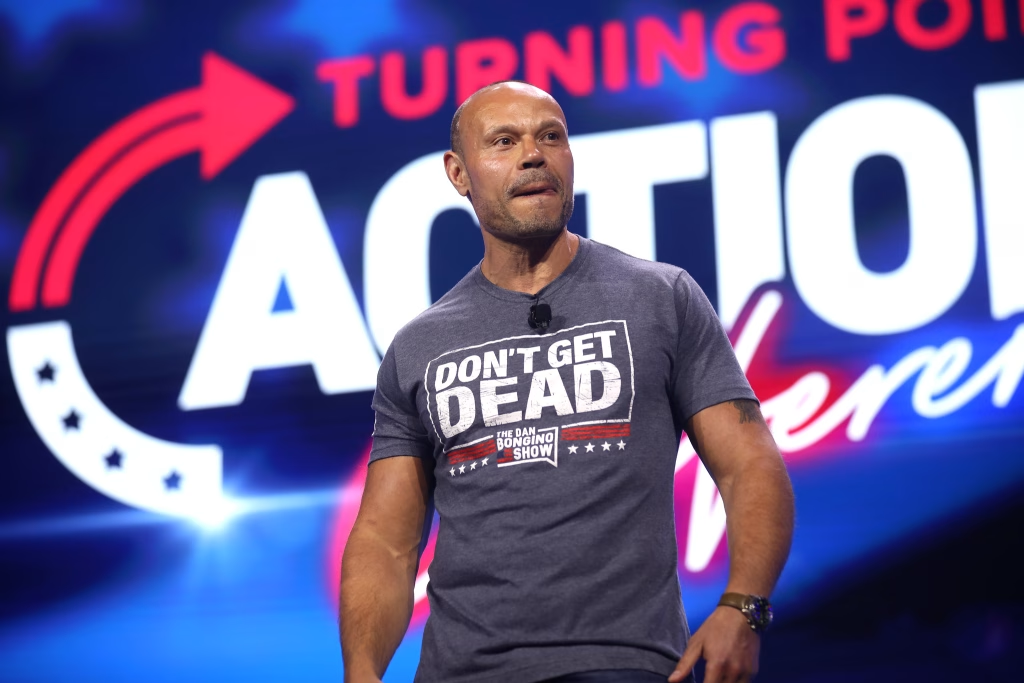
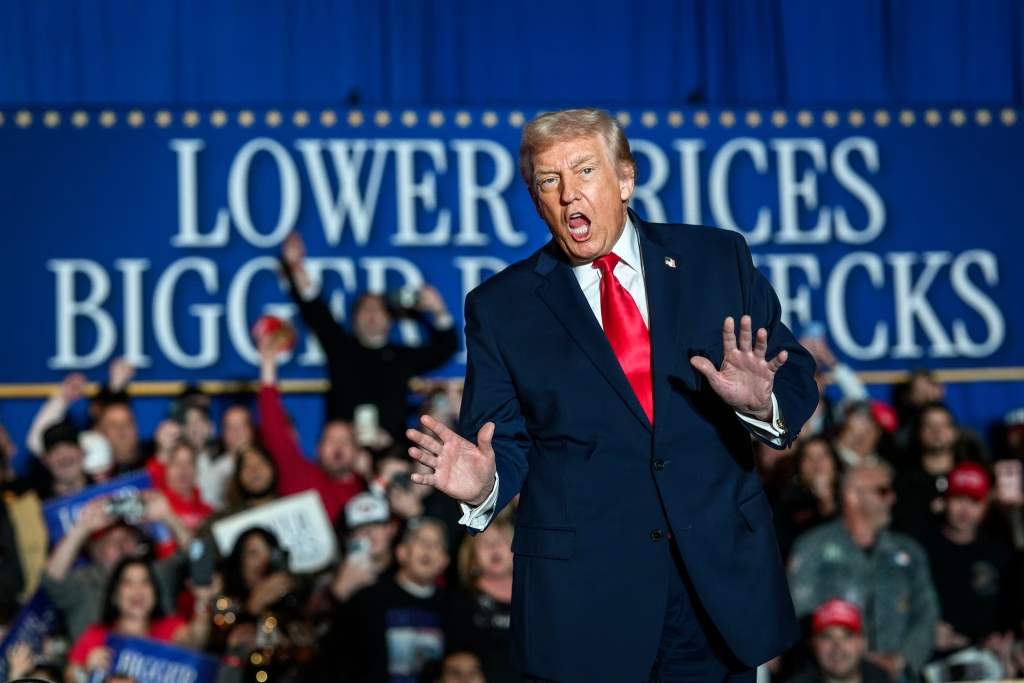
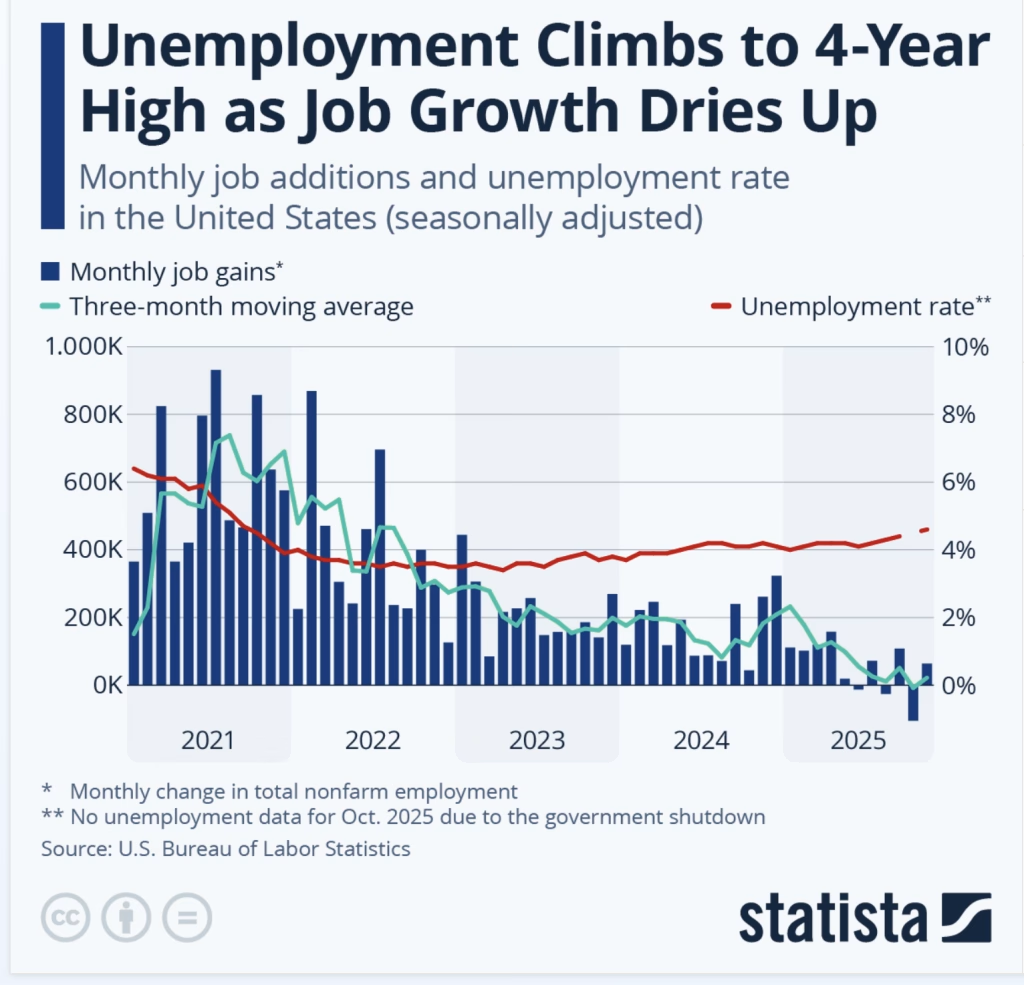
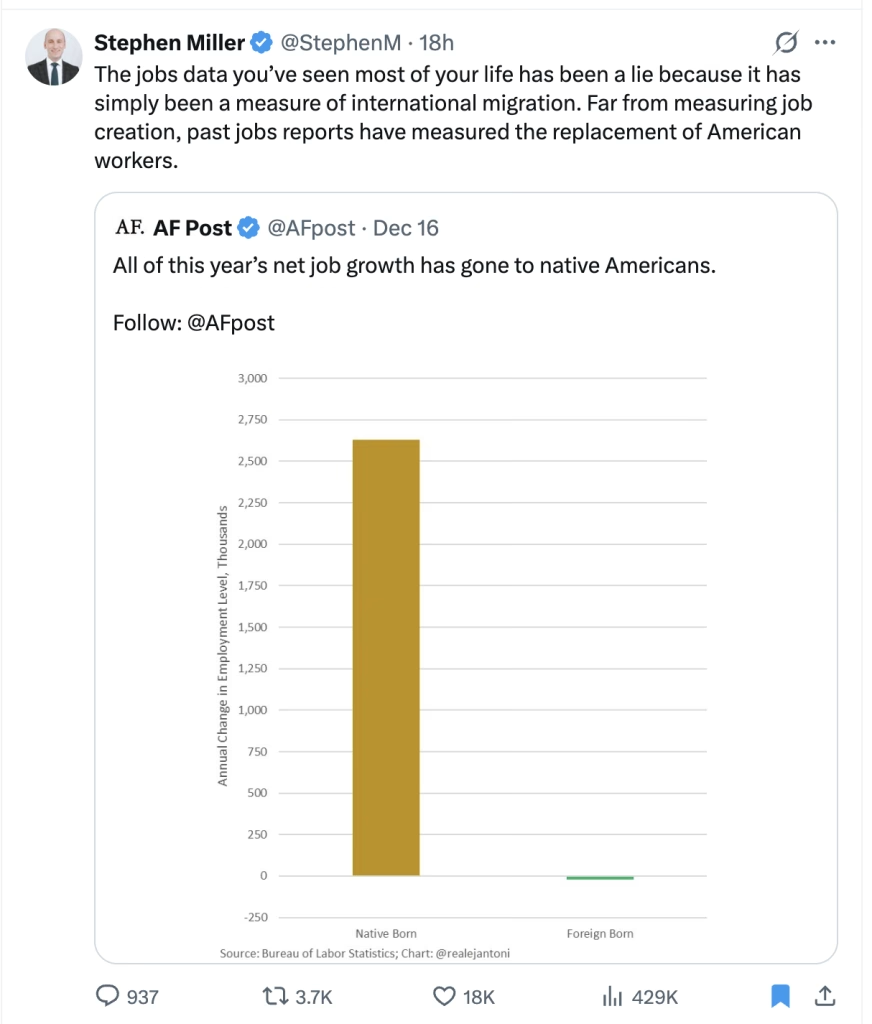



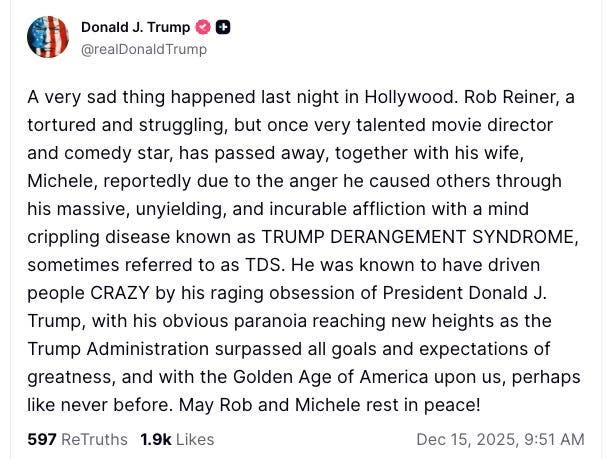


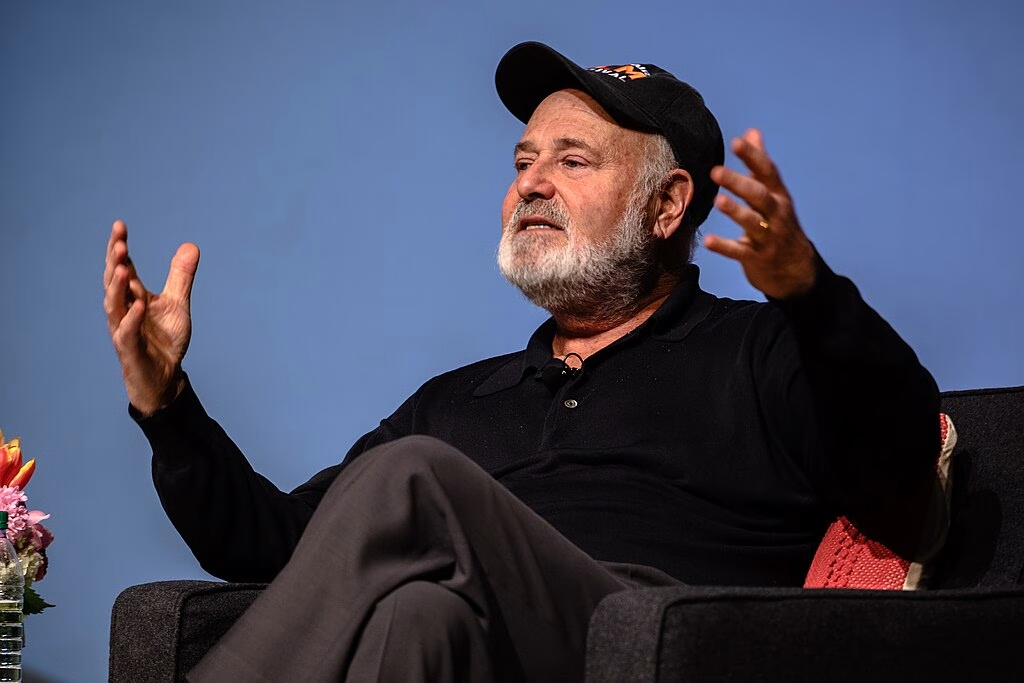




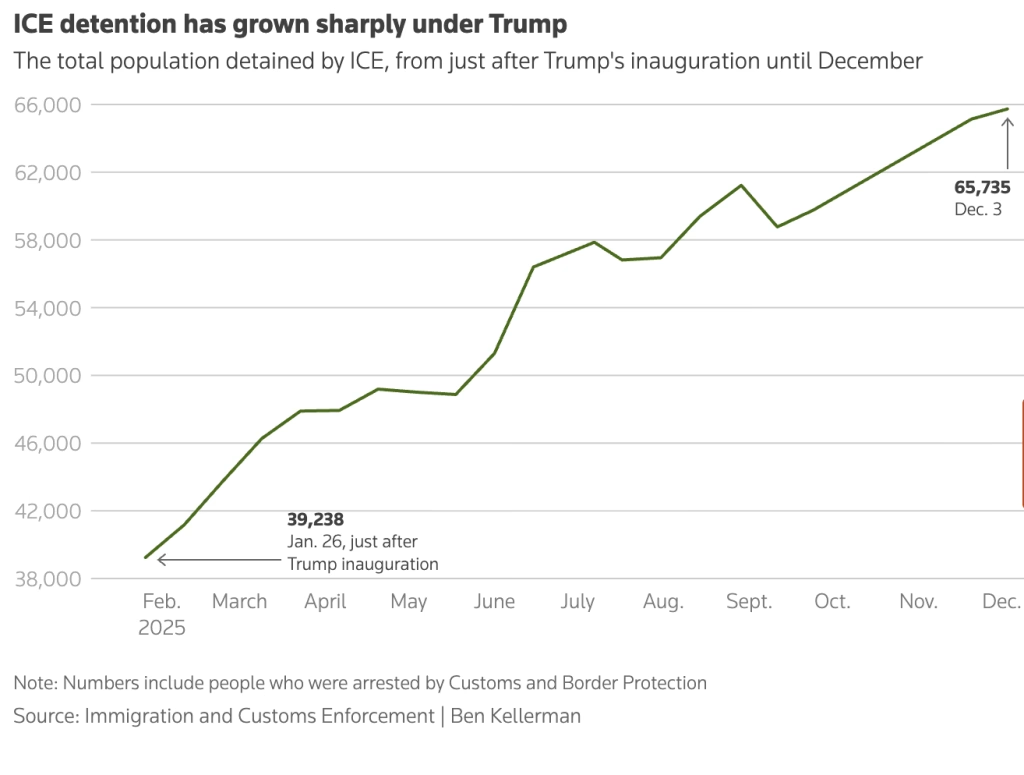

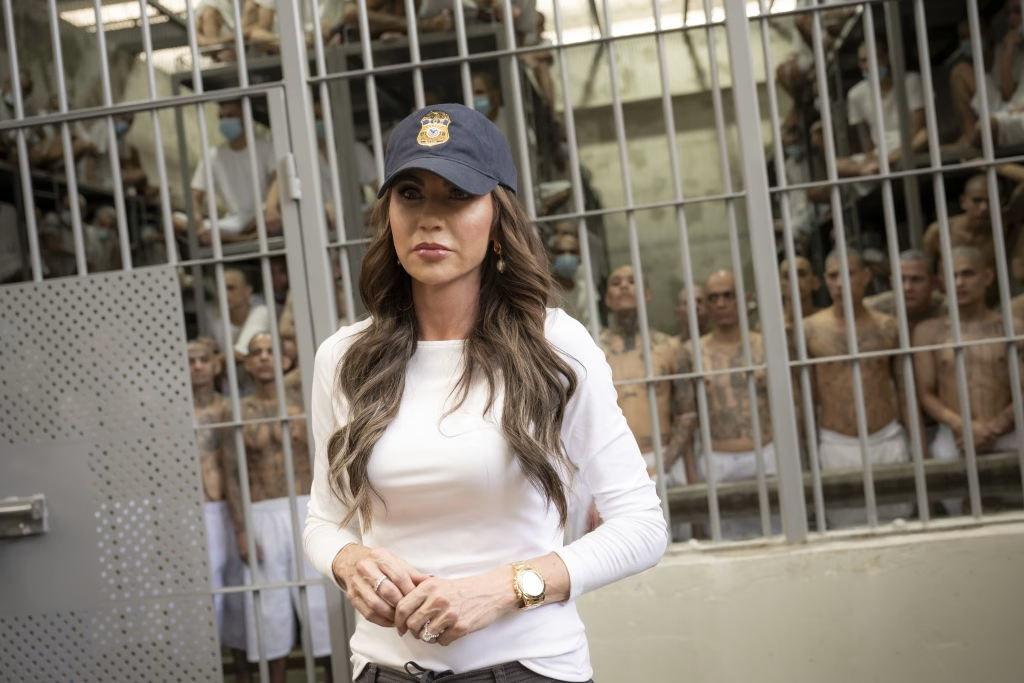
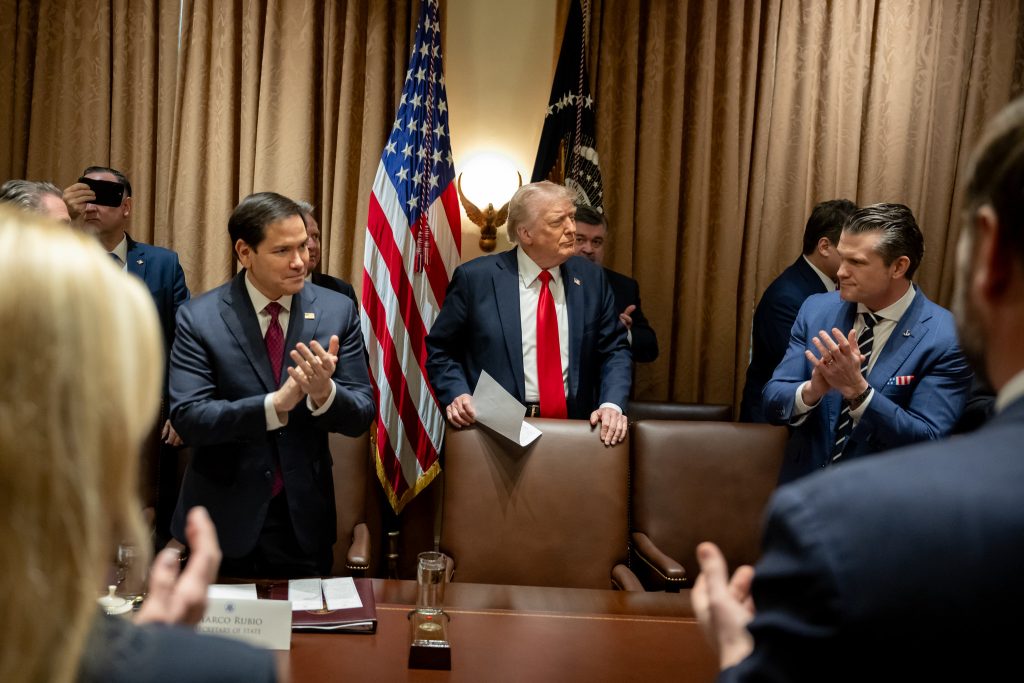
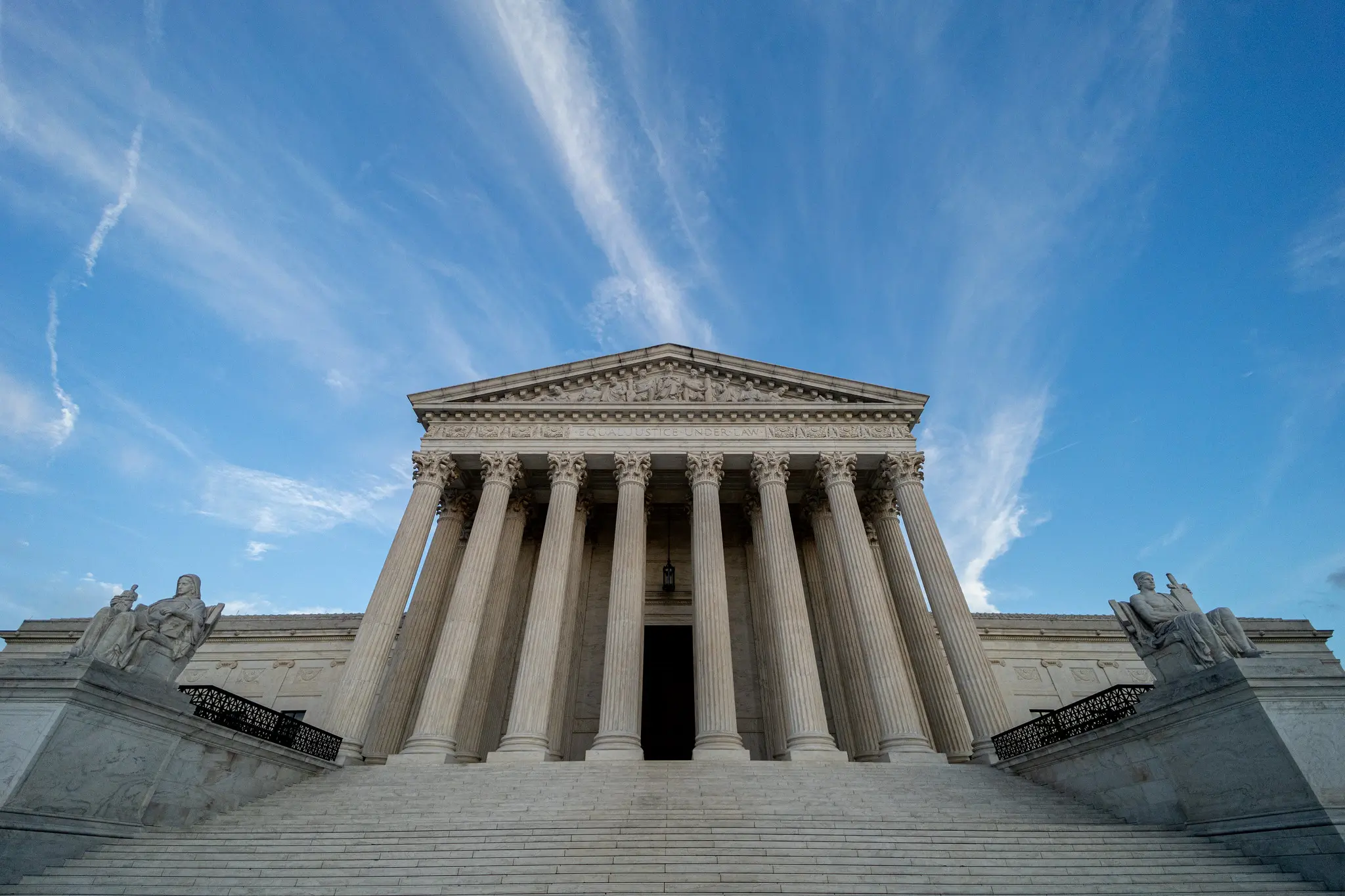

 ********************@